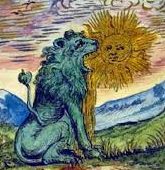
Radical pessimism turns out to be much like optimism

From Guido Morselli’s Dissipatio H.G. (ch 10):

Mylius (former paranoid) had a bleak and irrefutable hypothesis, funereally reassuring.

Human beings were half-dead even while they were alive, he held. My talk with Mylius comes back to me only now, dug up by my discussion with myself on the presentiment, the itinerarium mentis.

It was an April morning. We were having coffee on the terrace at the Hôtel Zemmi; the view was festive (snow and sun), and we were feasting our eyes on a Sachertorte layered with whipped cream. Why the old man chose that moment to expound his philosophy, I have no idea. A portent?

Mylius: Let us begin with a realistic notion of what “being dead” means to us. Impassive so far as the outside world goes, insensible, indifferent. If we agree that this is death, then life is similar, the difference between the two merely quantitative. Ideally, life ought to be learning, experience, interests, but you know very well that measured against that ideal of life (in any case never fully realized), measured against a theoretically possible multiplicity of experiences or relations, each of us is not much more than a dead man. Death signifies impassibility, yet ignorance and forgetfulness or the tendency to forget, reduce the living—in terms of nearly all the possible experiences and relations—to a similar impassibility. We are dead to everything that doesn’t touch us or doesn’t interest us. I don’t mean what’s happening on the Moon, but what’s happening in the house just across the road. Of the myriad events taking place every day in our own human sphere, we know of only a few, a few dozen, shall we say, and most of them indirectly, via the news. We speak, badly, one language of the 3,000 spoken on Earth. Biological death, then, is the perfecting of a state we already occupy.

Me: My biological death makes me impassible to myself, the private individual, but while I live whatever affects me, the private individual, is something I suffer or enjoy. Greatly!

Mylius: There’s no reason the private individual should be the privileged object of experience. Everything that is real can be experienced, but we’re incapable of achieving that, and if as seems right, that is how life should be measured, we don’t have very much of it. It’s understandable that we console ourselves with the thought that not very much, however little, is precious and important to us, but it doesn’t make things better.

Me: Perhaps. But that “not very much” will suffice for me.

Mylius: Consider the blindness of a dead man and that of a living person. What is the difference? Our ignorance, and thus indifference, impassibility, confronted with almost all the possible “data” or even with the sum of others’ experiences, those of our own kind—that ignorance amounts to a genuine blindfold. That data, those experiences don’t exist for us, and we don’t for them. No matter that for other individuals, they are the very plot of daily life; we, here, are dead, and it’s pointless to call that death metaphorical. It’s a partial death, but real.

Me: Life is motion; death, torpor.

Mylius: There’s no denying the distinction between the two states. Certainly, life is movement. But it is a circular motion (around that tiny nucleus called the self), motion so circumscribed that it’s like a piétiner sur place: a tapping of your heels in place while surrounded by a large circle of shade of all that escapes our cognition, and of which we desire no cognition. And I’m not referring to the knowable, and even less to the mystery of the universe, I’m referring to petty reality, and as I said, that closest to us.

We may talk of the individual’s life dynamism, of his nearly infinite multiplicity of relationships, or experiences. But we must face the fact that this is rhetoric. Each of us is limited to his own tiny fragment of reality, and in fact, cannot escape it. The contrasting rhetoric, about incommunicability, is true only in this sense. Acting, learning, observing: these functions lead us around in circles. And, please note, we are individuals, coherent, stable (even physically), thanks to this. Surrounded by the possible, which almost never materializes, but closed to and distant from that immensity—lucky for us or we would fritter ourselves away. Determination is negation; as individuals we must have these strict confines, we must exclude, close off. And thus life, anyway our life, is awfully similar to what we call its opposite.

Me: Not a happy tale.

Mylius: Not happy? Actually it’s comforting, considering that we all have to die. You, too, even though you are still young. Or do you think you’ll be an exception?

Me: Certainly not. (As you can see I was anything but prescient just then.)

Mylius: Think about ataraxia, or utter equanimity, the supreme form of spiritual life for the Stoics, the Buddhists, the ascetic Christians. Such detachment before moral and physical ills is a taste of the dead man’s impassability. In any case, secular man strives to be imperturbable, impassive, before death; it’s the extreme toward which the hero, the man gifted with courage, the real man, aims. It’s spelled out explicitly in the famous expression perinde ac cadaver, in the manner of a corpse. You know the one about the soldier, observing his dead companion out in front of the trench, who says: “Look at that, he’s the bravest, lying there under the machine-gun fire calmly looking up at the heavens.” There’s nothing offensive about that remark, it’s profound.

Thus Mylius, the philosopher, that April morning. All the better for him, actually; if he believed what he was saying, the Event will not have been a surprise, or painful for him. Radical pessimism turns out to be much like optimism.

Let me add that our philosopher was nearly sixty years old and hobbled by arthritis, that a few years back his wife had abandoned him and run off with an assistant, also a philosopher. Even so, philosophy had this going for it, it was anti-rhetorical. It debunked a pseudo-fatal antithesis probably unknown in nature. To some extent, that’s a consolation.


L’assunto di Mylius (ex-paranoico), era tetro e irrefutabile, fúnebremente rassicurante.

Gli uomini sarebbero semi-morti già mentre vivono. Ci ripenso solo ora alla chiacchierata di Mylius: a richiamarla è stato il discorso con me stesso, sull’ ‘ appressamento ‘, l’itinerarium mentis.

Una mattina d’aprile. Prendevamo il caffè sulla terrazza dell’Albergo Zemmi e la scena era festosamente neve-sole, la Sachertorte farcita alla panna si mangiava con gli occhi; non capisco perché il vecchio scegliesse quel momento per espormi la sua filosofia. Un presagio?

Mylius – Occorre partire dalla premessa realistica di ciò che significa per noi ‘ essere morti Imparte- cipazione al mondo esterno, insensibilità, indifferenza. Stabilito che la morte è questo, si conclude che la vita le assomiglia, il divario essendo puramente quantitativo. Idealmente, la vita dovrebbe essere apprendimento, esperienza, interessi, ma lei capisce che in confronto alla vita in questa sua ideale e non mai raggiunta pienezza, in confronto alla molteplicità delle esperienze (o relazioni) teoricamente possibili, ognuno di noi non è molto diverso da un morto. Il connotato del morto è l’impassibilità: ora l’ignoranza e (aggiunga) la dimenticanza o facilità a dimenticare, riducono noi vivi, per la quasi totalità delle esperienze (o relazioni) possibili, a una impassibilità analoga. Siamo morti a tutto ciò che non ci tocca o non c’interessa. Non dico a ciò che succede sulla Luna, ma a ciò che succede a coloro che stanno di casa dirimpetto a noi. Della miriade di eventi che si verificano ogni giorno nella nostra stessa sfera umana più prossima, ne conosciamo solo alcuni, qualche decina diciamo, e di solito indirettamente, attraverso un notiziario. Usiamo, e male, una lingua, delle 3.000 che si parlano nel mondo. Morire biologicamente, è il perfezionarsi di uno stato in cui ci troviamo già ora.

Io – Ma la mia morte biologica mi rende impassibile verso il mio privato individuo, e invece finché vivo, quel che riguarda il mio individuo lo soffro o lo godo, e come!

Mylius – Non c’è motivo per fare del nostro privato individuo un oggetto privilegiato di esperienza. Tutto quanto è reale può essere esperito, e noi non siamo capaci di ciò; se la vita, come è giusto, si deve misurare da ciò, ne abbiamo ben poca. Il consolarci dicendo che questo poco è importante per noi, o prezioso, è un atteggiamento comprensibile, che però non migliora la situazione.

Io – Può darsi. Ma a me basterebbe quel poco.

Mylius – Consideri la cecità di un morto e la cecità di un vivente. Che differenza c’è? La nostra ignoranza e quindi indifferenza, impassibilità, rispetto alla quasi totalità dei ‘ dati ‘ possibili, o anche rispetto alle effettive esperienze altrui, ossia dei nostri simili, è autentica occlusione. Quei dati, quelle esperienze, ‘ non ci sono ‘ per noi, e noi non ci siamo per essi. Non importa che, per altri individui, essi costituiscano la trama del ‘ quotidiano ‘ : noi, qui, siamo morti, e non c’è ragione di chiamare tale morte ‘ metaforica ‘. È morte parziale, ma reale.

Io – La vita è moto, la morte immobilità.

Mylius – Non si nega la distinzione fra i due stati: certo, la vita è movimento. Un moto, però, circolare (intorno a quel piccolo nucleo che si chiama ‘ io ‘), un moto talmente circoscritto che assomiglia a un piétiner sur place. Circoscritto dal gran cerchio d’ombra di tutto quello che sfugge alla nostra cognizione, o di cui non c’interessa avere cognizione. E non alludo allo scibile, né tanto meno al ‘ mistero dell’universo ‘, alludo a ciò che rappresenta la realtà spicciola e, come le dicevo, la più vicina a noi.

Parliamo pure di dinamismo vitale dell’individuo, di molteplicità virtualmente infinita di relazioni, o di esperienze. Ma rendiamoci conto che è retorica. Ognuno è vincolato a un suo minuscolo frammento di realtà, e, di fatto, non ne esce. La retorica opposta, quella della incomunicabilità, solo in questo senso si giustifica. Non soltanto l’agire ma anche l’apprendere, il sentire, sono funzioni per cui ci aggiriamo in tondo. E, lei noti, siamo individui, manteniamo una coerenza e una stabilità (anche organica), proprio in grazie di questo. Intorno c’è il possibile, che non diventa quasi mai reale (per noi), e a quella immensità siamo chiusi e remoti: per fortuna nostra, poiché altrimenti ci disperderemmo. Determinazione è negazione, il nostro status d’individui richiede questi stretti confini, noi siamo fatti di esclusioni, di occlusioni. Ma questo fa sì che alla vita, perlomeno la nostra, ciò che chiamiamo il suo contrario le assomigli molto.

Io – Non è allegro.

Mylius – Non è allegro? Anzi, è confortante visto che a morire dobbiamo arrivarci tutti. Lei compreso, benché sia ancora giovine. O crede di fare eccezione?

Io – No di certo. (In quel momento, è chiaro che io non ero presago).

Mylius – Pensi alla atarassia o impertubabilità, in cui consiste il culmine della vita spirituale per lo stoicismo, il buddhismo, l’ascesi cristiana. Tale indifferenza di fronte ai mali morali o fisici, anticipa la impassibilità del morto. Ma, già per il laico, l’imperturbabilità o impassibilità della morte è la condizione-limite a cui tende l’eroe, l’uomo, comunque, dotato di coraggio, il vero uomo. Il che è affermato esplicitamente nella famosa formula ‘perinde ac ca- daver ‘. Lei conosce la storiella di quel soldato che dice, osservando un suo compagno morto davanti alla trincea: vedi un po’, quello è il più bravo di tutti, se ne sta lì disteso sotto il fuoco della mitraglia, a guardare tranquillo il cielo. – La storiella non è irriverente, è profonda.

Fin qui il filosofo Mylius, quella mattina d’aprile. Meglio per lui, del resto: se era convinto della sua tesi, l’Evento per lui non sarà stato né sorprendente né doloroso. Il pessimismo radicale sconfina nell’ottimismo.

Andrebbe aggiunto che il mio filosofo aveva quasi sessant’anni, che un’artrosi lo inchiodava, che qualche anno fa la moglie lo aveva piantato per scappare con un assistente, della sua stessa cattedra. Con tutto ciò, quella filosofia aveva un merito, si metteva contro la retorica. Sfatava un’antitesi pseudo-fa- tale, probabilmente ignota alla natura. Io posso sì, in qualche misura, confortarmene.
A complete catalog of Bokononisms

From Kurt Vonnegut’s Cat’s Cradle, all quotes attributed to Bokonon and all lines referencing Bokonon’s thought (fragments and testimonia, for classicists). These are given in order of appearance.

Epigraph
“Live by the foma* that make you brave and kind and healthy and happy.” The Books of Bokonon. I: 5 * Harmless untruths

Chapter 1
We Bokononists believe that humanity is organized into teams, teams that do God’s Will without ever discovering what they are doing. Such a team is called a karass by Bokonon, and the instrument, the kan-kan, that brought me into my own particular karass was the book I never finished, the book to be called The Day the World Ended.

Chapter 2
“If you find your life tangled up with somebody else’s life for no very logical reasons,” writes Bokonon, “that person may be a member of your karass.” At another point in The Books of Bokonon he tells us, “Man created the checkerboard; God created the karass.” By that he means that a karass ignores national, institutional, occupational, familial, and class boundaries. It is as free-form as an amoeba. In his “Fifty-third Calypso,” Bokonon invites us to sing along with him:

Oh, a sleeping drunkard
Up in Central Park,
And a lion-hunter In the jungle dark,
And a Chinese dentist,
And a British queen—
All fit together
In the same machine.
Nice, nice, very nice;
Nice, nice, very nice—
So many different people In the same device.

Chapter 3
In the autobiographical section of The Books of Bokonon he writes a parable on the folly of pretending to discover, to understand:

I once knew an Episcopalian lady in Newport, Rhode Island, who asked me to design and build a doghouse for her Great Dane. The lady claimed to understand God and His Ways of Working perfectly. She could not understand why anyone should be puzzled about what had been or about what was going to be. And yet, when I showed her a blueprint of the doghouse I proposed to build, she said to me, “I’m sorry, but I never could read one of those things.” “Give it to your husband or your minister to pass on to God,” I said, “and, when God finds a minute, I’m sure he’ll explain this doghouse of mine in a way that even you can understand.” She fired me. I shall never forget her. She believed that God liked people in sailboats much better than He liked people in motorboats. She could not bear to look at a worm. When she saw a worm, she screamed. She was a fool, and so am I, and so is anyone who thinks he sees what God is Doing, [writes Bokonon].

Chapter 4
I should like to offer a Bokononist warning about it, however. The first sentence in The Books of Bokonon is this: “All of the true things I am about to tell you are shameless lies.” My Bokononist warning is this: Anyone unable to understand how a useful religion can be founded on lies will not understand this book either.

Chapter 9
I suppose Dr. Breed was a member of my karass, too, though he took a dislike to me almost immediately. “Likes and dislikes have nothing to do with it,” says Bokonon—an easy warning to forget.

Chapter 10
As it happened—“as it was meant to happen,” Bokonon would say

Chapter 13
“Ah, God,” says Bokonon, “what an ugly city every city is!”

Chapter 18
“Nothing generous about it. New knowledge is the most valuable commodity on earth. The more truth we have to work with, the richer we become.” Had I been a Bokononist then, that statement would have made me howl.

Chapter 24
Which brings me to the Bokononist concept of a wampeter. A wampeter is the pivot of a karass. No karass is without a wampeter, Bokonon tells us, just as no wheel is without a hub. Anything can be a wampeter: a tree, a rock, an animal, an idea, a book, a melody, the Holy Grail. Whatever it is, the members of its karass revolve about it in the majestic chaos of a spiral nebula. The orbits of the members of a karass about their common wampeter are spiritual orbits, naturally. It is souls and not bodies that revolve. As Bokonon invites us to sing:
Around and around and around we spin,
With feet of lead and wings of tin …

And wampeters come and wampeters go, Bokonon tells us. At any given time a karass actually has two wampeters—one waxing in importance, one waning.

Chapter 25
“Dr. Breed keeps telling me the main thing with Dr. Hoenikker was truth.” “You don’t seem to agree.” “I don’t know whether I agree or not. I just have trouble understanding how truth, all by itself, could be enough for a person.” Miss Faust was ripe for Bokononism.

Chapter 31
As a Bokononist, of course, I would have agreed gaily to go anywhere anyone suggested. As Bokonon says: “Peculiar travel suggestions are dancing lessons from God.”

Chapter 32
Had I been a Bokononist then, pondering the miraculously intricate chain of events that had brought dynamite money to that particular tombstone company, I might have whispered, “Busy, busy, busy.”

Busy, busy, busy, is what we Bokononists whisper whenever we think of how complicated and unpredictable the machinery of life really is.

Chapter 34
… vin-dit, a Bokononist word meaning a sudden, very personal shove in the direction of Bokononism, in the direction of believing that God Almighty knew all about me, after all, that God Almighty had some pretty elaborate plans for me.

Chapter 36
A wrang-wrang, according to Bokonon, is a person who steers people away from a line of speculation by reducing that line, with the example of the wrang-wrang’s own life, to an absurdity.

Chapter 40
As it happened —“As it was supposed to happen,” Bokonon would say—I

Chapter 41
a flawless example of what Bokonon calls a duprass, which is a karass composed of only two persons. “A true duprass,” Bokonon tells us, “can’t be invaded, not even by children born of such a union.” Bokonon tells us, incidentally, that members of a duprass always die within a week of each other.

Chapter 42
a textbook example of a false karass, of a seeming team that was meaningless in terms of the ways God gets things done, a textbook example of what Bokonon calls a granfalloon. Other examples of granfalloons are the Communist party, the Daughters of the American Revolution, the General Electric Company, the International Order of Odd Fellows—and any nation, anytime, anywhere. As Bokonon invites us to sing along with him:

If you wish to study a granfalloon,
Just remove the skin of a toy balloon.

Chapter 46
The words were a paraphrase of the suggestion by Jesus: “Render therefore unto Caesar the things which are Caesar’s.” Bokonon’s paraphrase was this: “Pay no attention to Caesar. Caesar doesn’t have the slightest idea what’s really going on.”

Chapter 47
It was the belief of Bokonon that good societies could be built only by pitting good against evil, and by keeping the tension between the two high at all times. And, in Castle’s book, I read my first Bokononist poem, or “Calypso.” It went like this: “

Papa” Monzano, he’s so very bad,
But without bad “Papa” I would be so sad;
Because without “Papa’s” badness,
Tell me, if you would,
How could wicked old Bokonon
Ever, ever look good?

Chapter 48
As a youth, for all his interest in the outward trappings of organized religion, he seems to have been a carouser, for he invites us to sing along with him in his “Fourteenth Calypso”:

When I was young,
I was so gay and mean,
And I drank and chased the girls
Just like young St. Augustine.
Saint Augustine,
He got to be a saint.
So, if I get to be one, also,
Please, Mama, don’t you faint.

Chapter 49
But a gale hounded the schooner onto the rocks of San Lorenzo. The boat went down. Johnson and McCabe, absolutely naked, managed to swim ashore. As Bokonon himself reports the adventure:

A fish pitched up
By the angry sea,
I gasped on land,
And I became me.

He was enchanted by the mystery of coming ashore naked on an unfamiliar island. He resolved to let the adventure run its full course, resolved to see just how far a man might go, emerging naked from salt water.

It was a rebirth for him:

Be like a baby,
The Bible say,
So I stay like a baby
To this very day.
How he came by the name of Bokonon was very simple. “Bokonon” was the pronunciation given the name Johnson in the island’s English dialect.

Chapter 55
A duprass, Bokonon tells us, is a valuable instrument for gaining and developing, in the privacy of an interminable love affair, insights that are queer but true. The Mintons’ cunning exploration of indexes was surely a case in point. A duprass, Bokonon tells us, is also a sweetly conceited establishment. The Mintons’ establishment was no exception.

Chapter 56
From the “Calypsos” again:

Oh, a very sorry people, yes,
Did I find here.
Oh, they had no music,
And they had no beer.
And, oh, everywhere
Where they tried to perch
Belonged to Castle Sugar, Incorporated,
Or the Catholic church.

Chapter 58
“There was at least one quality of the new conquerors of San Lorenzo that was really new,” wrote young Castle. “McCabe and Johnson dreamed of making San Lorenzo a Utopia.

“To this end, McCabe overhauled the economy and the laws.

“Johnson designed a new religion.”

Castle quoted the “Calypsos” again:

I wanted all things
To seem to make some sense,
So we all could be happy, yes,
Instead of tense.
And I made up lies
So that they all fit nice,
And I made this sad world
A par-a-dise.

Chapter 63
At a limp, imperious signal from “Papa,” the crowd sang the San Lorenzan National Anthem. Its melody was “Home on the Range.” The words had been written in 1922 by Lionel Boyd Johnson, by Bokonon. The words were these:

Oh, ours is a land
Where the living is grand,
And the men are as fearless as sharks;
The women are pure,
And we always are sure
That our children will all toe their marks.
San, San Lo-ren-zo!
What a rich, lucky island are we!
Our enemies quail,
For they know they will fail
Against people so reverent and free.

Chapter 64
In The Books of Bokonon she is mentioned by name. One thing Bokonon says of her is this: “Mona has the simplicity of the all.”

Chapter 72
the Bokononist ritual of boko-maru, or the mingling of awarenesses. We Bokononists believe that it is impossible to be sole-to-sole with another person without loving the person, provided the feet of both persons are clean and nicely tended. The basis for the foot ceremony is this “Calypso”:

We will touch our feet, yes,
Yes, for all we’re worth,
And we will love each other, yes,
Yes, like we love our Mother Earth.

Chapter 78
“When Bokonon and McCabe took over this miserable country years ago,” said Julian Castle, “they threw out the priests.And then Bokonon, cynically and playfully, invented a new religion.” “I know.” I said. “Well, when it became evident that no governmental or economic reform was going to make the people much less miserable, the religion became the one real instrument of hope. Truth was the enemy of the people, because the truth was so terrible, so Bokonon made it his business to provide the people with better and better lies.” “How did he come to be an outlaw?” “It was his own idea. He asked McCabe to outlaw him and his religion, too, in order to give the religious life of the people more zest, more tang. He wrote a little poem about it, incidentally.” Castle quoted this poem, which does not appear in The Books of Bokonon:

So I said good-bye to government,
And I gave my reason:
That a really good religion
Is a form of treason.

“Bokonon suggested the hook, too, as the proper punishment for Bokononists,” he said. “It was something he’d seen in the Chamber of Horrors at Madame Tussaud’s.” He winked ghoulishly. “That was for zest, too.”

Chapter 81
“Don’t try,” he said. “Just pretend you understand.”
“That’s—that’s very good advice,” I went limp.

Castle quoted another poem:

Tiger got to hunt,
Bird got to fly;
Man got to sit and wonder,
“Why, why, why?”
Tiger got to sleep,
Bird got to land;
Man got to tell himself he understand.

“What’s that from?” I asked. “What could it possibly be from but The Books of Bokonon?”

Chapter 82
So I asked Julian Castle what zah-mah-ki-bo meant. “You want a simple answer or a whole answer?” “Let’s start with a simple one.” “Fate—inevitable destiny.”

Chapter 85
I learned of the Bokononist cosmogony, for instance, wherein Borasisi, the sun, held Pabu, the moon, in his arms, and hoped that Pabu would bear him a fiery child. But poor Pabu gave birth to children that were cold, that did not burn; and Borasisi threw them away in disgust. These were the planets, who circled their terrible father at a safe distance. Then poor Pabu herself was cast away, and she went to live with her favorite child, which was Earth. Earth was Pabu’s favorite because it had people on it; and the people looked up at her and loved her and sympathized. And what opinion did Bokonon hold of his own cosmogony? “Foma! Lies!” he wrote. “A pack of foma!”

Chapter 88
“Maturity,” Bokonon tells us, “is a bitter disappointment for which no remedy exists, unless laughter can be said to remedy anything.”

Chapter 89
Duffle, in the Bokononist sense, is the destiny of thousands upon thousands of persons when placed in the hands of a stuppa. A stuppa is a fogbound child.

Chapter 90
All things conspired to form one cosmic vin-dit, one mighty shove into Bokononism, into the belief that God was running my life and that He had work for me to do.
And, inwardly, I sarooned, which is to say that I acquiesced to the seeming demands of my vin-dit.

Chapter 93
“A sin-wat!” she cried. “A man who wants all of somebody’s love. That’s very bad.”

Chapter 94
“What is sacred to Bokononists?” I asked after a while. “Not even God, as near as I can tell.” “Nothing?” “Just one thing.” I made some guesses. “The ocean? The sun?” “Man,” said Frank. “That’s all. Just man.”

Chapter 102
Bokonon’s “hundred-and-nineteenth Calypso,” wherein he invites us to sing along with him:

“Where’s my good old gang done gone?”
I heard a sad man say.
I whispered in that sad man’s ear,
“Your gang’s done gone away.”

Chapter 102
As Bokonon tells us, “It is never a mistake to say good-bye.”

Chapter 104
Bokonon tells us:

A lover’s a liar,
To himself he lies.
The truthful are loveless,
Like oysters their eyes!

Chapter 105
“Write it all down,” Bokonon tells us. He is really telling us, of course, how futile it is to write or read histories. “Without accurate records of the past, how can men and women be expected to avoid making serious mistakes in the future?” he asks ironically.

Chapter 106
And then ‘Papa’ said, ‘Now I will destroy the whole world.’” “What did he mean by that?” “It’s what Bokononists always say when they are about to commit suicide.”

Chapter 107
Well, as Bokonon tells us: “God never wrote a good play in His Life.”

Chapter 110
“Sometimes the Pool-Pah,” Bokonon tells us, “exceeds the power of humans to comment.” Bokonon translates pool-pah at one point in The Books of Bokonon as “shit storm” and at another point as “wrath of God.”

Chapter 110
And I remembered The Fourteenth Book of Bokonon? which I had read in its entirety the night before. The Fourteenth Book is entitled, “What Can a Thoughtful Man Hope for Mankind on Earth, Given the Experience of the Past Million Years?” It doesn’t take long to read The Fourteenth Book. It consists of one word and a period. This is it: “Nothing.”

Chapter 111
But, as Bokonon tells us, “Any man can call time out, but no man can say how long the time out will be.”

Chapter 113
“History!” writes Bokonon. “Read it and weep!”

Chapter 118
The sixth book of The Books of Bokonon is devoted to pain, in particular to tortures inflicted by men on men. “If I am ever put to death on the hook,” Bokonon warns us, “expect a very human performance.” Then he speaks of the rack and the peddiwinkus and the iron maiden and the veglia and the oubliette.

In any case, there’s bound to be much crying.
But the oubliette alone will let you think while dying.

Chapter 118
I turned to The Books of Bokonon, still sufficiently unfamiliar with them to believe that they contained spiritual comfort somewhere. I passed quickly over the warning on the title page of The First Book:

“Don’t be a fool! Close this book at once! It is nothing but foma!”

Foma, of course, are lies. And then I read this: In the beginning, God created the earth, and he looked upon it in His cosmic loneliness. And God said, “Let Us make living creatures out of mud, so the mud can see what We have done.” And God created every living creature that now moveth, and one was man. Mud as man alone could speak. God leaned close as mud as man sat up, looked around, and spoke. Man blinked. “What is the purpose of all this?” he asked politely. “Everything must have a purpose?” asked God. “Certainly,” said man. “Then I leave it to you to think of one for all this,” said God. And He went away.

I thought this was trash. “Of course it’s trash!” says Bokonon.

Chapter 119
“Today I will be a Bulgarian Minister of Education,” Bokonon tells us. “Tomorrow I will be Helen of Troy.” His meaning is crystal clear: Each one of us has to be what he or she is.

Chapter 120
We found a boulder in it. And under the boulder was a penciled note which said: To whom it may concern: These people around you are almost all of the survivors on San Lorenzo of the winds that followed the freezing of the sea. These people made a captive of the spurious holy man named Bokonon. They brought him here, placed him at their center, and commanded him to tell them exactly what God Almighty was up to and what they should now do. The mountebank told them that God was surely trying to kill them, possibly because He was through with them, and that they should have the good manners to die. This, as you can see, they did. The note was signed by Bokonon.

Chapter 121
“What a cynic!” I gasped. I looked up from the note and gazed around the death-filled bowl. “Is he here somewhere?”

“I do not see him,” said Mona mildly. She wasn’t depressed or angry. In fact, she seemed to verge on laughter. “He always said he would never take his own advice, because he knew it was worthless.”

Chapter 124
I walked away from Frank, just as The Books of Bokonon advised me to do. “Beware of the man who works hard to learn something, learns it, and finds himself no wiser than before,” Bokonon tells us. “He is full of murderous resentment of people who are ignorant without having come by their ignorance the hard way.”

Chapter 125
When I hadn’t been writing, I’d been poring over The Books of Bokonon, but the reference to midgets had escaped me. I was grateful to Newt for calling it to my attention, for the quotation captured in a couplet the cruel paradox of Bokononist thought, the heartbreaking necessity of lying about reality, and the heartbreaking impossibility of lying about it.

Midget, midget, midget, how he struts and winks,
For he knows a man’s as big as what he hopes and thinks!

Chapter 126
But Bokonon had been there, too, had written a whole book about Utopias, The Seventh Book, which he called “Bokonon’s Republic.” In that book are these ghastly aphorisms:

The hand that stocks the drug stores rules the world.
Let us start our Republic with a chain of drug stores, a chain of grocery stores, a chain of gas chambers, and a national game. After that, we can write our Constitution.

Chapter 127
“Bokonon?” “Yes?” “May I ask what you’re thinking?” “I am thinking, young man, about the final sentence for The Books of Bokonon. The time for the final sentence has come.” “Any luck?” He shrugged and handed me a piece of paper. This is what I read:

If I were a younger man, I would write a history of human stupidity; and I would climb to the top of Mount McCabe and lie down on my back with my history for a pillow; and I would take from the ground some of the blue-white poison that makes statues of men; and I would make a statue of myself, lying on my back, grinning horribly, and thumbing my nose at You Know Who.

The entire universe is moving toward a final state of total, absolute kippleization

Advice for homeowners from Phillip K. Dicks’ Do Androids Dream of Electric Sheep:

“Kipple is useless objects, like junk mail or match folders after you use the last match or gum wrappers or yesterday’s homeopape. When nobody’s around, kipple reproduces itself. For instance, if you go to bed leaving any kipple around your apartment, when you wake up the next morning there’s twice as much of it. It always gets more and more.”

“I see.” The girl regarded him uncertainly, not knowing whether to believe him. Not sure if he meant it seriously.

“There’s the First Law of Kipple,” he said. “‘Kipple drives out nonkipple.’ Like Gresham’s law about bad money. And in these apartments there’s been nobody here to fight the kipple.”

“So it has taken over completely,” the girl finished. She nodded. “Now I understand.”

“Your place, here,” he said, “this apartment you’ve picked–it’s too kipple-ized to live in. We can roll the kipple-factor back; we can do like I said, raid the other apts. But–” He broke off.

“But what?”

Isidore said, “We can’t win.”

“Why not?”

….

“No one can win against kipple,” he said, “except temporarily and maybe in one spot, like in my apartment I’ve sort of created a stasis between the pressure of kipple and nonkipple, for the time being. But eventually I’ll die or go away, and then the kipple will again take over. It’s a universal principle operating throughout the universe; the entire universe is moving toward a final state of total, absolute kippleization.”

She was crying because she was not a wolf

The Wolf and the Dog From La Fontaine’s Fables (1.5). But Rousseau’s mention of this one in Emile is worth including first:

From the fable of the sleek dog and the starving wolf he learns a lesson of licence rather than the lesson of moderation which you profess to teach him. I shall never forget seeing a little girl weeping bitterly over this tale, which had been told her as a lesson in obedience. The poor child hated to be chained up; she felt the chain chafing her neck; she was crying because she was not a wolf.

Dans la fable du loup maigre et du chien gras, au lieu d’une leçon de modération qu’on prétend lui donner, il en prend une de licence. Je n’oublierai jamais d’avoir vu beaucoup pleurer une petite fille qu’on avait désolée avec cette fable, tout en lui prêchant toujours la docilité. On eut peine à savoir la cause de ses pleurs; on la sut enfin. La pauvre enfant s’ennuyait d’être à la chaîne, elle se sentait le cou pelé; elle pleurait de n ‘être pas loup.

THE WOLF AND THE DOG
A wolf was skin and bone; the dogs on guard
performed their duties well, and times were hard.
He chanced to meet a dog one day
who’d carelessly allowed himself to stray.
This dog was large, well-covered, trim,
and handsome; if Sir Wolf had had his way
he’d happily have torn him limb from limb;
but first there’d have to be a fight,
and since the mastiff, from the look of him,
was likely to defend himself with vigour,
the wolf decides it’s best to be polite,
approaches meekly, starts a conversation,
and compliments the dog; so fine a figure,
he says, deserves his admiration.
‘Fair Sir, the choice is yours,’ the dog responds;
‘you too could be well-fed like me. You should
abandon living in the wood;
your fellows there are paupers, vagabonds,
poor devils in a wretched state;
to starve to death will surely be their fate.
There nobody will serve you dinners free;
you get your food by violence and strife;
there’s no security. Come back with me;
you’ll have a much more comfortable life.’
‘What must I do, then?’ asked the wolf. ‘Not much,’
answered the dog; ‘just chase away
beggars and tramps who have a stick or crutch.
Upon the staff you fawn; the master you obey.
They give you in return a lot to eat:
all sorts of scraps, left-over meat,
with pigeon-bones and chicken-bones to chew.
They often stroke you and caress you too.’
The wolf reflects upon this life of ease,
and weeps to think it could be his to share.
They walk along together; then he sees,
around the other’s neck, a strip rubbed bare.
‘What’s that?’ he asks him. ‘Nothing.’ ‘What d’you mean,
it’s nothing?’ ‘Nothing much,’ the dog replied.
‘There’s something, all the same.’ ‘Perhaps you’ve seen
the mark my collar makes when I am tied.’
‘You’re tied?’ the wolf exclaimed. ‘You cannot go
wherever you might want?’ ‘Not always, no.
It’s not a thing I mind about.’
‘But I would mind; and so much so,’
the wolf said, ‘that I’ll do without
the meals you’re given. Eat your fill;
to make me want them at that price
no kind of treasure would suffice.’
With that, the wolf ran off; he’s running still.


LE LOUP ET LE CHIEN
Un Loup n’avait que les os et la peau ;
Tant les Chiens faisaient bonne garde.
Ce Loup rencontre un Dogue aussi puissant que beau,
Gras, poli, qui s’était fourvoyé par mégarde.
L’attaquer, le mettre en quartiers,
Sire Loup l’eût fait volontiers.
Mais il fallait livrer bataille
Et le Mâtin était de taille
A se défendre hardiment.
Le Loup donc l’aborde humblement,
Entre en propos, et lui fait compliment
Sur son embonpoint, qu’il admire.
Il ne tiendra qu’à vous, beau sire,
D’être aussi gras que moi, lui repartit le Chien.
Quittez les bois, vous ferez bien :
Vos pareils y sont misérables,
Cancres, haires, et pauvres diables,
Dont la condition est de mourir de faim.
Car quoi ? Rien d’assuré, point de franche lippée.
Tout à la pointe de l’épée.
Suivez-moi ; vous aurez un bien meilleur destin.
Le Loup reprit : Que me faudra-t-il faire ?
Presque rien, dit le Chien : donner la chasse aux gens
Portants bâtons, et mendiants;
Flatter ceux du logis, à son maître complaire ;
Moyennant quoi votre salaire
Sera force reliefs de toutes les façons:
Os de poulets, os de pigeons,
……..Sans parler de mainte caresse.
Le loup déjà se forge une félicité
Qui le fait pleurer de tendresse.
Chemin faisant il vit le col du Chien, pelé :
Qu’est-ce là ? lui dit-il. Rien. Quoi ? rien ? Peu de chose.
Mais encor ? Le collier dont je suis attaché
De ce que vous voyez est peut-être la cause.
Attaché ? dit le Loup : vous ne courez donc pas
Où vous voulez ? Pas toujours, mais qu’importe ?
Il importe si bien, que de tous vos repas
Je ne veux en aucune sorte,
Et ne voudrais pas même à ce prix un trésor.
Cela dit, maître Loup s’enfuit, et court encor.

But the sea is none the less the sea

From Ultramarine, Malcolm Lowry’s first novel. This passage is taken from a later printing where Lowry’s widow had re-edited the original text to incorporate marginal revisions Lowry had made over years in his personal copy. I have no sense how extensive those revisions were – here or generally – but his usual approach to re(writing) would suggest they were not sparing. That said, I enjoy this section – where the main character Dana Hilliot imagines a letter of sorts to his girlfriend Janet – as much for the strength of the opening (which feels close to Lowry’s mature prose) as for the (to me) relative weakness of the closing. There’s always something intriguing in moments where a young writer’s stratigraphy feels notably jumbled.

(Puella mea … No, not you, not even my supervisor would recognise me as I sit here upon the number six hatch drinking ship’s coffee. Driven out and compelled to be chaste. The whole deep blue day is before me. The breakfast dishes must be washed up: the forecastle and the latrines must be cleaned and scrubbed—the alleyway too—the brasswork must be polished. For this is what sea life is like now—a domestic servant on a treadmill in hell! Labourers, navvies, scalers rather than sailors. The firemen are the real boys, and I’ve heard it said there’s not much they can’t do that the seamen can. The sea! God, what it may suggest to you! Perhaps you think of a deep grey sailing ship lying over in the seas, with the hail hurling over her: or a bluenose skipper who chewed glass so that he could spit blood, who could sew a man up alive in a sack and throw him overboard, still groaning! Well, those were the ancient violences, the old heroic days of holystones; and they have gone, you say. But the sea is none the less the sea. Man scatters ever farther and farther the footsteps of exile. It is ever the path to some strange land, some magic land of faery, which has its extraordinary and unearthly reward for us after the storms of ocean. But it is not only the nature of our work which has changed, Janet. Instead of being called out on deck at all hours to shorten sail, we have to rig derricks, or to paint the smokestack: the only things we have in common with Dauber, besides dungarees, is that we still “mix red lead in many a bouilli tin.” We batter the rusty scales of the deck with a carpenter’s maul until the skin peels off our hands like the rust off the deck … . Ah well, but this life has compensations, the days of joy even when the work is most brutalising. At sea, at this time, when the forecastle doesn’t need scrubbing, there is a drowsy calm there during the time we may spend between being roused from our bunks and turning out on deck. Someone throws himself on the floor, another munches a rasher; hear how Horsey’s limbs crack in a last sleepy stretch! But when bells have gone on the bridge and we stand by the paintlocker, the blood streams red and cheerful in the fresh morning breeze, and I feel almost joyful with my chipping hammer and scraper. They will follow me like friends, through the endless day. Cleats are knocked out, booms, hatches, and tarpaulins pulled away by brisk hands, and we go down the ladder deep into the hold’s night, clamber up along the boat’s side, where plank ends bristle, then we sit down and turn to wildly! Hammers clap nimbly against the iron, the hold quivers, howls, crashes, the speed increases: our scrapers flash and become lightning in our hands. The rust spurts out from the side in a hail of sharp flakes, always right in front of our eyes, and we rave, but on on! Then all at once the pace slackens, and the avalanche of hewing becomes a firm, measured beat, of an even deliberate force, the arm swings like a rocking machine, and our fist loosens its grip on the slim haft—

And so I sit, chipping, dreaming of you, Janet, until the iron facing shows, or until eight bells go, or until the bosun comes and knocks us off. Oh, Janet, I do love you so. But let us have no nonsense about it. The memory of your virginity fills me with disgust. Disgust and contempt! You are like Arabella, you would let Claudio die rather than sacrifice it—Claudio—Hilliot—die … with no bride to fix his swimming eye.

And this poor Claudio you would invest with shy, abstemious promises. Claudio, continent in his prison! The story of the Scots professor on the ship who had never been able to make up his mind whether to marry or travel! You are suffering from forced celibacy! … Good God, I loathe you, abwhore you, Janet! Forgive me for having thought that, it is not true. Let’s make it up. Do you remember the time you wore your white sweater, which gave you a kind of woolly smell, and I put my hand on your heart to feel it beat? It was like feeling a lamb’s heart beating, your sweater was so innocent and soft. I love you … )

I love the Real when I love my dreams

Two of Fernando Pessoa’s poems written in English, from the Penguin anthology A little Larger Than the Entire Universe

Epigram
“I love my dreams,” I said, a winter morn,
To the pract ical man, and he, in scorn,
Replied: ” I am no slave of the Ideal,
But, as all men of sense, I love the Real.”
Poor fool, mistaking all this is and seems!
I love the Real when I love my dreams.
[1906]


A Temple
I have built my temple – wall and face –
Outside the idea of space,
Complex-built as a full-rigged ship;
I made its walls of my fears,
Its turrets many of weird thoughts and tears –
And that strange temple, thus unfurled
Like a death’s-head flag, that like a whip
Stinging around my soul is curled,
Is far more real than the world.
[August 1907]

A sudden blow: the great wings beating still above the staggering girl …

W.B. Yeat’s Leda and the Swan, a line of which appears in Phillip K Dick’s short story Out in the Garden (below):

A sudden blow: the great wings beating still
Above the staggering girl, her thighs caressed
By the dark webs, her nape caught in his bill,
He holds her helpless breast upon his breast.

How can those terrified vague fingers push
The feathered glory from her loosening thighs?
And how can body, laid in that white rush,
But feel the strange heart beating where it lies?

A shudder in the loins engenders there
The broken wall, the burning roof and tower
And Agamemnon dead.
Being so caught up,
So mastered by the brute blood of the air,
Did she put on his knowledge with his power
Before the indifferent beak could let her drop?

And Dick’s story – where the duck’s name, Sir Francis, is presumably a play on Sir Francis Drake and a drake as mature male duck.

“Sweetheart,” Nye said to her, “look who’s here. You remember Tom Lindquist, don’t you?”
Peggy looked up quickly. “Tommy Lindquist!” she exclaimed. “How are you? How nice it is to see you.”
“Thanks.” Lindquist shuffled a little in pleasure. “How have you been, Peg? I see you have a friend.”
“A friend?”
“Sir Francis. That’s his name, isn’t it?”
Peggy laughed. “Oh, Sir Francis.” She reached down and smoothed the duck’s feathers. Sir Francis went on searching out spiders from the grass. “Yes, he’s a very good friend of mine. But won’t you sit down? How long are you staying?”
“He won’t be here very long,” her husband said. “He’s driving through to New York on some kind of business.”
“That’s right,” Lindquist said. “Say, you certainly have a wonderful garden here, Peggy. I remember you always wanted a nice garden, with lots of birds and flowers.”
“It is lovely,” Peggy said. “We’re out here all the time.”
“We?”
“Sir Francis and myself.”
“They spend a lot of time together,” Robert Nye said. “Cigarette?” He held out his pack to Lindquist. “No?” Nye lit one for himself. “Personally, I can’t see anything in ducks, but I never was much on flowers and nature.”
“Robert stays indoors and works on his articles,” Peggy said. “Sit down, Tommy.” She picked up the duck and put him on her lap. “Sit here, beside us.”
“Oh, no,” Lindquist said. “This is fine.”
He became silent, looking down at Peggy and all the flowers, the grass, the silent duck. A faint breeze moved through the rows of iris behind the tree, purple and white iris. No one spoke. The garden was very cool and quiet. Lindquist sighed.
“What is it?” Peggy said.
“You know, all this reminds me of a poem.” Lindquist rubbed his forehead. “Something by Yeats, I think.”
“Yes, the garden is like that,” Peggy said. “Very much like poetry.”
Lindquist concentrated. “I know!” he said, laughing. “It’s you and Sir Francis, of course. You and Sir Francis sitting there. ‘Leda and the Swan’.”
Peggy frowned. “Do I—”
“The swan was Zeus,” Lindquist said. “Zeus took the shape of a swan to get near Leda while she was bathing. He—uh—made love to her in the shape of a swan. Helen of Troy was born—because of that, you see. The daughter of Zeus and Leda. How does it go … ‘A sudden blow: the great wings beating still above the staggering girl’—”
He stopped. Peggy was staring up at him, her face blazing. Suddenly she leaped up, pushing the duck from her path. She was trembling with anger.
“What is it?” Robert said. “What’s wrong?”
“How dare you!” Peggy said to Lindquist. She turned and walked off quickly.
Robert ran after her, catching hold of her arm. “But what’s the matter? What’s wrong? That’s just poetry!”
She pulled away. “Let me go.”
He had never seen her so angry. Her face had become like ivory, her eyes like two stones. “But Peg—”
She looked up at him. “Robert,” she said, “I am going to have a baby.”
“What!”
She nodded. “I was going to tell you tonight. He knows.” Her lips curled. “He knows. That’s why he said it. Robert, make him leave! Please make him go!”
Nye nodded mechanically. “Sure, Peg. Sure. But—it’s true? Really true? You’re really going to have a baby?” He put his arms around her. “But that’s wonderful! Sweetheart, that’s marvelous. I never heard anything so marvelous. My golly! For heaven’s sake. It’s the most marvelous thing I ever heard.”
He led her back toward the seat, his arm around her. Suddenly his foot struck something soft, something that leaped and hissed in rage. Sir Francis waddled away, half-flying, his beak snapping in fury.
“Tom!” Robert shouted. “Listen to this. Listen to something. Can I tell him, Peg? Is it all right?”
Sir Francis hissed furiously after him, but in the excitement no one noticed him, not at all.

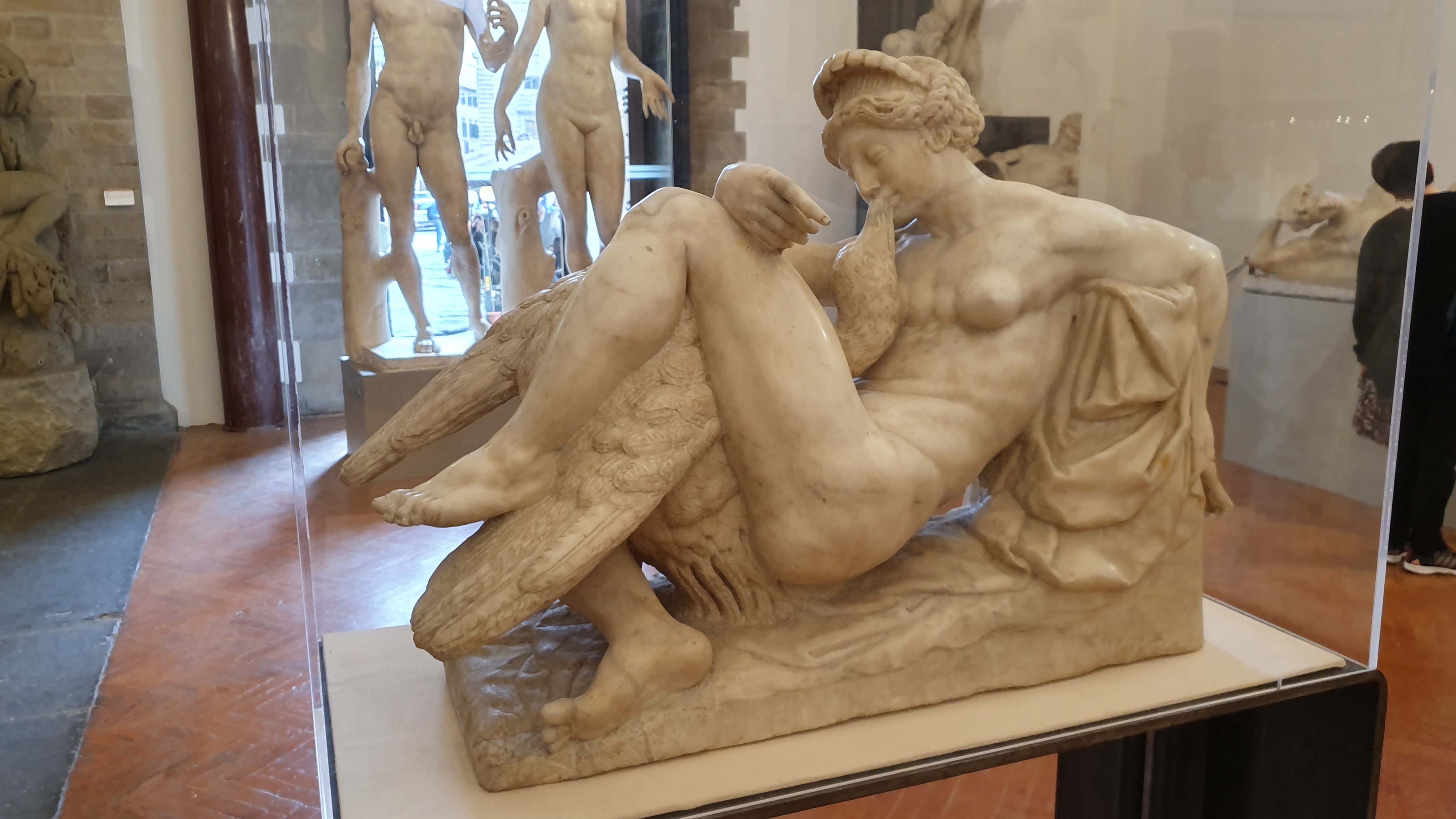
I can’t help recalling Bartolomeo Ammanati’s Leda and the Swan in the Bargello.

That is beyond my sights

Another healthy-minded fragment of Archilochus, recorded by Plutarch in his On Tranquility of Mind (10.470b-c):

Accordingly, since they always lack what is beyond them, they are never grateful for what befits their station.

“The possessions of Gyges1 rich in gold are of no concern to me, not yet have I been seized with jealousy of him, I do not envy the deeds of the gods, and I have no love of tyranny. That is beyond my sights.”


εἶθ᾿ οὕτως ἀεὶ τῶν ὑπὲρ ἑαυτοὺς ἐνδεεῖς ὄντες οὐδέποτε τοῖς καθ᾿ ἑαυτοὺς χάριν ἔχουσιν.

οὔ μοι τὰ Γύγεω τοῦ πολυχρύσου μέλει,
οὐδ᾿ εἷλέ πώ με ζῆλος, οὐδ᾿ ἀγαίομαι
θεῶν ἔργα, μεγάλης δ᾿ οὐκ ἐρέω τυραννίδος·
ἀπόπροθεν γάρ ἐστιν ὀφθαλμῶν ἐμῶν.

It may seem a pedantic distinction but the Greek of ‘beyond my sights’ feels somehow stronger to me – it is more like ‘far from my eyes.’

The ways of wisdom are steep (σοφίαι μέν αἰπειναί)

A phrase from the end of Pindar’s Olympian 9 (104-108) that I always find more striking than I probably should and am now trying to justify to myself as worth the interest.

for some paths
are longer than others,
and no single training will develop
us all. The ways of wisdom
are steep …

ἐντὶ γὰρ ἄλλαι
ὁδῶν ὁδοὶ περαίτεραι,
μία δ᾿ οὐχ ἅπαντας ἄμμε θρέψει
μελέτα· σοφίαι μέν
αἰπειναί …

αἰπεινός is an adjective related to the far more common αἰπύς, both meaning something like ‘high, steep, sheer’. The full definitions of αἰπύς from Liddell Scott and Cunliffe’s Homeric Dictionary are below but, in short form, the word mostly appears in Epic and Lyric and the primary use is with cities, hills, and anything physically high up. An extended use later develops that allows application to what I’ll term vertiginous abstracts – death, darkness, anger, trickery, and toil (though you could probably argue for death as a transitional usage, its poetic conception ranging between a physical presence and a personified notion).

LSJ:

αἰπύς, εῖα, ύ, Ep. and Lyr. Adj., rare in Trag.,

high and steep, in Hom. mostly of cities on rocky heights, esp. of Troy, Od. 3.485, al.; of hills, Il. 2.603; later of the sky, αἰθήρ B. 3.36; οὐρανός S. Aj. 845; on high, ποδῶν αἰ. ἰωή Hes. Th. 682; ἁψαμένη βρόχον αἰπύν hanging high, Od. 11.278.

metaph., sheer, utter, αἰ. ὄλεθρος freq. in Hom., death being regarded as the plunge from a high precipice; φόνος αἰ. Od. 4.843; θάνατος Pi. O. 10(11).42; σκότος utter darkness, Id. Fr. 228; of passions, etc., αἰ. χόλος towering wrath, Il. 15.223; δόλος αἰ. h.Merc. 66, Hes. Th. 589; αἰπυτάτη σοφίη AP 11.354 (Agath.); arduous, πόνος Il. 11.601, 16.651; αἰπύ οἱ ἐσσεῖται ʼtwill be hard work for him, 13.317.

Cunliffe:

αἰπύς -εῖα, -ύ.

Steep, sheer: ὄρος Il. 2.603. Cf. Il. 2.811, 829, Il. 5.367, 868, Il. 11.711, Il. 15.84: αἰπεῖα εἰς ἅλα πέτρη (running sheer down into the sea) Od. 3.293. Cf. Od. 3.287, Od. 4.514, Od. 19.431. Applied to walls Il. 6.327, Il. 11.181: Od. 14.472. Of a noose, hung from on high Od. 11.278.
Of cities, set on a steep Il. 2.538, Il. 9.668, Il. 15.71: Od. 3.485, Od. 10.81, Od. 15.193.

Fig., difficult, hard.In impers. construction : αἰπύ οἱ ἐσσεῖται Il. 13.317. Of ὄλεθρος (thought of as a precipice or gulf), sheer, utter Il. 6.57, Il. 10.371, Il. 11.174, 441, Il. 12.345, 358, Il. 13.773, Il. 14.99, 507=Il. 16.283, Il. 16.859, Il. 17.155, 244, Il. 18.129: Od. 1.11, 37, Od. 5.305, Od. 9.286, 303, Od. 12.287, 446, Od. 17.47, Od. 22.28, 43, 67. Sim. of φόνος Il. 17.365: Od. 4.843, Od. 16.379. Of the toil and moil of war, hard, daunting Il. 11.601, Il. 16.651. Of wrath, towering Il. 15.223.

The less common αἰπεινός shows only the first use in Homer – the physical application. Again, Cunliffe:

αἰπεινός -ή, -όν[αἰπύς.]

Steep, sheer: Μυκάλης κάρηνα Il. 2.869. Cf. Il. 20.58: Od. 6.123. Rocky, rugged: Καλυδῶνι Il. 13.217, Il. 14.116.
Of cities, set on a steep Il. 2.573, Il. 6.35, Il. 9.419 = 686, Il. 13.773, Il. 15.215, 257, 558, Il. 17.328.

But then in Pindar’s four uses of αἰπεινός, two are figurative applications. One (Nemean 5.32) is explicable through comparison with the extended uses of αἰπύς seen in Hesiod’s Theogony (589) at the presentation of Pandora and the Homeric Hymn to Hermes (66). First Hesiod:

θαῦμα δ᾽ ἔχ᾽ ἀθανάτους τε θεοὺς θνητούς τ᾽ ἀνθρώπους,
ὡς εἶδον δόλον αἰπύν, ἀμήχανον ἀνθρώποισιν.

And wonder took hold of the deathless gods and mortal men when they saw that which was sheer guile, not to be withstood by men.

And then Hermes:

ἆλτο κατὰ σκοπιὴν εὐώδεος ἐκ μεγάροιο
ὁρμαίνων δόλον αἰπὺν ἐνὶ φρεσίν, οἶά τε φῶτες
φηληταὶ διέπουσι μελαίνης νυκτὸς ἐν ὥρῃ.

[He] sprang from the sweet-smelling hall to a watch-place, pondering sheer trickery in his heart —deeds such as knavish folk pursue in the dark night-time;

The context of both scenes is the realm of subterfuge. Pandora is intended as an inescapable (ἀμήχανον) evil slipped in amongst men. Hermes – who coincidentally leaps to a watching place (σκοπιὴ) to do so – makes thieving plans. The same context is activated below in Pindar’s telling of Hippolyta attempting to persuade her husband to ambush Peleus. I bold the relevant phrases but the main point is that we have here only the extended, metaphorical use. There is no element of the physical:

And, after a prelude
to Zeus, they first sang of august Thetis
and Peleus, telling how elegant Hippolyta, Cretheus’
daughter, sought to snare him by a trick, after she
persuaded her husband, overseer of the Magnesians,
to be an accomplice through her elaborate designs:
she put together a falsely fabricated tale,
claiming that in Acastus’ own marriage bed
he was trying to gain her wifely
love. But the opposite was true, for again and again
with all her heart she begged him beguilingly.
But her precipitous words provoked his anger,
and he immediately rejected the wife,

αἱ δὲ πρώτιστον μὲν ὕμνησαν Διὸς ἀρχόμεναι σεμνὰν Θέτιν
Πηλέα θ᾿, ὥς τέ νιν ἁβρὰΚρηθεῒς Ἱππολύτα δόλῳ πεδᾶσαι
ἤθελε ξυνᾶνα Μαγνήτων σκοπόν
πείσαισ᾿ ἀκοίταν ποικίλοις βουλεύμασιν,
ψεύσταν δὲ ποιητὸν συνέπαξε λόγον,
ὡς ἦρα νυμφείας ἐπείρα κεῖνος ἐν λέκτροις Ἀκάστου

εὐνᾶς· τὸ δ᾿ ἐναντίον ἔσκεν· πολλὰ γάρ νιν παντὶθυμῷ
παρφαμένα λιτάνευεν. τοῖο δ᾿ ὀργὰν κνίζον αἰπεινοὶ λόγοι·
εὐθὺς δ᾿ ἀπανάνατο νύμφαν,

(As an aside, I would add here the consideration that there’s a second or alternate influence on this use in Pindar – that αἰπεινοὶ in ‘τοῖο δ᾿ ὀργὰν κνίζον αἰπεινοὶ λόγοι’ is a transferred modifier, the background idea being ‘but her words provoked his precipitous anger.’ This sense would draw from the metaphorical application of αἰπύς to passions.)

Coming at last back to launching point in Olympian 9:

for some paths
are longer than others,
and no single training will develop
us all. The ways of wisdom
are steep …

ἐντὶ γὰρ ἄλλαι
ὁδῶν ὁδοὶ περαίτεραι,
μία δ᾿ οὐχ ἅπαντας ἄμμε θρέψει
μελέτα· σοφίαι μέν
αἰπειναί …

There is an easy near parallel to this thought flow in Hesiod’s Works and Days (286-292):

σοὶ δ᾽ ἐγὼ ἐσθλὰ νοέων ἐρέω, μέγα νήπιε Πέρση.
τὴν μέν τοι κακότητα καὶ ἰλαδὸν ἔστιν ἑλέσθαι
ῥηιδίως: λείη μὲν ὁδός, μάλα δ᾽ ἐγγύθι ναίει:
τῆς δ᾽ ἀρετῆς ἱδρῶτα θεοὶ προπάροιθεν ἔθηκαν
ἀθάνατοι: μακρὸς δὲ καὶ ὄρθιος οἶμος ἐς αὐτὴν
καὶ τρηχὺς τὸ πρῶτον: ἐπὴν δ᾽ εἰς ἄκρον ἵκηται,
ῥηιδίη δὴ ἔπειτα πέλει, χαλεπή περ ἐοῦσα.

To you, foolish Perses, I will speak good sense. Badness can be got easily and in shoals; the road to her is smooth, and she lives very near us. But between us and Goodness the gods have placed the sweat of our brows; long and steep is the path that leads to her, and it is rough at the first; but when a man has reached the top, then is she easy to reach, though before that she was hard.

Substitute Pindar’s σοφίαι for Hesiod’s ἀρετή (goodness, excellence – more), αἰπειναί for ὄρθιος (straight up, steep – more), and ὁδοὶ for οἶμος ( way, road – more) and you’re in the same region of folk wisdom. But what you get different with Pindar is typical of his construction generally – a marked condensing of thought alongside a heightened intensity. He manages the effect here through a unique (in surviving work) use of αἰπεινός that forces activation of both its physical and metaphorical senses – basically I read his σοφίαι μέν αἰπειναί as pulling together the entirety of Hesiod’s
τῆς δ᾽ ἀρετῆς ἱδρῶτα θεοὶ προπάροιθεν ἔθηκαν / ἀθάνατοι: μακρὸς δὲ καὶ ὄρθιος οἶμος ἐς αὐτὴν. It hits not just the physical difficulty of ὄρθιος οἶμος but also – calling in the metaphorical use of αἰπύς – the attendant psychic strain of τῆς δ᾽ ἀρετῆς ἱδρῶτα θεοὶ προπάροιθεν ἔθηκαν ἀθάνατοι (between us and Goodness the gods have placed the sweat of our brows). Wisdom here is difficult to reach like an elevated city or cliff and daunting to encounter/overcome like death, treachery, and the darker passions.

Truly a path longer than others.


What do I care about that shield?

A fragment of Archilochus, recorded by Plutarch in Ancient Customs of the Spartans (34.239b):

When the poet Archilochus arrived in Sparta, they drove him out at once, because they learned that in his poetry he had said that it was better to throw away one’s arms than to be killed:

Some Saian exults in my shield which I left—a faultless weapon—beside a bush against my will. But I saved myself. What do I care about that shield? To hell with it! I’ll get one that’s just as good another time.


Ἀρχίλοχον τὸν ποιητὴν ἐν Λακεδαίμονι γενόμενον αὐτῆς ὥρας ἐδίωξαν, διότι ἐπέγνωσαν αὐτὸν πεποιηκότα ὡς κρεῖττόν ἐστιν ἀποβαλεῖν τὰ ὅπλα ἢ ἀποθανεῖν·

ἀσπίδι μὲν Σαΐων τις ἀγάλλεται, ἣν παρὰ θάμνῳ,
ἔντος ἀμώμητον, κάλλιπον οὐκ ἐθέλων·
αὐτὸν δ᾿ ἐξεσάωσα. τί μοι μέλει ἀσπὶς ἐκείνη;
ἐρρέτω· ἐξαῦτις κτήσομαι οὐ κακίω.