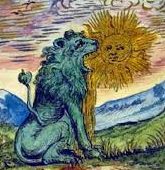
Cumae and Avernus

Strabo (5.4.5) on the local legends of Cumae and Avernus (the home of the Sybil and site of Aeneas’ descent to the underworld):

Near to Cumæ is the promontory of Misenum, and between them is the Acherusian Lake, … Former writers, mingling fable with history, have applied to Avernus the expressions of Homer in his Invocation of Departed Spirits, and relate that here formerly was an oracle of the dead, and that it was to this place that Ulysses came. …These hills, now so beautifully cultivated were formerly covered with wild forests, gigantic and impenetrable, which overshadowed the gulf, imparting a feeling of superstitious awe. The inhabitants affirm that birds, flying over the lake, fall into the water, being stifled by the vapours rising from it, a phenomenon of all Plutonian localities. They believed, in fact, that this place was a Plutonium, around which the Kimmerians used to dwell, and those who sailed into the place made sacrifice and propitiatory offerings to the infernal deities, as they were instructed by the priests who ministered at the place. There is here a spring of water near to the sea fit for drinking, from which, however, every one abstained, as they supposed it to be water from the Styx: [they thought likewise] that the oracle of the dead was situated some where here; and the hot springs near to the Acherusian Lake indicated the proximity of Pyriphlegethon. Ephorus, peopling this place with Kimmerii, tells us that they dwell in under-ground habitations, named by them Argillæ, and that these communicate with one another by means of certain subterranean passages; and that they conduct strangers through them to the oracle, which is built far below the surface of the earth. They live on the mines together with the profits accruing from the oracle, and grants made to them by the king [of the country]. It was a traditional custom for the servants of the oracle never to behold the sun, and only to quit their caverns at night. It was on this account that the poet said,

“ On them the Sun
Deigns not to look with his beam-darting eye.” Odys. xi. 15.

At last, however, these men were exterminated by one of the kings, the oracle having deceived him; but [adds Ephorus] the oracle is still in existence, though removed to another place. Such were the myths related by our ancestors. But now that the wood surrounding the Avernus has been cut down by Agrippa, the lands built upon, and a subterranean passage cut from Avernus to Cumæ, all these appear fables. Perhaps Cocceius, who made this subterranean passage, wished to follow the practice of the Kimmerians we have already described, or fancied that it was natural to this place that its roads should be made under-ground.

The Greek can be found here.

Et j’ai deux fois vainqueur traversé l’Achéron

Spiralling associative chains, beginning with the Sybil to Aeneas (6.135):

Quod si tantus amor menti, si tanta cupido est,
bis Stygios innare lacus, bis nigra videre
Tartara, et insano iuvat indulgere labori,
accipe, quae peragenda prius.

In Ahl’s Oxford Classics:

Yet, if there’s love so strong in your mind, so mighty a passion
Twice to float over the Stygian lakes, twice gaze upon deep black
Tartarus, if it’s your pleasure to wanton in labours of madness,
Grasp what you must do first.

And moving to Gerard de Nerval’s El Desdichado:

Je suis le ténébreux,- le Veuf, – l’inconsolé,
Le Prince d’Aquitaine à la tour abolie:
Ma seule étoile est morte, et mon luth constellé
Porte le soleil noir de la Mélancolie.

Dans la nuit du Tombeau, Toi qui m’as consolé,
Rends-moi le Pausilippe et la mer d’Italie,
La fleur qui plaisait tant à mon coeur désolé,
Et la treille où le Pampre à la rose s’allie.

Suis-je Amour ou Phoebus ?…. Lusignan ou Biron ?
Mon front est rouge encor du baiser de la Reine ;
J’ai rêvé dans la grotte où nage la Sirène…

Et j’ai deux fois vainqueur traversé l’Achéron :
Modulant tour à tour sur la lyre d’Orphée
Les soupirs de la Sainte et les cris de la Fée.

And in the Penguin Selected Writings translation by Richard Sieburth:

I am the man of gloom – the widower – the unconsoled, the prince of Aquitaine, his tower in ruins: My sole star is dead – and my constellated lute bears the Black Sun of Melancholia.

In the night of the tomb, you who consoled me, give me back Posilipo and the Italian sea, the flower that so pleased my desolate heart, and the arbour where the vine and the rose are entwined.

Am I Amor or Phoebus? … Lusignan or Biron? My brow still burns from the kiss of the queen; I have dreamed in the grotto where the siren swims …

And I have twice victorious crossed the Acheron: Modulating on Orpheus’ lyre now the sighs of the saint, now the fairy’s cry.

And back to the beginning, a Homeric hapax from Odyssey 12.21, Circe to Odysseus:

σχέτλιοι, οἳ ζώοντες ὑπήλθετε δῶμ᾽ Ἀίδαο,
δισθανέες, ὅτε τ᾽ ἄλλοι ἅπαξ θνῄσκουσ᾽ ἄνθρωποι.

Unwearying, you who alive go down to the house of Hades,
twice-dying, when other men die once.

Closing with an unrelated echo from Dante, Inferno 24 4. Which commentaries tell me is also a hapax suggested by Jude’s (12) ‘arbores…. bis mortuae’ (trees twice dead).

e l’ombre, che parean cose rimorte,
per le fosse de li occhi ammirazione
traean di me, di mio vivere accorte.

And the Longfellow translation:

And shadows, that appeared things doubly dead,
From out the sepulchres of their eyes betrayed
Wonder at me, aware that I was living.


Each of the drinking cups, which charmingly sailed across the water like boats …

I set out yesterday to find a volume of Sidonius Apollinaris’ letters but ended with an even lesser known contemporary, Aristaenetus. He seems to have lived on either side of 500 C.E. and the introduction of this edition of his Erotic Letters (‘the first complete English translation of Aristaenetus in nearly three centuries’ and, curiously, published by the Society of Biblical Letters) of course makes the case that he deserves a wider readership and a kinder critical evaluation (a recent scholar called him “a jackdaw, embellishing his pages with vivid passages and phrases culled verbatim or with minimal alteration from a variety of earlier authors”). I am unconvinced but if you like New Comedy and its descendants you might feel differently. Here is one of his more charming passages – from Letter 1.3, given by the translators the title A Hetaira and a Youth Feasting Together Under a Tree. It reminds me of catching noodles in a bamboo flume (nagashi somen as here).

Together with Leimone, I pleasurably feasted in a garden that seemed just made for love and a good match for the beauty of my darling. There was an enormous plane tree providing shade; a gentle breeze; soft grass covered with flowers, as is typical during summer (reclining on the ground was like lying on the most expensive carpets); and many trees heavy with fruit: “pears, pomegranates, and apples, glorious in their yield,” to use Homer’s words in describing the grove of the harvest nymphs right there
….
This, though, was the greatest of all delights, by the Graces: While a man running irrigation channels quickly led the water to the garden plots and trees with his mattock, our servant, from afar, put bowls filled with the most delicious beverages into the watercourse so that they would be carried more speedily by the current, not jumbled all together, but one by one, separated from each other by short intervals. Each of the drinking cups, which charmingly sailed across the water like boats, carried with it a leafy shoot of the Median plant; these served as sails for our bowls on their merry journey. So, naturally steered by a calm and peaceful breeze, like ships sailing fast with the wind behind their stern, they, together with their delightful cargo, happily landed close to the drinkers. We, in turn, assiduously grabbed each cup, as it ran past, and drank down the moderate blend, which contained equal parts of wine and water. For the cupbearer, who knew how to mix things just right, had on purpose combined wine warmer than required with red-hot water. The heat was in proportion to the icy water that was about to cool down the mixture floating on its surface, so that, the surplus of warmth reduced by the cold, the resulting temperature would be as desired.

And the Greek:

Τῇ Λειμώνῃ χαριέντως ἐν ἐρωτικῷ συνειστιώμην παραδείσῳ καὶ μάλα πρέποντι τῷ κάλλει τῆς ἐρωμένης· ἔνθα πλάτανος μὲν ἀμφιλαφής τε καὶ σύσκιος, πνεῦμα δὲ μέτριον, καὶ πόα μαλθακὴ ὥρᾳ θέρους ἐπανθεῖν εἰωθυῖα (ἐπὶ τοῦ πεδίου κατεκλίθημεν οἷα τῶν πολυτελεστάτων δαπίδων) δένδρη τε πολλὰ τῆς ὀπώρας πλησίον, “ὄγχναι καὶ ῥοιαὶ καὶ μηλέαι ἀγλαόκαρποι,” φαίη τις ἂν καθομηρίζων τῶν ὀπωρινῶν αὐτόθι Νυμφῶν τὸ χωρίον
…..
κἀκεῖνό γε, νὴ τὰς Χάριτας, ἐπιτερπέστατον ἦν· τοῦ γὰρ ὀχετηγοῦ κατὰ τάχος ἐπὶ πρασιάς τε καὶ δένδρα τῇ σμινύῃ καθηγουμένου τῷ ῥεύματι, πόρρωθεν ὁ θεράπων φιάλας καλλίστου πόματος πλήρεις ἐπὶ τὸν ὁλκὸν ἠφίει θᾶττον φέρεσθαι κατὰ ῥοῦν, οὐ χύδην, ἀλλὰ κατὰ μίαν, ἐκ διαστήματος βραχέος διακεκριμένας ἀλλήλων· ἕκαστον δὲ τῶν ἐκπωμάτων δίκην ὁλκάδων ἐπιχαρίτως διεκπλεόντων πτόρθον Μηδικοῦ φυτοῦ ἐπεφέρετο εὔφυλλον, καὶ ἦν ταῦτα ταῖς εὐπλοούσαις ἡμῶν φιάλαις ἱστία. τοιγαροῦν αὐτοφυῶς ἠρεμαίᾳ καὶ ἀταράχῳ πνοῇ κυβερνώμεναι, καθάπερ νῆες ταχυναυτήσασαι κατὰ πρύμναν ἱσταμένου τοῦ πνεύματος, σὺν τοῖς ἡδίστοις φόρτοις εἰς τοὺς συμπότας εὔδιον προσωρμίζοντο· ἡμεῖς δὲ ὑπουργῶς ἀνασπῶντες ἑκάστην παραθέουσαν κύλικα συνεπίνομεν ἴσον ἴσῳ κεκραμένην μετρίως· ὁ γὰρ ἔμμετρος οἰνοχόος ἐξεπίτηδες τοσούτῳ
θερμότερον τοῦ δέοντος τὸν οἶνον συνέμισγεν ὕδατι διαπύρῳ, ὅσον ἔμελλεν ὁ ψυχρότατος ὁλκὸς ἐπιπολάζον αὐτῷ τὸ κραθὲν ἐπιψύχειν, ὅπως ἄν, μόνης γε τῆς ἀμέτρου θέρμης τῷ ψυχρῷ μειουμένης, τὸ σύμμετρον καταλείψοιτο.

Do not take opium, but put salt and vinegar in the soul’s wound

From Miguel de Unamuno’s The Tragic Sense of Life in Men and Nations (somewhere toward the end of the chapter The Practical Problem):

The cure for suffering–which, as we have said, is the collision of consciousness with unconsciousness–is not to be submerged in unconsciousness, but to be raised to consciousness and to suffer more. The evil of suffering is cured by more suffering, by higher suffering. Do not take opium, but put salt and vinegar in the soul’s wound, for when you sleep and no longer feel the suffering, you are not. And to be, that is imperative. Do not then close your eyes to the agonizing Sphinx, but look her in the face and let her seize you in her mouth and crunch you with her hundred thousand poisonous teeth and swallow you. And when she has swallowed you, you will know the sweetness of the taste of suffering.

And the Spanish:

“El remedio al dolor, que es, dijimos, el choque de la conciencia en la inconsciencia no es hundirse en ésta, sino elevarse a aquélla y sufrir más. Lo malo del dolor se cura con más dolor, con más alto dolor. No hay que darse opio, sino poner vinagre y sal en la herida del alma, porque cuando te duermas y no sientas ya el dolor, es que no eres. Y hay que ser. No cerréis, pues, los ojos a la Esfinge acongojadora, sino miradla cara a cara, y dejad que os coja y os masque en su boca de cien mil dientes venenosos y os trague. Veréis qué dulzura cuando os haya tragado, qué dolor más sabroso.”

Un dì si venne a me Malinconia

Sonnet 41 (or LXXII) of Dante, first in the Foster and Boyde Oxford edition of Dante’s Lyric Poetry

One day Melancholy came to me and said: ‘I want to
stay with you awhile’; and it seemed to me she brought
Sorrow and Wrath with her as companions. And I said:
‘Be off! Away with you!’ But she answered like a Greek:
and while she continued speaking with me, perfectly at her
ease, I looked and saw Love drawing near, dressed in
a new black cloak, with a hat on his head, and weeping
real tears. And I said to him: ‘What’s the matter, poor
fellow?’ And he replied: ‘I’m troubled and sad, for our
lady is dying, dear brother.’

And Richard Lansing in the more recent University of Toronto Dante’s Lyric Poetry:

Once Melancholy came to me and said
“I plan to stay with you a little while”;
and it appeared to me she’d brought along
both Sorrow and Distress for company.
I said to her, “Away with you, be gone!”
But like a Greek she answered haughtily
and while she spoke to me with perfect ease,
I looked and saw the Love was drawing near,
attired in brand-new clothing that was black,
and wearing on his head a hat as well,
and he was truly weeping real tears.
I said to him: “What troubles you, poor man?”
And he replied: “I mourn and feel deep pain
because our lady, brother, lies near death.”

And now the Italian – the Societa Dantesca Italiana text:

Un dì si venne a me Malinconia
e disse: “Io voglio un poco stare teco”;
e parve a me ch’ella menasse seco
Dolore e Ira per sua compagnia.

E io le dissi: “Partiti, va via”;
ed ella mi rispose come un greco:
e ragionando a grande agio meco,
guardai e vidi Amore, che venia

vestito di novo d’un drappo nero,
e nel suo capo portava un cappello;
e certo lacrimava pur di vero.

Ed eo li dissi: “Che hai, cattivello?”.
Ed el rispose: “Eo ho guai e pensero,
ché nostra donna mor, dolce fratello”.

Then, for the first time, brutal horror beset me on all sides

Thanks to the sprawl of associations from Troilus and Cressida I took up The Aeneid last night. And this evening, in an effort to get my wife on board a simultaneous reading, I read her most of Aeneas’ account of Troy’s fall. She fell asleep as always so I’m not sure it landed (to be fair, we were in bed). Regardless, I found the translation – by Frederick Ahl, whom I once had as professor – more enjoyable than what I remember of the now semi-standard Fitzgerald so at least someone benefited. Here is Priam’s death at 2.226-263:

‘Look, one of Priam’s sons, named Polites, has just escaped Pyrrhus’
Murderous hand. Past enemy lines, dodging spears, he is fleeing
Down through long colonnades and is crossing the now empty courtyard
Wounded. But hot on his heels, and intent on inflicting the death-blow
Pyrrhus pursues, and he’s now within arm’s reach, he’s thrusting his javelin.
Lurching in front of the faces and eyes of his parents, Polites
Finally crumples and spews out life in a fountain of dark blood.
Priam, at this point, though already trapped in a circle of killing,
Can’t hold back. For he doesn’t suppress all his wrath, he proclaims it.
“You will pay dear for this crime,” he declares, “you will pay for this outrage.
If any power in heaven feels righteous concern in such matters,
May gods show you the thanks you deserve, pay you back in the proper
Coinage for staging my son’s death here, and for making me watch it,
You have disfigured a father’s face with the blood of his son’s death.
You are no child of Achilles, you liar. He never mistreated
Priam, his foe, like this! He blushed for shame, he respected
Rights that are granted a suppliant, he showed good faith by returning
Hector’s blood-drained corpse for interment, and me to my kingdom.”
Once he’d spoken, the elderly man made a feeble strike with a powerless
Spear. And it fell, with a clang, on the bronze shield, instantly halted,
Then dangled limply down from the top of its central embossment.
Pyrrhus replied: “You’ll report this, then, to my father Achilles,
Fully, in person. Remember to tell of my grisly actions!
Call Neoptolemus just what he is: a degenerate bastard.
Now: die.”
‘While he was speaking, he pounced on the quivering Priam
Dragged the king, slipping in pools of his own son’s blood, to the altar,
Grabbed his hair, yanked back his head with his left, with his right drew his gleaming
Sword which he then buried up to the hilt in the flank of the old king.
So ended Priam’s role, as prescribed by the fates. His allotted
Exit made him a spectator at Troy’s Fires, Pergamum’s Ruin,
This man once in command of so many countries and peoples,
Ruler of Asia! He’s now a huge trunk lying dead on the seashore,
Head torn away from his shoulders, a thing without name, a cadaver.
‘Then, for the first time, brutal horror beset me on all sides.
Rooted me down stock-still. Stealing into my mind came my cherished
Father’s face as I watched that king, just his age, being butchered,
Gasping his life out. Then in stole the thought of Creusa, deserted,
Thoughts of my home being plundered, the fate of my little Iulus.

And the Latin:

Ecce autem elapsus Pyrrhi de caede Polites,
unus natorum Priami, per tela, per hostis
porticibus longis fugit, et vacua atria lustrat
saucius: illum ardens infesto volnere Pyrrhus
insequitur, iam iamque manu tenet et premit hasta.
Ut tandem ante oculos evasit et ora parentum,
concidit, ac multo vitam cum sanguine fudit.
Hic Priamus, quamquam in media iam morte tenetur,
non tamen abstinuit, nec voci iraeque pepercit:
“At tibi pro scelere,” exclamat, “pro talibus ausis,
di, si qua est caelo pietas, quae talia curet,
persolvant grates dignas et praemia reddant
debita, qui nati coram me cernere letum
fecisti et patrios foedasti funere voltus.
At non ille, satum quo te mentiris, Achilles
talis in hoste fuit Priamo; sed iura fidemque
supplicis erubuit, corpusque exsangue sepulchro
reddidit Hectoreum, meque in mea regna remisit.”
Sic fatus senior, telumque imbelle sine ictu
coniecit, rauco quod protinus aere repulsum
e summo clipei nequiquam umbone pependit.
Cui Pyrrhus: “Referes ergo haec et nuntius ibis
Pelidae genitori; illi mea tristia facta
degeneremque Neoptolemum narrare memento.
Nunc morere.” Hoc dicens altaria ad ipsa trementem
traxit et in multo lapsantem sanguine nati,
implicuitque comam laeva, dextraque coruscum
extulit, ac lateri capulo tenus abdidit ensem.
Haec finis Priami fatorum; hic exitus illum
sorte tulit, Troiam incensam et prolapsa videntem
Pergama, tot quondam populis terrisque superbum
regnatorem Asiae. Iacet ingens litore truncus,
avolsumque umeris caput, et sine nomine corpus.
At me tum primum saevus circumstetit horror.
Obstipui; subiit cari genitoris imago,
ut regem aequaevum crudeli volnere vidi
vitam exhalantem; subiit deserta Creüsa,
et direpta domus, et parvi casus Iuli.

A pelting kind of thersitical satire, as black as the very ink ’tis wrote with

A history of the reception of Thersites would be a fun project.

A prepping quote from Tristram Shandy:

And first, it may be said, there is a pelting kind of thersitical satire, as black as the very ink ’tis wrote with——(and by the bye, whoever says so, is indebted to the muster-master general of the Grecian army, for suffering the name of so ugly and foul-mouth’d a man as Thersites to continue upon his roll——for it has furnish’d him with an epithet)

And a sample of Shakespeare’s indulging in the thersitical vein, from Troilus and Cressida (5.1):

THERSITES
Prithee, be silent, boy; I profit not by thy talk:
thou art thought to be Achilles’ male varlet.
PATROCLUS
Male varlet, you rogue! what’s that?
THERSITES
Why, his masculine whore. Now, the rotten diseases
of the south, the guts-griping, ruptures, catarrhs,
loads o’ gravel i’ the back, lethargies, cold
palsies, raw eyes, dirt-rotten livers, wheezing
lungs, bladders full of imposthume, sciaticas,
limekilns i’ the palm, incurable bone-ache, and the
rivelled fee-simple of the tetter, take and take
again such preposterous discoveries!

Arden adds these enlightening but effect-deflating glosses:

guts-griping … palsies ‘colic or other spasms of the abdoment, hernias, common colds or other infections of nose and throat, severe cases of kidney stones, illnesses like stroke that result in torpor or inertness, severe termor and paralysis

(From Longer notes) …The list comprises: chronic eye inflammation, liver ailments like hepatitis, asthma, bladder infections caused by cysts or abscesses (impostumes), lower back pain (sciaticas), gout (which can produce white lumps in the joints and knuckles) or else psoriasis (causing dry, reddish itchy patches on the skin of the hand), bone-ache (including the ‘Neapolitan bone-ache’ or syphilis), and pustular outbreaks of the skin caused by herpes, impetigo, ringworm, etc. This last, the tetter, produces a rivelled fee-simple or irreversible wrinkling.

The best good Man, with the worst natur’d Muse

Two years later, an addendum to an image from Dickens’ Christmas Carol – Like a bad lobster in a dark cellar. There I’d mentioned a similar image in a quote from John Randolph – “He is a man of splendid abilities but utterly corrupt. He shines and stinks, like a rotten mackerel by moonlight.” Today I have either a background source for Randolph or – more likely – a third independent observation of the same kind. While reading the works of John Wilmot last week I found the following line in his An Allusion to Horace:

For pointed Satyrs, I wou’d Buckhurst choose,
The best good Man, with the worst natur’d Muse.

I, of course, follow a clue to a man with the ‘worst natur’d Muse’ and find that Buckhurst (Charles Sackville, Lord Buckhurst) was indeed savage in wit. Here is only one of his attacks on Catherine Sedley, a sometime mistress of the future James II:


Tell me, Dorinda, why so gay,
Why such embroidery, fringe and lace,
Can any dresses find a way
To stop th’ approaches of decay,
And mend a ruined face? …

So have I seen in larder dark
Of veal a lucid loin,
Replete with many a brilliant spark,
As wise philosophers remark,
At once both stink and shine.

And give to dust that is a little gilt more laud than gilt o’er-dusted.

From Troilus and Cressida (3.3), somewhat ironically (given his tradition) spoken by Ulysses:

One touch of nature makes the whole world kin,
That all with one consent praise new-born gawds,
Though they are made and moulded of things past,
And give to dust that is a little gilt
More laud than gilt o’er-dusted.

The wordplay requires activating two senses of both gilt (the adjective – thinly covered in gold – and the noun – gold itself) and dust (the noun – worthless matter – and the adjective – lightly covered in such).

Make me happy for a moment

An underwhelming Masters Sunday pick-me-up, from Giacomo Leopardi’s Operette Morali. The translation here is the Gutenberg Charles Edwards but I’d much recommend the bilingual edition from University Of California press.  The Italian text can be found here:


DIALOGUE BETWEEN MALAMBRUNO AND FARFARELLO.
Malambruno. Spirits of the deep, Farfarello, Ciriatto, Raconero, Astarotte, Alichino, or whatever else you are called, I adjure you in the name of Beelzebub, and command you by virtue of my art, which can unhinge the moon, and nail the sun in the midst of the heavens, come one of you with your prince’s permission, to put all the powers of hell at my disposal.

Farfarello. Here I am.

Mal. Who are you?

Far. Farfarello, at thy service.

Mal. Have you the mandate of Beelzebub?

Far. I have; and can thus do for thee all that the king himself could do, and more than lies in the power of all other creatures together.

Mal. It is well. I wish to be satisfied in but one desire.

Far. Thou shalt be obeyed. What is it? Dost thou wish for majesty surpassing that of the Atrides?

Mal. No.

Far. More wealth than shall be found in El Dorado, when it is discovered? Mal. No.

Far. An empire as large as that of which Charles V. dreamt one night?

Mal. No.

Far. A mistress chaster than Penelope?

Mal. No: methinks the devil’s aid were superfluous for that.

Far. Honours and success, however wicked thou mayst be?

Mal. I should rather more need the devil, if I wished the contrary, under such circumstances.

Far. Then what dost thou want?

Mal. Make me happy for a moment.

Far. I cannot.

Mal. Why?

Far. I give you my word of honour—I cannot do it.

Mal. The word of honour of a good demon?

Far. Yes, to be sure. Thou shouldest know that there are good devils as well as good men.

Mal. And you must know that I will hang you by the tail to one of these beams if you do not instantly obey me without more words.

Far. It were easier for you to kill me, than for me to satisfy your demands.

Mal. Then return with my malediction, and let Beelzebub come himself.

Far. Beelzebub and the whole army of hell would be equally powerless to render you or any of your race happy.

Mal. Not even for a single moment?

Far. As impossible for a moment, half a moment, or the thousandth part of a moment, as for a lifetime.

Mal. Well, since you cannot make me happy in any way, at least free me from unhappiness.

Far. On condition that you no longer love yourself above everything else.

Mal. I shall only cease doing that when I die.

Far. But as long as you live you will be unable to do it. Your nature would tolerate anything rather than that.

Mal. So it is.

Far. Consequently, loving yourself above everything, you desire your own happiness more than anything. But because this is unattainable, you must necessarily be unhappy.

Mal. Even when engaged in pleasure; since no gratification can make me happy, or satisfy me.

Far. Truly none.

Mal. And because pleasure cannot satisfy my soul’s innate desire for happiness, it is not true pleasure, and during its continuance I shall still be unhappy.

Far. As you say: because in men and other living beings, the deprivation of happiness, even though pain and misfortune be wanting, implies express unhappiness. This, too, during the continuance of so-called pleasures.

Mal. So that from birth to death our unhappiness never ceases for an instant.

Far. Yes, it ceases whenever you sleep dreamlessly, or when, from one cause or another, you are deprived of your senses.

Mal. But never, so long as we are sensible that we live.

Far. Never.

Mal. So that in fact it were better not to live than to live.

Far. If the absence of unhappiness be better than unhappiness itself.

Mal. Then?

Far. Then if you would like to give me your soul before its time, I am ready to carry it away with me.