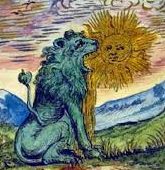
But before proceeding I must beg very serious persons not to read this

From the introductory chapter to Anatole France’s Abeille.

But before proceeding I must beg very serious persons not to read this. It is not written for them. It is not written for grave people who despise trifles and who always require to be instructed. I only venture to offer this to those who like to be entertained, and whose minds are both young and gay. Only those who are amused by innocent pleasures will read this to the end. Of these I beg, should they have little children, that they will tell them about my Honey-Bee. I wish this story to please both boys and girls and yet I hardly dare to hope it will. It is too frivolous for them and, really, only suitable for old-fashioned children. I have a pretty little neighbour of nine whose library I examined the other day. I found many books on the microscope and the zoophytes, as well as several scientific story-books. One of these I opened at the following lines: “The cuttle-fish Sepia Officinalis is a cephalopodic mollusc whose body includes a spongy organ containing a chylaqueous fluid saturated with carbonate of lime.” My pretty little neighbour finds this story very interesting. I beg of her, unless she wishes me to die of mortification, never to read the story of Honey-Bee.


Mais, avant d’aller plus avant, je supplie les personnes graves de ne point me lire. Ceci n’est pas écrit pour elles. Ceci n’est point écrit pour les âmes raisonnables qui méprisent les bagatelles et veulent qu’on les instruise toujours. Je n’ose offrir cette histoire qu’aux gens qui veulent bien qu’on les amuse et dont l’esprit est jeune et joue parfois.

Ceux à qui suffisent des amusements pleins d’innocence me liront seuls jusqu’au bout. Je les prie, ceux-là, de faire connaître mon Abeille à leurs enfants, s’ils en ont de petits. Je souhaite que ce récit plaise aux jeunes garçons et aux jeunes filles ; mais, à vrai dire, je n’ose l’espérer. Il est trop frivole pour eux et bon seulement pour les enfants du vieux temps. J’ai une jolie petite voisine de neuf ans dont j’ai examiné l’autre jour la bibliothèque particulière. J’y ai trouvé beaucoup de livres sur le microscope et les zoophytes, ainsi que plusieurs romans scientifiques. J’ouvris un de ces derniers et je tombai sur ces lignes : « La sèche, Sepia officinalis, est un mollusque céphalopode dont le corps contient un organe spongieux à trame de chiline associé à du carbonate de chaux. » Ma jolie petite voisine trouve ce roman très intéressant. Je la supplie, si elle ne veut pas me faire mourir de honte, de ne jamais lire l’histoire d’Abeille.

Today when I met Lao-tzu, it was like meeting a dragon

From Red Pine’s introduction to his edition of the Taoteching.  Something like a Chinese version of Solon and Croesus, only with better thinkers and more likely to be true.

In the same year [516BC], the Keeper of the Royal Archives, which were still in
Wangcheng, received a visitor from the state of Lu. The visitor was a young
man named Kung Fu-tzu, or Confucius. Confucius was interested in ritual
and asked Lao-tzu about the ceremonies of the ancient kings.

According to Ssu-ma Ch’ien, Lao-tzu responded with this advice: “The ancients you admire have been in the ground a long time. Their bones have
turned to dust. Only their words remain. Those among them who were wise
rode in carriages when times were good and slipped quietly away when times
were bad. I have heard that the clever merchant hides his wealth so his store
looks empty and that the superior man acts dumb so he can avoid calling
attention to himself. I advise you to get rid of your excessive pride and
ambition. They won’t do you any good. This is all I have to say to you.” Afterwards, Confucius told his disciples, “Today when I met Lao-tzu, it was like
meeting a dragon.”

perdidi Musam tacendo, nec me Phoebus respicit

The conclusion to the Pervigilium Veneris from the Loeb edition of Catullus, Tibullus, and the Pervigilium.

She sings, I am mute. When will my spring come? When shall I become like the swallow, that I may cease to be voiceless? I have lost my Muse through being voiceless, and Phoebus regards me not: so did Amyclae, through being voiceless, perish by its very silence.


illa cantat, nos tacemus. quando ver venit meum?
quando fiam uti chelidon, ut tacere desinam?
perdidi Musam tacendo, nec me Phoebus respicit:
sic Amyclas, cum tacerent, perdidit silentium.
cras amet qui numquam amavit, quique amavit cras amet!

a delightful touch, in its practical combination of those not normally kindred pursuits, ornithology and gun-running

From early in Theodore Roosevelt’s Through the Brazilian Wilderness.  I listened to a podcast this morning about photojournalist Loren McIntyre’s encounter with an uncontacted (or at least very little contacted) people of the Amazon, a story told in full in Petru Popesco’s Amazon Beaming.  That book I’ve had to buy to be able to read but the Amazon look inside preview included an epigraph from Roosevelt’s now public-domain work so here we are now, as Roosevelt describes one of the members of his expedition.

The men whom Chapman recommended were Messrs. George K. Cherrie and Leo E. Miller …. Cherrie had spent about twenty-two years collecting in the American tropics. Like most of the field-naturalists I have met, he was an unusually efficient and fearless man; and willy-nilly he had been forced at times to vary his career by taking part in insurrections. Twice he had been behind the bars in consequence, on one occasion spending three months in a prison of a certain South American state, expecting each day to be taken out and shot. In another state he had, as an interlude to his ornithological pursuits, followed the career of a gun-runner, acting as such off and on for two and a half years. The particular revolutionary chief whose fortunes he was following finally came into power, and Cherrie immortalized his name by naming a new species of ant-thrush after him—a delightful touch, in its practical combination of those not normally kindred pursuits, ornithology and gun-running.


Suus cuique attributus est error

Catullus XXII.  I’m sure there are better translations than the Loeb prose – though they’re all butchery to some degree – but ctrl+c/ctrl+v makes a strong counter-argument.

Svffenvs iste, Vare, quem probe nosti,
homost venustus et dicax et urbanus,
idemque longe plurimos facit versus.
puto esse ego illi milia aut decem aut plura
perscripta, nec sic ut fit in palimpsesto
relata: chartae regiae, novi libri,
novi umbilici, lora rubra, membranae,
derecta plumbo, et pumice omnia aequata.
haec cum legas tu, bellus ille et urbanus
10Suffenus unus caprimulgus aut fossor
rursus videtur: tantum abhorret ac mutat.
hoc quid putemus esse? qui modo scurra
aut siquid hac re scitius videbatur,
idem infacetost infacetior rure,
simul poemata attigit; neque idem umquam
aequest beatus ac poema cum scribit:
tam gaudet in se tamque se ipse miratur.
nimirum idem omnes fallimur, nequest quisquam
quem non in aliqua re videre Suffenum
possis. suus cuique attributus est error:
sed non videmus manticae quod in tergost.


That Suffenus, Varus, whom you know very well, is a charming fellow, and has wit and good manners. He also makes many more verses than any one else. I suppose he has got some ten thousand or even more written out in full, and not, as is often done, put down on used sheets; imperial paper, new rolls, new bosses, red ties, parchment wrappers; all ruled with lead and smoothed with pumice. When you come to read these, the fashionable well-bred Suffenus I spoke of this time seems to be nothing but any goatherd or ditcher; so unlike himself and changed he is. How are we to account for this? The same man who was just now a dinner-table wit or someone (if such there be) even smarter, is more clumsy than the clumsy country, whenever he touches poetry; and at the same time he is never so happy as when he is writing a poem, he delights in himself and admires himself so much. True enough, we all are under the same delusion, and there is no one whom you may not see to be a Suffenus in one thing or another. Everybody has his own delusion assigned to him: but we do not see that part of the bag which hangs on our back.

By the time one has read them all one does not know what to think about anything

From Anatole France’s Le Crime de Sylvestre Bonnard:

– Que de livres ! s’écria-t-elle. Et vous les avez tous lus, monsieur Bonnard ?

– Hélas ! oui, répondis-je, et c’est pour cela que je ne sais rien du tout, car il n’y a pas un de ces livres qui n’en démente un autre, en sorte que, quand on les connaît tous, on ne sait que penser. J’en suis là, madame.


“What a lot of books!” she cried. “And have you really read them all, Monsieur Bonnard?”

“Alas! I have,” I replied, “and that is just the reason that I do not know anything; for there is not a single one of those books which does not contradict some other book; so that by the time one has read them all one does not know what to think about anything. That is just my condition, Madame.”

Parler français comme une vache espagnole

A curious phrase I learned from Balzac’s Splendeurs et misères des courtisanes (with a recentish Penguin translation as A Harlot High and Low) that came to mind this morning when I ran into a cow while hiking:

Jacques Collin parlait le français comme une vache espagnole

Jacques Collin spoke French like a Spanish cow

The first appearance of the idiom is securely dated to the mid 17th century but the origin is disputed.  These are the three theories I can find:

  1.  ‘Vache’ is a deformation of ‘vasques’ from Latin ‘vasco’ and originally referred to a Gascon or a Basque.  The former were traditionally regarded as a bit backwoods (D’Artagnan is the best known instance of a Gascon bumpkin-ish character) while the latter were equally backwoods with the added disadvantage of being foreign.
  2. ‘Vache’ is a deformation of ‘basse’, which at the time referred to a servant woman of foreign origins whose French was predictably poor.
  3. It blends an existing ‘comme une vache’ that generically slurred the performance of any action with a 17th century nationalist distaste for the Spanish.

Per publicam viam ne ambules

Erasmus’ Adagia 2.12.

Per publicam viam ne ambules

Λεωφόρου μὴ βαδίζειν, id est Per publicam viam ne ambules. Diuus Hieronymus
exponit: Ne vulgi sequaris errores. Nunquam enim tam bene cum rebus humanis
actum est, vt optima plurimis placuerint. Vnde quidam hoc sic efferunt: Viam
regiam declinato, per semitas ingreditor. Quod quidem praeceptum non abhorret
ab Euangelica doctrina, quae monet, vt declinata via spaciosa per quam
ambulant plerique, per angustam ingrediamur viam a paucis quidem tritam,
sed ducentem ad immortalitatem.

Do not walk along the public way.  Saint Jerome explains: Do not follow the errors of the crowd.  Indeed, never in human affairs has it been possible to act such that the best actions are pleasing to the majority.  For this reason certain authors say it in this way: Avoid the royal road, take the by-ways.  A precept which itself is not in disagreement with the evangelical doctrine, which warns that we should turn away from the spacious way by which the many walk and go by the narrow path which is trod by few but leads to immortality.

As a child, I loved you; lately, I have run you down; now, I forgive you

From Villers de l’Isle-Adam’s Le visions Merveilleuses du Dr. Tribulat Bonhomet. 

Left alone, Monsieur Bonhomet felt the need to set things right with God, to whom he had so long displayed such wise antagonism. (It goes without saying that, everyone having only the God whom he consents to give thought to, the God of Doctor Bonhomet probably differs in numerous respects from the God of Isaiah, Saint Paul, Saint Laurent, Saint Blandine, Christopher Columbus, Saint Louis, Saint Bernard, Blaise Pascal and many other superficial souls seemingly deprived of the enlightenment of that dear Good Sense of which we others, spoiled children of the Ages, have obtained through our discoveries–without fear of contradiction–the exclusive monopoly.)

“Lord!” called the prudent Doctor, interlacing his fingers. “As a child, I loved you; lately, I have run you down; now, I forgive you.”


Demeuré seul, M. Bonhomet ressentit le besoin de se remettre avec le dieu, dont il s’était tant de fois montré le si sagace antagoniste.—(Il va sans dire que chacun n’ayant de Dieu que ce qu’il accepte d’en penser, le dieu du docteur diffère peut-être, en quelques points, du dieu d’Isaïe, de saint Paul, de saint Laurent, de sainte Blandine, de Christophe Colomb, de saint Louis, de saint Bernard, de Pascal, et de quelques autres âmes superficielles, dénuées, paraît-il, des lumières de ce cher Bon sens, dont nous autres, enfants gâtés des Époques, avons, sans contredit, depuis nos découvertes, l’exclusif monopole).

—Seigneur! clamait l’avisé docteur en entrelaçant ses doigts,—tout enfant, je vous ai aimé: ultérieurement, je vous ai conspué; actuellement, je vous pardonne.

But meanwhile I am enjoying my friends’ teasing

From Pliny’s Letters (5.13) – I note this passage as an instance of Pliny’s relaxing of his authorial persona – of allowing a view to a less constructed version of his self.  Where several times he hints, as immediately below in 4.14 and 5.3, at the livelier sides of his personality, he rarely allows those elements into his published letters so they’re all the more welcome and effective when they do appear.

4.14:

With this letter you will receive some hendecasyllables of mine with which I amuse myself when I have time to spare in my carriage, my bath, or at dinner. Here are my jokes and witticisms, my loves, sorrows, complaints and vexations; now my style is simple, now more elevated, and I try through variety to appeal to different tastes and produce a few things to please everyone.


Accipies cum hac epistula hendecasyllabos nostros, quibus nos in vehiculo in balineo inter cenam oblectamus otium temporis. His iocamur ludimus amamus dolemus querimur irascimur, describimus aliquid modo pressius modo elatius, atque ipsa varietate temptamus efficere, ut alia aliis quaedam fortasse omnibus placeant.

5.3:

I admit that I do often write verse which is far from serious, for I also listen to comedy, watch farces, read lyric poetry, and appreciate Sotadic verse; there are besides times when I laugh, make jokes, and enjoy my fun, in fact I can sum up all these innocent relaxations in a word “I am human.”


facio non numquam versiculos severos parum, facio; nam et comoedias audio et specto mimos et lyricos lego et Sotadicos intellego; aliquando praeterea rideo iocor ludo, utque omnia innoxiae remissionis genera breviter amplectar, homo sum.

5.13:

But before a vote could be taken, Nigrinus, the tribune of the people, read out a well-phrased statement of great importance. In this he complained that counsel sold their services, faked lawsuits for money, settled them by collusion, and made a boast of the large regular incomes to be made by robbery of their fellow-citizens. He quoted the relevant paragraphs of the law, reminded the Senate of its decrees, and ended by saying that our noble Emperor should be asked to remedy these serious evils himself, since the law and the Senate’s decrees were fallen into contempt. After a few days the Emperor issued a decree, which was firm but moderate in tone. It is published in the official records, so you can read it.

How glad I am that I have always kept clear of any contracts, presents, remunerations, or even small gifts for my conduct of cases! It is true that one ought to shun dishonesty as a shameful thing, not because it is illegal; but, even so, it is a pleasure to find an official ban on a practice one would never have permitted oneself. Perhaps I shall lose some of the credit and reputation I won from my resolve—in fact I am sure to do so, when everyone is compelled to behave as I did of my own free will—but meanwhile I am enjoying my friends’ teasing, when they hail me as a prophet or pretend that this measure is directed against my own robberies and greed.


Sed prius quam sententiae dicerentur, Nigrinus tribunus plebis recitavit libellum disertum et gravem, quo questus est venire advocationes, venire etiam praevaricationes, in lites coiri, et gloriae loco poni ex spoliis civium magnos et statos reditus. Recitavit capita legum, admonuit senatus consultorum, in fine dixit petendum ab optimo principe, ut quia leges, quia senatus consulta contemnerentur, ipse tantis vitiis mederetur. Pauci dies, et liber principis severus et tamen moderatus: leges ipsum; est in publicis actis. Quam me iuvat, quod in causis agendis non modo pactione dono munere verum etiam xeniis semper abstinui! Oportet quidem, quae sunt inhonesta, non quasi inlicita sed quasi pudenda vitare; iucundum tamen si prohiberi publice videas, quod numquam tibi ipse permiseris. Erit fortasse, immo non dubie, huius propositi mei et minor laus et obscurior fama, cum omnes ex necessitate facient quod ego sponte faciebam. Interim fruor voluptate, cum alii divinum me, alii meis rapinis meae avaritiae occursum per ludum ac iocum dictitant. Vale.