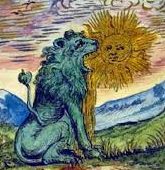
From Bernard Suits’ The Grasshopper: Games, Life, and Utopia. For lack of confidence in my ability to sum up this more than odd Socratic meta-dialogue I’ll borrow a review blurb from David Braybrooke now slapped on the cover of a recent reprinting:
Like Erasmus’s Praise of Folly and Diderot’s Rameau’s Nephew, Suits’s The Grasshopper sparkles with wit and fun; and outranks those wonderful works in clear, firm philosophical conclusions. Defying certain discouragements, Suits constructs an illuminating definition of games, which he defends in lively dialogues, amusing parables, and cascades of subtle analytical distinctions. That is achievement enough to make a new classic in the history of philosophy. Suits offers more: an application of his definition in a discussion of how much we may have to rely on games—deliberately using relatively inefficient means to reach freely stipulated goals—if life is to continue to have meaning. We may be able to regain thereby the meaning lost as advances in technology enable us to escape one by one the tasks that necessity used to impose on humankind.
Below is a lengthy – 5 pages – extract from the conclusion of the work. New editions include additional materials from the author and there’s also a recent sequel – The Return of the Grasshopper: Games, Leisure and the Good Life in the Third Millennium – that I’ve pulled but not yet begun.
Skepticus: I shall be happy to do so. When you were advancing the view that science, or any kind of intellectual inquiry, was an instrumental activity and thus could have no place in the moral ideal of man, I had some misgivings, and now I believe I know why. You know, Grasshopper, as well as I do, that people who are seriously engaged in the pursuit of knowledge value that pursuit at least as much as they do the knowledge which is its goal. Indeed, it is a commonplace that once a scientist or philosopher after great effort solves a major problem he is very let down, and far from rejoicing in the possession of his solution or discovery, he cannot wait to be engaged once more in the quest. Success is something to shoot at, not to live with. And of course, now that I think of it, this is true not only of intellectual inquiry, but it certainly can be true of any instrumental activity whatever, and frequently is. We might call this state of affairs the Alexandrian condition of man, after Alexander the Great. When there are no more worlds to conquer we are filled not with satisfaction but with despair.
Grasshopper: How do you think we could have made such an elementary mistake, Skepticus?
S: I think we failed to take note of the fact that an activity which is, from one point of view, instrumentally valuable can, from another point of view, be intrinsically valuable. Thus, we would agree that carpentry is an instrumental activity; that is, instrumental to the existence of houses. But to a person who enjoys building for its own sake, that otherwise instrumental activity has intrinsic value as well. And the same could be true of anyone who really enjoys his work, whatever that work might be. It seems to follow from this that we may now re-instate most of the activities we thought we were obliged to banish from Utopia. The ideal, therefore, does not consist wholly in game playing.
G: I believe you are correct, Skepticus, in pointing out that otherwise instrumental activities can be valued as ends in themselves. But I am not convinced that it follows from that fact that game playing is not the only possible Utopian occupation. Let me see if I can persuade you of this. Let us continue to think of the moral ideal of man as an actual Utopian community, then, but where, instead of supposing that allso to speak – objectively instrumental activities have been banishedphysical and intellectual labour, and the like – what has been banished is simply all activity which is not valued intrinsically, thus leaving it open to any Utopian to enjoy the exertions of productive endeavour. Thus, just as some Utopians will be able to pluck yachts and diamonds off Utopian trees, others will be able to pluck off opportunities to fix the kitchen sink, to solve economic problems, to push forward the frontiers of scientific knowledge, and so on, with respect to anything a Utopian might find intrinsically valuable.
S: Yes, Grasshopper. That seems a much more satisfactory picture of Utopia and of the ideal of existence.
G: Splendid. Now, to continue. It is clear, I should think, that the opportunity to work – or whatever other instrumental activity it might be which is desired – should not be left to chance in Utopia. If, at any given period of time, everyone in Utopia wanted to work at something, then such work should be available for them all. And if nobody wanted to work, then it would not follow (as it surely would in our present non-Utopian existence) that society would collapse. And similarly, of course, with intellectual inquiry. That is to say, with respect to any objectively instrumental activity whatever, it would have to be the case that such activity could be undertaken, but it would also have to be the case that no such activity need be undertaken. For another way of saying that the Utopians only do those things which they value intrinsically is to say that they always do things because they want to, and never because they must.
S: Yes, that seems correct.
G: Very well. Now let us consider two cases that would inevitably arise in Utopia.
Case One: John Striver has spent his first decade in Utopia doing all the things that newcomers to Utopia usually do. He has travelled round the world several times, loafed a good deal in the sun, and so on, and now, having become bored, he wants some activity to be engaged in. He therefore makes a request (to the Computer in Charge or to God or whatever) saying that he wants to work at something, and he selects carpentry. Now, there is no demand for houses which John’s carpentry will serve, because all the houses of whatever possible kind are already instantly available to the citizens of Utopia. What kind of house, then, should he build? Surely it would be the kind whose construction would give him the greatest satisfaction, and we may suggest that such satisfaction would require that building the house would provide enough of a challenge to make the task interesting while not being so difficult that John would utterly botch the job. Now, what I would like to put to you, Skepticus, is that this activity is essentially no different from playing golf or any other game. Just as there is no need, aside from the game of golf, to get little balls into holes in the ground, so in Utopia there is no need, aside from the activity of carpentry, for the house which is the product of that carpentry. And just as a golfer could get balls into holes much more efficiently by dropping them in with his hand, so John could obtain a house simply by pressing a telepathic button. But it is clear that John is no more interested in simply having a house than the golfer is in having ball-filled holes. It is the bringing about of these results which is important to John and to the golfer rather than the results themselves. Both, that is to say, are involved in a voluntary attempt to overcome unnecessary obstacles; both, that is to say, are playing games. This solution, it is interesting to note, was also open to Alexander the Great. Since he had run out of worlds to conquer by impetuously conquering the only world there was, he could have given it all back and started over again, just as one divides up the chess pieces equally after each game in order to be able to play another game. Had Alexander done that, his action would no doubt have been regarded by his contemporaries as somewhat frivolous, but from the Utopian point of view his failure to take such an obvious step would indicate that Alexander did not really place all that high a value on the activity of conquering worlds.
Case Two: The early experience of William Seeker in Utopia is very similar to that of John Striver. William, too, after a time, wishes to be able to achieve something. But whereas John’s abilities and interests had led him to choose a manual art, William is led to choose the pursuit of scientific truth. Now again, how much scientific inquiry there is to undertake at any given time cannot be left to chance, since the interests in doing scientific research might far exceed the amount of research that could logically be undertaken at any given time. It is even conceivable that there would come a time when all scientific investigation had come to an end; a time, that is, when everything knowable was in fact known. Since, therefore, there could be no guarantee that there would always be an objective opportunity to do scientific research, it follows that it would be undesirable to have Utopian scientists stop doing research on a problem simply because the problem had already been solved. For what is important in Utopia is not the objective state of scientific knowledge, but the attitude of the Utopian scientist, which may be described in the following way. If the solution of the problem he is working on were readily retrievable from the memory banks of the computers, the Utopian scientist would not retrieve the solution. This is just like the devotee of crossword puzzles who knows that the answers to the puzzle will be published next day. Still, he tries to solve the puzzle today, even though there is no urgency whatever in having the solution today rather than tomorrow. And just as the dedicated puzzle solver will say, ‘Don’t tell me the answer; let me work it out for myself,’ William Seeker will have the same attitude towards his scientific investigations. Even if other means for coming to know the answer are readily available, he voluntarily rejects these means so that he will have something to do. But this is again, I submit, to play a game.
S: What you seem to be saying is that a Utopian could engage in all of the achieving activities that normally occupy people in the nonUtopian world, but that the quality, so to speak, of such endeavours would be quite different.
G: Yes. The difference in quality, as you put it, can be seen in the contrast in attitude of a lumberjack when he is, on the one hand, plying his trade of cutting down trees for the sawmill and, on the other hand, when he is cutting down trees in competition with other lumberjacks at the annual woodcutter’s picnic. Thus, all the things we now regard as trades, indeed all instances of organized endeavour whatever, would, if they continued to exist in Utopia, be sports. So that in addition to hockey, baseball, golf, tennis, and so on, there would also be the sports of business administration, jurisprudence, philosophy, production management, motor mechanics, ad, for all practical purposes, infinitum.
S: So that the moral ideal of man does, after all, consist in game playing.
G: I think not, Skepticus. For now that the Utopians have something to do, both admiration and sharing are again possible, and so love and friendship as well. And with the re-introduction of the emotions associated with striving – the joy of victory, you know, and the bitterness of defeat – emotional content is provided for art. And perhaps morality will also be present, possibly in the form of what we now call sportsmanship. So, while game playing need not be the sole occupation of Utopia, it is the essence, the ‘without which not’ of Utopia. What I envisage is a culture quite different from our own in terms of its basis. Whereas our own culture is based on various kinds of scarcity – economic, moral, scientific, erotic – the culture of Utopia will be based on plenitude. The notable institutions of Utopia, accordingly, will not be economic, moral, scientific, and erotic instruments – as they are today – but institutions which foster sport and other games. But sports and games unthought of today; sports and games that will require for their exploitation – that is, for their mastery and enjoyment – as much energy as is expended today in serving the institutions of scarcity. It behoves us, therefore, to begin the immense work of devising these wonderful games now, for if we solve all of our problems of scarcity very soon, we may very well find ourselves with nothing to do when Utopia arrives.
S: You mean we should begin to store up games- very much like food for winter – against the possibility of an endless and endlessly boring summer. You seem to be a kind of ant after all, Grasshopper, though, I must admit, a distinctly odd kind of ant.
G: No, Skepticus, I am truly the Grasshopper; that is, an adumbration of the ideal of existence, just as the games we play in our non-Utopian lives are intimations of things to come. For even now it is games which give us something to do when there is nothing to do. We thus call games ‘pastimes,’ and regard them as trifling fillers of the interstices in our lives. But they are much more important than that. They are clues to the future. And their serious cultivation now is perhaps our only salvation. That, if you like, is the metaphysics of leisure time.
S: Still, Grasshopper, I find that I have a serious reservation about the Utopia you have constructed. It sounds a grand sort of life for those who are very keen on games, but not everyone is keen on games. People like to be building houses, or running large corporations, or doing scientific research to some purpose, you know, not just for the hell of it.
G: The point is well taken, Skepticus. You are saying that Bobby Fischer and Phil Esposito and Howard Cosell might be very happy in paradise, but that John Striver and William Seeker are likely to find quite futile their make-believe carpentry and their make-believe science.
S: Precisely. (Pause) Well, Grasshopper, what answer do you have to make to this objection? (There is a nother pause) Grasshopper, are you dying again?
G: No, Skepticus.
S: What is it, then? You look quite pale.
G: Skepticus, I have just had a vision.
S: Good lord!
G: Shall I tell you about it?
S: (Skepticus glances furtively at his wrist watch) Yes. Well. Certainly, Grasshopper, please proceed.
G: The vision was evidently triggered by your suggestion that not everyone likes to play games, and it was a vision of the downfall of Utopia, a vision of paradise lost. I saw time passing in Utopia, and I saw the Strivers and the Seekers coming to the conclusion that if their lives were merely games, then those lives were scarcely worth living. Thus motivated, they began to delude themselves into believing that man-made houses were more valuable than computer-produced houses, and that long-solved scientific problems needed resolving. They then began to persuade others of the truth of these opinions and even went so far as to represent the computers as the enemies of mankind. Finally they enacted legislation proscribing their use. Then more time passed, and it seemed to everyone that the carpentry game and the science game were not games at all, but vitally necessary tasks which had to be performed in order for mankind to survive. Thus, although all of the apparently productive activities of man were games, they were not believed to be games. Games were once again relegated to the role of mere pastimes useful for bridging the gaps in our serious endeavours. And if it had been possible to convince these people that they were in fact playing games, they would have felt that their whole lives had been as nothing – a mere stage play or empty dream.
S: Yes, Grasshopper, they would believe themselves to be nothing at all, and one can imagine them. out of chagrin and mortification. simply vanishing on the spot. as though they had never been.
G: Quite so. Skeptic us. As you are quick to see. my vision has solved the final mystery of my dream. The message of the dream now seems perfectly clear. The dream was saying to me. ‘Come now. Grasshopper. you know very well that most people will not want to spend their lives playing games. Life for most people will not be worth living if they cannot believe that they are doing something useful. whether it is providing for their families or formulating a theory of relativity.’
S: Yes. it seems a perfectly straightforward case of an anxiety dream. You were acting out in a disguised way certain hidden fears you had about your thesis concerning the ideal of existence.
G: No doubt. But tell me, Skeptic us. were my repressed fears about the fate of mankind. or were they about the cogency of my thesis? Clearly they could not have been about both. For if my fears about the fate of mankind are justified. then I need not fear that my thesis is faulty. since it is that thesis which justifies those fears. And if my thesis is faulty. then I need not fear for mankind. since that fear stems from the cogency of my thesis.
S: Then tell me which you feared. Grasshopper. You alone are in a position to know.
G: I wish there were time. Skepticus. but again I feel the chill of death. Goodbye.
S: Not goodbye. Grasshopper. au revoir.
 Extracts