With nothing shall be pleased, till he be eased with being nothing

The first half of Richard’s great prison monologue from Richard II (5.5):

I have been studying how I may compare
This prison where I live unto the world:
And for because the world is populous
And here is not a creature but myself,
I cannot do it; yet I’ll hammer it out.
My brain I’ll prove the female to my soul,
My soul the father; and these two beget
A generation of still-breeding thoughts,
And these same thoughts people this little world,
In humours like the people of this world,
For no thought is contented. The better sort,
As thoughts of things divine, are intermix’d
With scruples and do set the word itself
Against the word:
As thus, ‘Come, little ones,’ and then again,
‘It is as hard to come as for a camel
To thread the postern of a small needle’s eye.’
Thoughts tending to ambition, they do plot
Unlikely wonders; how these vain weak nails
May tear a passage through the flinty ribs
Of this hard world, my ragged prison walls,
And, for they cannot, die in their own pride.
Thoughts tending to content flatter themselves
That they are not the first of fortune’s slaves,
Nor shall not be the last; like silly beggars
Who sitting in the stocks refuge their shame,
That many have and others must sit there;
And in this thought they find a kind of ease,
Bearing their own misfortunes on the back
Of such as have before endured the like.
Thus play I in one person many people,
And none contented: sometimes am I king;
Then treasons make me wish myself a beggar,
And so I am: then crushing penury
Persuades me I was better when a king;
Then am I king’d again: and by and by
Think that I am unking’d by Bolingbroke,
And straight am nothing: but whate’er I be,
Nor I nor any man that but man is
With nothing shall be pleased, till he be eased
With being nothing. Music do I hear?

Teach thy necessity to reason thus

From Richard II (1.3.275) – Shakespeare in a decidedly Senecan frame.

All places that the eye of heaven visits
Are to a wise man ports and happy havens.
Teach thy necessity to reason thus;
There is no virtue like necessity.
Think not the king did banish thee,
But thou the king. Woe doth the heavier sit,
Where it perceives it is but faintly borne.
Go, say I sent thee forth to purchase honour
And not the king exiled thee; or suppose
Devouring pestilence hangs in our air
And thou art flying to a fresher clime:
Look, what thy soul holds dear, imagine it
To lie that way thou go’st, not whence thou comest:
Suppose the singing birds musicians,
The grass whereon thou tread’st the presence strew’d,
The flowers fair ladies, and thy steps no more
Than a delightful measure or a dance;
For gnarling sorrow hath less power to bite
The man that mocks at it and sets it light.

Moonshine and Lion are left to bury the dead

From A Midsummer Night’s Dream (5.1) – too perfect to break apart. If I ever wrote a murder mystery I would consider calling it ‘Moonshine and Lion are left to bury the dead.’

THESEUS
Let him approach.
Flourish of trumpets

Enter QUINCE for the Prologue

Prologue
If we offend, it is with our good will.
That you should think, we come not to offend,
But with good will. To show our simple skill,
That is the true beginning of our end.
Consider then we come but in despite.
We do not come as minding to contest you,
Our true intent is. All for your delight
We are not here. That you should here repent you,
The actors are at hand and by their show
You shall know all that you are like to know.
THESEUS
This fellow doth not stand upon points.
LYSANDER
He hath rid his prologue like a rough colt; he knows
not the stop. A good moral, my lord: it is not
enough to speak, but to speak true.
HIPPOLYTA
Indeed he hath played on his prologue like a child
on a recorder; a sound, but not in government.
THESEUS
His speech, was like a tangled chain; nothing
impaired, but all disordered. Who is next?
Enter Pyramus and Thisbe, Wall, Moonshine, and Lion

Prologue
Gentles, perchance you wonder at this show;
But wonder on, till truth make all things plain.
This man is Pyramus, if you would know;
This beauteous lady Thisby is certain.
This man, with lime and rough-cast, doth present
Wall, that vile Wall which did these lovers sunder;
And through Wall’s chink, poor souls, they are content
To whisper. At the which let no man wonder.
This man, with lanthorn, dog, and bush of thorn,
Presenteth Moonshine; for, if you will know,
By moonshine did these lovers think no scorn
To meet at Ninus’ tomb, there, there to woo.
This grisly beast, which Lion hight by name,
The trusty Thisby, coming first by night,
Did scare away, or rather did affright;
And, as she fled, her mantle she did fall,
Which Lion vile with bloody mouth did stain.
Anon comes Pyramus, sweet youth and tall,
And finds his trusty Thisby’s mantle slain:
Whereat, with blade, with bloody blameful blade,
He bravely broach’d is boiling bloody breast;
And Thisby, tarrying in mulberry shade,
His dagger drew, and died. For all the rest,
Let Lion, Moonshine, Wall, and lovers twain
At large discourse, while here they do remain.
Exeunt Prologue, Thisbe, Lion, and Moonshine

THESEUS
I wonder if the lion be to speak.
DEMETRIUS
No wonder, my lord: one lion may, when many asses do.
Wall
In this same interlude it doth befall
That I, one Snout by name, present a wall;
And such a wall, as I would have you think,
That had in it a crannied hole or chink,
Through which the lovers, Pyramus and Thisby,
Did whisper often very secretly.
This loam, this rough-cast and this stone doth show
That I am that same wall; the truth is so:
And this the cranny is, right and sinister,
Through which the fearful lovers are to whisper.
THESEUS
Would you desire lime and hair to speak better?
DEMETRIUS
It is the wittiest partition that ever I heard
discourse, my lord.
Enter Pyramus

THESEUS
Pyramus draws near the wall: silence!
Pyramus
O grim-look’d night! O night with hue so black!
O night, which ever art when day is not!
O night, O night! alack, alack, alack,
I fear my Thisby’s promise is forgot!
And thou, O wall, O sweet, O lovely wall,
That stand’st between her father’s ground and mine!
Thou wall, O wall, O sweet and lovely wall,
Show me thy chink, to blink through with mine eyne!
Wall holds up his fingers

Thanks, courteous wall: Jove shield thee well for this!
But what see I? No Thisby do I see.
O wicked wall, through whom I see no bliss!
Cursed be thy stones for thus deceiving me!
THESEUS
The wall, methinks, being sensible, should curse again.
Pyramus
No, in truth, sir, he should not. ‘Deceiving me’
is Thisby’s cue: she is to enter now, and I am to
spy her through the wall. You shall see, it will
fall pat as I told you. Yonder she comes.
Enter Thisbe

Thisbe
O wall, full often hast thou heard my moans,
For parting my fair Pyramus and me!
My cherry lips have often kiss’d thy stones,
Thy stones with lime and hair knit up in thee.
Pyramus
I see a voice: now will I to the chink,
To spy an I can hear my Thisby’s face. Thisby!
Thisbe
My love thou art, my love I think.
Pyramus
Think what thou wilt, I am thy lover’s grace;
And, like Limander, am I trusty still.
Thisbe
And I like Helen, till the Fates me kill.
Pyramus
Not Shafalus to Procrus was so true.
Thisbe
As Shafalus to Procrus, I to you.
Pyramus
O kiss me through the hole of this vile wall!
Thisbe
I kiss the wall’s hole, not your lips at all.
Pyramus
Wilt thou at Ninny’s tomb meet me straightway?
Thisbe
‘Tide life, ‘tide death, I come without delay.
Exeunt Pyramus and Thisbe

Wall
Thus have I, Wall, my part discharged so;
And, being done, thus Wall away doth go.
Exit

THESEUS
Now is the mural down between the two neighbours.
DEMETRIUS
No remedy, my lord, when walls are so wilful to hear
without warning.
HIPPOLYTA
This is the silliest stuff that ever I heard.
THESEUS
The best in this kind are but shadows; and the worst
are no worse, if imagination amend them.
HIPPOLYTA
It must be your imagination then, and not theirs.
THESEUS
If we imagine no worse of them than they of
themselves, they may pass for excellent men. Here
come two noble beasts in, a man and a lion.
Enter Lion and Moonshine

Lion
You, ladies, you, whose gentle hearts do fear
The smallest monstrous mouse that creeps on floor,
May now perchance both quake and tremble here,
When lion rough in wildest rage doth roar.
Then know that I, one Snug the joiner, am
A lion-fell, nor else no lion’s dam;
For, if I should as lion come in strife
Into this place, ’twere pity on my life.
THESEUS
A very gentle beast, of a good conscience.
DEMETRIUS
The very best at a beast, my lord, that e’er I saw.
LYSANDER
This lion is a very fox for his valour.
THESEUS
True; and a goose for his discretion.
DEMETRIUS
Not so, my lord; for his valour cannot carry his
discretion; and the fox carries the goose.
THESEUS
His discretion, I am sure, cannot carry his valour;
for the goose carries not the fox. It is well:
leave it to his discretion, and let us listen to the moon.
Moonshine
This lanthorn doth the horned moon present;–
DEMETRIUS
He should have worn the horns on his head.
THESEUS
He is no crescent, and his horns are
invisible within the circumference.
Moonshine
This lanthorn doth the horned moon present;
Myself the man i’ the moon do seem to be.
THESEUS
This is the greatest error of all the rest: the man
should be put into the lanthorn. How is it else the
man i’ the moon?
DEMETRIUS
He dares not come there for the candle; for, you
see, it is already in snuff.
HIPPOLYTA
I am aweary of this moon: would he would change!
THESEUS
It appears, by his small light of discretion, that
he is in the wane; but yet, in courtesy, in all
reason, we must stay the time.
LYSANDER
Proceed, Moon.
Moonshine
All that I have to say, is, to tell you that the
lanthorn is the moon; I, the man in the moon; this
thorn-bush, my thorn-bush; and this dog, my dog.
DEMETRIUS
Why, all these should be in the lanthorn; for all
these are in the moon. But, silence! here comes Thisbe.
Enter Thisbe

Thisbe
This is old Ninny’s tomb. Where is my love?
Lion
[Roaring] Oh–
Thisbe runs off

DEMETRIUS
Well roared, Lion.
THESEUS
Well run, Thisbe.
HIPPOLYTA
Well shone, Moon. Truly, the moon shines with a
good grace.
The Lion shakes Thisbe’s mantle, and exit

THESEUS
Well moused, Lion.
LYSANDER
And so the lion vanished.
DEMETRIUS
And then came Pyramus.
Enter Pyramus

Pyramus
Sweet Moon, I thank thee for thy sunny beams;
I thank thee, Moon, for shining now so bright;
For, by thy gracious, golden, glittering gleams,
I trust to take of truest Thisby sight.
But stay, O spite!
But mark, poor knight,
What dreadful dole is here!
Eyes, do you see?
How can it be?
O dainty duck! O dear!
Thy mantle good,
What, stain’d with blood!
Approach, ye Furies fell!
O Fates, come, come,
Cut thread and thrum;
Quail, crush, conclude, and quell!
THESEUS
This passion, and the death of a dear friend, would
go near to make a man look sad.
HIPPOLYTA
Beshrew my heart, but I pity the man.
Pyramus
O wherefore, Nature, didst thou lions frame?
Since lion vile hath here deflower’d my dear:
Which is–no, no–which was the fairest dame
That lived, that loved, that liked, that look’d
with cheer.
Come, tears, confound;
Out, sword, and wound
The pap of Pyramus;
Ay, that left pap,
Where heart doth hop:
Stabs himself

Thus die I, thus, thus, thus.
Now am I dead,
Now am I fled;
My soul is in the sky:
Tongue, lose thy light;
Moon take thy flight:
Exit Moonshine

Now die, die, die, die, die.
Dies

DEMETRIUS
No die, but an ace, for him; for he is but one.
LYSANDER
Less than an ace, man; for he is dead; he is nothing.
THESEUS
With the help of a surgeon he might yet recover, and
prove an ass.
HIPPOLYTA
How chance Moonshine is gone before Thisbe comes
back and finds her lover?
THESEUS
She will find him by starlight. Here she comes; and
her passion ends the play.
Re-enter Thisbe

HIPPOLYTA
Methinks she should not use a long one for such a
Pyramus: I hope she will be brief.
DEMETRIUS
A mote will turn the balance, which Pyramus, which
Thisbe, is the better; he for a man, God warrant us;
she for a woman, God bless us.
LYSANDER
She hath spied him already with those sweet eyes.
DEMETRIUS
And thus she means, videlicet:–
Thisbe
Asleep, my love?
What, dead, my dove?
O Pyramus, arise!
Speak, speak. Quite dumb?
Dead, dead? A tomb
Must cover thy sweet eyes.
These My lips,
This cherry nose,
These yellow cowslip cheeks,
Are gone, are gone:
Lovers, make moan:
His eyes were green as leeks.
O Sisters Three,
Come, come to me,
With hands as pale as milk;
Lay them in gore,
Since you have shore
With shears his thread of silk.
Tongue, not a word:
Come, trusty sword;
Come, blade, my breast imbrue:
Stabs herself

And, farewell, friends;
Thus Thisby ends:
Adieu, adieu, adieu.
Dies

THESEUS
Moonshine and Lion are left to bury the dead.
DEMETRIUS
Ay, and Wall too.
BOTTOM
[Starting up] No assure you; the wall is down that
parted their fathers. Will it please you to see the
epilogue, or to hear a Bergomask dance between two
of our company?
THESEUS
No epilogue, I pray you; for your play needs no
excuse. Never excuse; for when the players are all
dead, there needs none to be blamed. Marry, if he
that writ it had played Pyramus and hanged himself
in Thisbe’s garter, it would have been a fine
tragedy: and so it is, truly; and very notably
discharged. But come, your Bergomask: let your
epilogue alone.
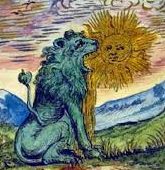
I would not spend another such a night, Though ’twere to buy a world of happy days

From Richard III (1.4). This and Richard’s opening were the first two Shakespeare speeches I memorized. Richard’s is loveable villainy, this one is the more personally revealing choice.

SCENE IV. London. The Tower.
Enter CLARENCE and BRAKENBURY

BRAKENBURY
Why looks your grace so heavily today?

CLARENCE
O, I have pass’d a miserable night,
So full of ugly sights, of ghastly dreams,
That, as I am a Christian faithful man,
I would not spend another such a night,
Though ’twere to buy a world of happy days,
So full of dismal terror was the time!

BRAKENBURY
What was your dream? I long to hear you tell it.

CLARENCE
Methoughts that I had broken from the Tower,
And was embark’d to cross to Burgundy;
And, in my company, my brother Gloucester;
Who from my cabin tempted me to walk
Upon the hatches: thence we looked toward England,
And cited up a thousand fearful times,
During the wars of York and Lancaster
That had befall’n us. As we paced along
Upon the giddy footing of the hatches,
Methought that Gloucester stumbled; and, in falling,
Struck me, that thought to stay him, overboard,
Into the tumbling billows of the main.
Lord, Lord! methought, what pain it was to drown!
What dreadful noise of waters in mine ears!
What ugly sights of death within mine eyes!
Methought I saw a thousand fearful wrecks;
Ten thousand men that fishes gnaw’d upon;
Wedges of gold, great anchors, heaps of pearl,
Inestimable stones, unvalued jewels,
All scatter’d in the bottom of the sea:
Some lay in dead men’s skulls; and, in those holes
Where eyes did once inhabit, there were crept,
As ’twere in scorn of eyes, reflecting gems,
Which woo’d the slimy bottom of the deep,
And mock’d the dead bones that lay scatter’d by.

BRAKENBURY
Had you such leisure in the time of death
To gaze upon the secrets of the deep?

CLARENCE
Methought I had; and often did I strive
To yield the ghost: but still the envious flood
Kept in my soul, and would not let it forth
To seek the empty, vast and wandering air;
But smother’d it within my panting bulk,
Which almost burst to belch it in the sea.

BRAKENBURY
Awaked you not with this sore agony?

CLARENCE
O, no, my dream was lengthen’d after life;
O, then began the tempest to my soul,
Who pass’d, methought, the melancholy flood,
With that grim ferryman which poets write of,
Unto the kingdom of perpetual night.
The first that there did greet my stranger soul,
Was my great father-in-law, renowned Warwick;
Who cried aloud, ‘What scourge for perjury
Can this dark monarchy afford false Clarence?’
And so he vanish’d: then came wandering by
A shadow like an angel, with bright hair
Dabbled in blood; and he squeak’d out aloud,
‘Clarence is come; false, fleeting, perjured Clarence,
That stabb’d me in the field by Tewksbury;
Seize on him, Furies, take him to your torments!’
With that, methoughts, a legion of foul fiends
Environ’d me about, and howled in mine ears
Such hideous cries, that with the very noise
I trembling waked, and for a season after
Could not believe but that I was in hell,
Such terrible impression made the dream.

BRAKENBURY
No marvel, my lord, though it affrighted you;
I promise, I am afraid to hear you tell it.

CLARENCE
O Brakenbury, I have done those things,
Which now bear evidence against my soul,
For Edward’s sake; and see how he requites me!
O God! if my deep prayers cannot appease thee,
But thou wilt be avenged on my misdeeds,
Yet execute thy wrath in me alone,
O, spare my guiltless wife and my poor children!
I pray thee, gentle keeper, stay by me;
My soul is heavy, and I fain would sleep.

That smooth-faced gentleman, tickling Commodity, the bias of the world

From King John (2.1.560ish) – Richard the Bastard’s response to the peace-making marriage Kings John and Philip opt for in place of the intended battle:

Mad world! mad kings! mad composition!
John, to stop Arthur’s title in the whole,
Hath willingly departed with a part,
And France, whose armour conscience buckled on,
Whom zeal and charity brought to the field
As God’s own soldier, rounded in the ear
With that same purpose-changer, that sly devil,
That broker, that still breaks the pate of faith,
That daily break-vow, he that wins of all,
Of kings, of beggars, old men, young men, maids,
Who, having no external thing to lose
But the word ‘maid,’ cheats the poor maid of that,
That smooth-faced gentleman, tickling Commodity*,
Commodity, the bias* of the world,
The world, who of itself is peised well,
Made to run even upon even ground,
Till this advantage, this vile-drawing bias,
This sway of motion, this Commodity,
Makes it take head from all indifferency,
From all direction, purpose, course, intent:
And this same bias, this Commodity,
This bawd, this broker, this all-changing word,
Clapp’d on the outward eye of fickle France,
Hath drawn him from his own determined aid,
From a resolved and honourable war,
To a most base and vile-concluded peace.
And why rail I on this Commodity?
But for because he hath not woo’d me yet:
Not that I have the power to clutch my hand,
When his fair angels would salute my palm;
But for my hand, as unattempted yet,
Like a poor beggar, raileth on the rich.
Well, whiles I am a beggar, I will rail
And say there is no sin but to be rich;
And being rich, my virtue then shall be
To say there is no vice but beggary.
Since kings break faith upon commodity,
Gain, be my lord, for I will worship thee.

*From my Arden (3rd) text: The Bastard’s itemization of Commodity’s qualities in theis speech incorporates an all-encompassing use of the word which defies a single definition: self-interest, advantage, expediency, gain (see OED n. 2b-d and 6b, citing this passage)

*Same source – swaying influence (OED n.5, citing 577-78. Oxford Shakespeare rightly says that the term derives from the game of bowls, in which a weight (bias) was added to one side of the ball, making it roll obliquely.

This fellow pecks up wit as pigeons peas

From Love’s Labour’s Lost (5.2.315)

This fellow pecks up wit as pigeons peas,
And utters it again when God doth please:
He is wit’s pedler, and retails his wares
At wakes and wassails, meetings, markets, fairs;
And we that sell by gross, the Lord doth know,
Have not the grace to grace it with such show.
This gallant pins the wenches on his sleeve;
Had he been Adam, he had tempted Eve;
A’ can carve too, and lisp: why, this is he
That kiss’d his hand away in courtesy;
This is the ape of form, Monsieur the Nice,
That, when he plays at tables, chides the dice
In honourable terms: nay, he can sing
A mean most meanly; and in ushering
Mend him who can: the ladies call him sweet;
The stairs, as he treads on them, kiss his feet:
This is the flower that smiles on every one,
To show his teeth as white as whale’s bone;
And consciences, that will not die in debt,
Pay him the due of honey-tongued Boyet.

His eye begets occasion for his wit

From Love’s Labour’s Lost (2.1), Rosaline first describing Berowne/Biron.

Another of these students at that time
Was there with him, if I have heard a truth.
Biron they call him; but a merrier man,
Within the limit of becoming mirth,
I never spent an hour’s talk withal:
His eye begets occasion for his wit;
For every object that the one doth catch
The other turns to a mirth-moving jest,
Which his fair tongue, conceit’s expositor,
Delivers in such apt and gracious words
That aged ears play truant at his tales
And younger hearings are quite ravished;
So sweet and voluble is his discourse.

A cold premeditation for my purpose!

From Henry VI, part 3 (3.2), a reminder of the delight to come with Richard III

GLOUCESTER
Ay, Edward will use women honourably.
Would he were wasted, marrow, bones and all,
That from his loins no hopeful branch may spring,
To cross me from the golden time I look for!
And yet, between my soul’s desire and me–
The lustful Edward’s title buried–
Is Clarence, Henry, and his son young Edward,
And all the unlook’d for issue of their bodies,
To take their rooms, ere I can place myself:
A cold premeditation for my purpose!
Why, then, I do but dream on sovereignty;
Like one that stands upon a promontory,
And spies a far-off shore where he would tread,
Wishing his foot were equal with his eye,
And chides the sea that sunders him from thence,
Saying, he’ll lade it dry to have his way:
So do I wish the crown, being so far off;
And so I chide the means that keeps me from it;
And so I say, I’ll cut the causes off,
Flattering me with impossibilities.
My eye’s too quick, my heart o’erweens too much,
Unless my hand and strength could equal them.
Well, say there is no kingdom then for Richard;
What other pleasure can the world afford?
I’ll make my heaven in a lady’s lap,
And deck my body in gay ornaments,
And witch sweet ladies with my words and looks.
O miserable thought! and more unlikely
Than to accomplish twenty golden crowns!
Why, love forswore me in my mother’s womb:
And, for I should not deal in her soft laws,
She did corrupt frail nature with some bribe,
To shrink mine arm up like a wither’d shrub;
To make an envious mountain on my back,
Where sits deformity to mock my body;
To shape my legs of an unequal size;
To disproportion me in every part,
Like to a chaos, or an unlick’d bear-whelp
That carries no impression like the dam.
And am I then a man to be beloved?
O monstrous fault, to harbour such a thought!
Then, since this earth affords no joy to me,
But to command, to cheque, to o’erbear such
As are of better person than myself,
I’ll make my heaven to dream upon the crown,
And, whiles I live, to account this world but hell,
Until my mis-shaped trunk that bears this head
Be round impaled with a glorious crown.
And yet I know not how to get the crown,
For many lives stand between me and home:
And I,–like one lost in a thorny wood,
That rends the thorns and is rent with the thorns,
Seeking a way and straying from the way;
Not knowing how to find the open air,
But toiling desperately to find it out,–
Torment myself to catch the English crown:
And from that torment I will free myself,
Or hew my way out with a bloody axe.
Why, I can smile, and murder whiles I smile,
And cry ‘Content’ to that which grieves my heart,
And wet my cheeks with artificial tears,
And frame my face to all occasions.
I’ll drown more sailors than the mermaid shall;
I’ll slay more gazers than the basilisk;
I’ll play the orator as well as Nestor,
Deceive more slily than Ulysses could,
And, like a Sinon, take another Troy.
I can add colours to the chameleon,
Change shapes with Proteus for advantages,
And set the murderous Machiavel to school.
Can I do this, and cannot get a crown?
Tut, were it farther off, I’ll pluck it down.