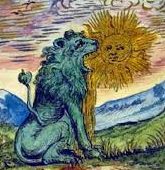
He turned it, churned it, upturned it; spattered it, battered it, bent it, bonked it, dubbed it, scrubbed it, rubbed it …

From Rabelais’ Prologe to the Third Book, a tale of Diogenes borrowed from Lucian’s How to Write History and thoroughly Rabelais-ized.

When Philip, King of Macedonia, undertook to besiege Corinth and reduce it to rubble, the Corinthians, warned by their spies that he was marching against them with a mighty army and vast array, were all rightly alarmed, overlooking nothing, all taking up their posts and doing their duty to resist his hostile advance and defend their city. Some brought everything movable out of the fields and into the fortresses, with their cattle, grain, wine, fruit, victuals and all necessary provisions.

Others repaired the walls, erected bastions, squared off outworks, dug trenches, excavated countermines, reinforced gabions, prepared emplacements, cleared clutter from the casemates, refixed bars on to advanced parapets, built high platforms for cannons, repaired the outer slopes of ditches, plastered the courtines between the bastions, built advanced pill-boxes, banked up earth parapets, keyed stones into barbicans, lined the chutes for molten lead, renewed cables on [Saracen-style] portcullises (or ‘cataracts’), stationed sentinels and sent out patrols.

Everyone was on the alert; everyone was carrying his hod. Some were burnishing breastplates, cleaning corselets and polishing the metal bands and head-armour of their horses, and their own plated jackets, light armour, helmets, [beavers, iron skull-caps, gisarmes,] headpieces, morions, coats of mail, [jaze-rants, wrist-guards, tasses,] gussets, limb-armour, breast-plates, joint-armour, hauberks, body-shields, bucklers, foot-armour, leg-plates, ankle-plates and spurs. Others were readying their bows, slings, crossbows, lead-shot, catapults, [fire-arrows,] fire-grenades, fire-pots, fire-wheels and fire-darts, ballistas, stone-hurling scorpions and other weapons for repelling and destroying siege-towers.

They sharpened spears, pikes, falchions, halberds, hooked spears, [sickles,] lances, zagayes, pitchforks, partisans, bladed maces, battle-axes, darts, javelins, light javelins, long stakes and leisters. They whetted swords, scimitars, broadblades, badlars, [scythes,] short-swords, rapiers, poniards, hangers, spiral-ferruled daggers, pricks, tucks, knives, blades, cutting-edges and dirks. Every man was exercising his prick: every man derusting his dagger. No woman was there, however old or matronly, who did not manage to furbish up her fanion, since you are aware that, of old, the ladies of Corinth would put up a good fight!

Diogenes, seeing all this fervent coming-and-going yet not being employed by the magistrates on anything whatsoever, spent a few days contemplating their behaviour without uttering a word. Then, moved by the martial spirit, he cast his cloke about him like a scarf, rolled his sleeves right up to his elbows, tucked in his robe like a peasant picking apples, entrusted to an ancient companion his shoulder-wallet, his books and his writing-tablets, went forth from the city in the direction of the Cranion (a hill and promontory hard by Corinth) on to the fair esplanade, and there trundled the earthenware barrel which served him as a shelter from inclement weather, and then, flexing his arms with great mental ardour, he turned it, churned it, upturned it; [spattered it,] battered it, bent it, bonked it, [dubbed it, scrubbed it, rubbed it, flattered it,] banged it, beat it; bumped it, topsy’d it, turvy’d it, dribbled it, tapped it, ting-ed it; stoppered it, unstoppered it, paced it, ambled it, shambled it, haggled it; tossed it, stopped it, [prodded it,] shot it; lifted it, laved it, louvered it; hampered it, aimed it, blamed it, blocked it; troubled it, huddled it, splattered it; fashioned it, fastened it; [walloped it, dolloped it, tickled it, tarred it, smutched it, touched it, hawked it, mawked it, hooked it, crooked it, twiddled it, twaddled it,] charmed it, armed it, alarmed it, saddled it, straddled it, caparisoned it, and – volleying it down from mount to vale – tumbled it along the Cranion, and then (as Sisyphus did with his stone) pushed it back up from vale to mount so that he all but holed it.

On seeing which, one of his friends asked him what had possessed him to make him so afflict his mind, body and barrel. Our philosopher replied that, not being employed by the State in any other task, he was storming about with his barrel so as not to be seen as the only one idle and dilatory amidst folk so ardent and busy.


Quand Philippe roy de Macedonie entreprint assieger & ruiner Corinthe, les Corinthiens par leurs espions aduertiz, que contre eulx il venoit en grand arroy & exercite numereux, tous feurent non à tort espouentez, & ne feurent negligens soy soigneusement mettre chascun en office & debuoir, pour à son hostile venue, resister, & leur ville defendre. Les vns des champs es forteresses retiroient meubles, bestail, grains, vins, fruictz, victuailles, & munitions necessaires. Les autres remparoient murailles, dressoient bastions, esquarroient rauelins, cauoient fossez, escuroient contremines, gabionnoient defenses, ordonnoient plates formes, vuidoient chasmates, rembarroient faulses brayes, erigeoient caualliers, ressapoient contrescarpes, enduisoient courtines, taluoient parapetes, enclauoient barbacanes, asseroient machicoulis, renouoient herses Sarrazinesques, & Cataractes, assoyoient sentinelles, forissoient patrouilles. Chascun estoit au guet, chascun portoit la hotte. Les vns polissoient corseletz, vernissoient alecretz, nettoyoient bardes, chanfrains, aubergeons, briguandines, salades, bauieres, cappelines, guisarmes, armetz, mourions, mailles, iazerans, brassalz, tassettes, goussetz, guorgeriz, hoguines, plastrons, lamines, aubers, pauoys, boucliers, caliges, greues, soleretz, esprons. Les autres apprestoient arcs, fondes, arbalestes, glands, catapultes, phalarices, micraines, potz, cercles, & lances à feu : balistes, scorpions, & autres machines bellicques repugnatoires & destructiues des Helepolides. Esguisoient vouges, picques, rancons, halebardes, hanicroches, volains, lancers, azes guayes, fourches fières, parthisanes, massues, hasches, dards, dardelles, iauelines, iauelotz, espieux. Affiloient cimeterres, brands d’assier, badelaires, paffuz, espées, verduns, estocz, pistoletz, viroletz, dagues, mandousianes, poignars, cousteaulx, allumelles, raillons. Chascun exerceoit son penard : chascun desrouilloit son braquemard. Femme n’estoit, tant preude ou vieille feust, qui ne feist fourbir son harnoys : comme vous sçauez que les antiques Corinthiennes estoient au combat couraigeuses.

Diogenes les voyant en telle ferueur mesnaige remuer, & n’estant par les magistratz enployé à chose aulcune faire, contempla par quelques iours leur contenence sans mot dire : puys comme excité d’esprit Martial, ceignit son palle en escharpe, recoursa ses manches iusques es coubtes, se troussa en cueilleur de pommes, bailla à un sien compaignon vieulx sa bezasse, ses livres, & opistographes, feit hors la ville tirant vers la Cranie (qui est une colline & promontoire lez Corinthe) une belle esplanade : y roulla le tonneau fictil, qui pour maison luy estoit contre les iniures du ciel, & en grande vehemence d’esprit desployant ses braz le tournoit, viroit, brouilloit, barbouilloit, hersoit, versoit, renversoit, grattoit, flattoit, barattoit, bastoit, boutoit, butoit, tabustoit, cullebutoit, trepoit, trempoit, tapoit, timpoit, estouppoit, destouppoit, detraquoit, triquotoit, chapotoit, croulloit, elançoit, chamailloit, bransloit, esbranloit, levoit, lavoit, clavoit, entravoit, bracquoit, bricquoit, blocquoit, tracassoit, ramassoit, clabossoit, afestoit, baffouoit, enclouoit, amadouoit, goildronnoit, mittonnoit, tastonnoit, bimbelotoit, clabossoit, terrassoit, bistorioit, vreloppoit, chaluppoit, charmoit, armoit, gizarmoit, enharnachoit, empennachoit, carapassonnoit, le devalloit de mont à val, & præcipitoit par le Cranie : puys de val en mont le rapportoit, comme Sisyphus faict sa pierre : tant que peu s’en faillit, qu’il ne le defonçast. Ce voyant quelqu’un de ses amis, luy demanda, quelle cause le mouvoit, à son corps, son esprit, son tonneau ainsi tormenter ? Auquel respondit le philosophe, qu’à autre office n’estant pour la republicque employé, il en ceste façon son tonneau tempestoit, pour entre ce peuple tant fervent & occupé, n’este veu seul cessateur & ocieux.

Lucian’s more restrained original (section 3):

When Philip was said to be already on the march, all the Corinthians were astir and busy, preparing weapons, bringing up stones, underpinning the wall, shoring up a battlement and doing various other useful jobs. Diogenes saw this, and as he had nothing to do—nobody made any use of him—he belted up his philosopher’s cloak and very busily by himself rolled the crock in which, as it happens, he was living up and down Cornel Hill. When one of his friends asked: “Why are you doing that, Diogenes?” he replied: “I’m rolling the crock so as not to be thought the one idle man in the midst of all these workers.”


ὁπότε γὰρ ὁ Φίλιππος ἐλέγετο ἤδη ἐπελαύνειν, οἱ Κορίνθιοι πάντες ἐταράττοντο καὶ ἐν ἔργῳ ἦσαν, ὁ μὲν ὅπλα ἐπισκευάζων, ὁ δὲ λίθους παραφέρων, ὁ δὲ ὑποικοδομῶν τοῦ τείχους, ὁ δὲ ἔπαλξιν ὑποστηρίζων, ὁ δὲ ἄλλος ἄλλο τι τῶν χρησίμων ὑπουργῶν. ὁ δὴ Διογένης ὁρῶν ταῦτα, ἐπεὶ μηδὲν εἶχεν ὅ τι καὶ πράττοι—οὐδεὶς γὰρ αὐτῷ ἐς οὐδὲν ἐχρῆτο—διαζωσάμενος τὸ τριβώνιον σπουδῇ μάλα καὶ αὐτὸς ἐκύλιε τὸν πίθον, ἐν ᾧ ἐτύγχανεν οἰκῶν, ἄνω καὶ κάτω τοῦ Κρανείου. καί τινος τῶν συνήθων ἐρομένου, Τί ταῦτα ποιεῖς, ὦ Διόγενες; Κυλίω, ἔφη, κἀγὼ τὸν πίθον, ὡς μὴ μόνος ἀργεῖν δοκοίην ἐν τοσούτοις ἐργαζομένοις.

He who loves wine, by God’s body let him follow me!

From ch. 25 (or 27, depending on edition) of Rabelais’ Gargantua, Frere Jean’s inimitable entry to literature defending his monastery from the pillaging of their grape harvest. This is M.A. Screech’s translation and the bracketed bits are the author’s changes to his second edition. The French text he uses is his own 1970 edition published by Droz but I can’t tell – at least in spotty glancing back and forth at notes – much difference against the more easily available Mireille Huchon Pleiade edition.

There was at that time in that abbey a cloistered monk called Frère Jean des Entommeures, young, gallant, lively, lusty, adroit, bold, daring, resolute, tall, slim, loud-mouthed, endowed with an ample nose, a galloper through of mattins, an unbridler of masses [and a polisher-off of vigils]: in short, a true monk if ever there was one since the [monking] world first monked-about [with monkery; and for the rest a cleric up to his teeth where breviary-stuff is concerned].

Upon hearing the din made by the enemy throughout the close of their vineyard, he sallied forth to see what they were up to. Realizing that they were harvesting the grapes on which the entire year’s drinking was based, he returned to the quire of the church where the other monks were assembled, as dazed as bell-founders. On seeing them chanting ‘Im, im, im, pe, e, e, e, e, e, tum, um, in, ni, i, mi, co, o, o, o, o, o, rum, um’, he said, ‘What a good little shitty-dog shanty! God Almighty! Why don’t you chant

Grape-baskets farewell: our vintage is o’er?

The devil take me if they are not inside our close, so thoroughly lopping off fruit and branch that, by the Body of God, there will be nothing but gleanings for four years to come. By the guts of Saint James, what shall we poor devils be drinking in the meantime? Lord God, Give me a drink.’

At which the claustral prior said:

‘What is that hintoxicated fellow here going to do! Let him be led off to the prison. Troubling Divine Service!’

‘The Wine Service!’ said the Monk. ‘Let’s see that it be not troubled! You too, my Lord Prior, love to drink of the best. So do all good men and true. Never hath noble man loathed good wine. [That’s a monastical apophthegm!] But those responses you are chanting here are, by God, out of season. Why are our services short during the harvesting of grain and grape yet so long during Advent and winter? The late Frère Macé Pelosse of blessèd memory (a true zealot for our Order or the devil take me) told me – I remember it well – that the reason is so that we may press and ferment our wine in that season and then quaff it in winter. Harken to me, Gentlemen: He who loves wine, by God’s body let him follow me! For bluntly, may Saint Anthony’s fire burn me if any of those taste the wine who never succoured the vine. Guts of God! It’s church property! Ah! No, no! The devil! Saint Thomas of England was willing enough to die for it. If I died here wouldn’t I be a saint too?

‘But I’m not going to die: I’ll make others do that!’

So saying, he cast off his great habit and grabbed the shaft of the Cross; it was from the heart of a cornel-tree, as long as a lance, rounded for the fist and scattered with a few fleurs-de-lys all but effaced. He sallied forth in a handsome cassock, his frock thrown over like a scarf, and with the shaft of his Cross he lashed out so violently at the enemy who without order, standard, trumpet or drum were harvesting the grapes in the close (for those who bore banner or standard had left them alongside the walls, while the drummers had knocked in one side of their drums so as to fill them with grapes, and the trumpeters were burdened by grape-laden vine-branches: all had broken ranks) he fell so suddenly on them without crying Cave, that he knocked them over like porkers, slashing this way and that as one fenced of old.

In some cases he battered their brains out; in others, he fractured their arms and legs; in others, he dislocated the vertebrae of the neck; and in others, he ruptured the kidneys, bashed in their noses, blacked their eyes, smashed their mandibles, knocked their teeth down their throats, stove in their shoulder-blades, gangrened their legs, dislocated their thighs and splintered their fore-arms.

If any one sought to hide amongst the thickest vines, he bashed in his back-bone and walloped him like a dog.

If any one sought safety in flight, he shattered his head along the lamdoidal suture.

If any one clambered into a tree and thought he was safe up there he impaled him through the fundament.

If one of his old acquaintances cried, ‘Ha! Frère Jean, my friend, Frère Jean, I surrender!’

‘You have to,’ he would say; ‘and surrender your soul to the devils too!’ And he would swiftly give him a few bonks.

If any person was so overcome with temerity as to wish to face up to him, he showed him the strength of his muscles, for he would skewer his chest through the heart and the middle septum.

In other cases he would strike them below the rib-cage, upsetting their tummies. And they would suddenly die.

In other cases he would run them so fiercely through the navel that he made their innards pour out.

In others, he would pierce the arse-gut between their bollocks.

It was, believe me, the most dreadful spectacle man ever saw.

Some evoked Saint Barbara;

others, Saint George;

others, Saint Touch-me-not;

others, Our Lady of Cunault, of Lorette-en-Bretagne, of Good Tidings, of La Lenou and of Rivière.

Some made vows to Saint James;

others, to the Holy Shroud at Chambéry, but it got so well burnt three months later that they could never save one thread of it;

others to the one at Cadouin;

others, to Saint-Jean-d’Angély, to Saint Mesmes of Chinon, to Saint Martin of Candes, to Saint Clouaud of Cinais, to the relics at Javrezay and to thousands of other good little saints.

Some died without speaking: [others spoke without dying; some died speaking; others spoke dying.] Others loudly cried, ‘Confession! Confession! I confess! Have mercy upon us! Into thy hands I commend…’

That other aspect of the wilderness

From Algernon Blackwood’s The Wendigo. I only discovered this story – and its author – a couple of years ago and now find myself continually coming back to it. More than a single mood it captures, I think it’s the rhythm of multiple moods and their intertwinement. Anyone who has done much back-country hiking will likely find the thought flow of the italicized paragraphs familiar.

In a very few minutes, under those skilful hands that never made a movement too much or a movement too little, the silk tent stood taut and cozy, the beds of balsam boughs ready laid, and a brisk cooking fire burned with the minimum of smoke. While the young Scotchman cleaned the fish they had caught trolling behind the canoe, Défago “guessed” he would “jest as soon” take a turn through the Bush for indications of moose. “May come across a trunk where they bin and rubbed horns,” he said, as he moved off, “or feedin’ on the last of the maple leaves”—and he was gone.

His small figure melted away like a shadow in the dusk, while Simpson noted with a kind of admiration how easily the forest absorbed him into herself. A few steps, it seemed, and he was no longer visible.

Yet there was little underbrush hereabouts; the trees stood somewhat apart, well spaced; and in the clearings grew silver birch and maple, spearlike and slender, against the immense stems of spruce and hemlock. But for occasional prostrate monsters, and the boulders of grey rock that thrust uncouth shoulders here and there out of the ground, it might well have been a bit of park in the Old Country. Almost, one might have seen in it the hand of man. A little to the right, however, began the great burnt section, miles in extent, proclaiming its real character—brulé, as it is called, where the fires of the previous year had raged for weeks, and the blackened stumps now rose gaunt and ugly, bereft of branches, like gigantic match heads stuck into the ground, savage and desolate beyond words. The perfume of charcoal and rain-soaked ashes still hung faintly about it.

The dusk rapidly deepened; the glades grew dark; the crackling of the fire and the wash of little waves along the rocky lake shore were the only sounds audible. The wind had dropped with the sun, and in all that vast world of branches nothing stirred. Any moment, it seemed, the woodland gods, who are to be worshipped in silence and loneliness, might stretch their mighty and terrific outlines among the trees. In front, through doorways pillared by huge straight stems, lay the stretch of Fifty Island Water, a crescent-shaped lake some fifteen miles from tip to tip, and perhaps five miles across where they were camped. A sky of rose and saffron, more clear than any atmosphere Simpson had ever known, still dropped its pale streaming fires across the waves, where the islands—a hundred, surely, rather than fifty—floated like the fairy barques of some enchanted fleet. Fringed with pines, whose crests fingered most delicately the sky, they almost seemed to move upwards as the light faded—about to weigh anchor and navigate the pathways of the heavens instead of the currents of their native and desolate lake.

And strips of colored cloud, like flaunting pennons, signaled their departure to the stars….

The beauty of the scene was strangely uplifting. Simpson smoked the fish and burnt his fingers into the bargain in his efforts to enjoy it and at the same time tend the frying pan and the fire. Yet, ever at the back of his thoughts, lay that other aspect of the wilderness: the indifference to human life, the merciless spirit of desolation which took no note of man. The sense of his utter loneliness, now that even Défago had gone, came close as he looked about him and listened for the sound of his companion’s returning footsteps.

There was pleasure in the sensation, yet with it a perfectly comprehensible alarm. And instinctively the thought stirred in him: “What should I—could I, do—if anything happened and he did not come back—?”

They enjoyed their well-earned supper, eating untold quantities of fish, and drinking unmilked tea strong enough to kill men who had not covered thirty miles of hard “going,” eating little on the way. And when it was over, they smoked and told stories round the blazing fire, laughing, stretching weary limbs, and discussing plans for the morrow. Défago was in excellent spirits, though disappointed at having no signs of moose to report. But it was dark and he had not gone far. The brulé, too, was bad. His clothes and hands were smeared with charcoal. Simpson, watching him, realized with renewed vividness their position—alone together in the wilderness.

“Défago,” he said presently, “these woods, you know, are a bit too big to feel quite at home in—to feel comfortable in, I mean!… Eh?” He merely gave expression to the mood of the moment; he was hardly prepared for the earnestness, the solemnity even, with which the guide took him up.

“You’ve hit it right, Simpson, boss,” he replied, fixing his searching brown eyes on his face, “and that’s the truth, sure. There’s no end to ’em—no end at all.” Then he added in a lowered tone as if to himself, “There’s lots found out that, and gone plumb to pieces!”

But the man’s gravity of manner was not quite to the other’s liking; it was a little too suggestive for this scenery and setting; he was sorry he had broached the subject. He remembered suddenly how his uncle had told him that men were sometimes stricken with a strange fever of the wilderness, when the seduction of the uninhabited wastes caught them so fiercely that they went forth, half fascinated, half deluded, to their death. And he had a shrewd idea that his companion held something in sympathy with that queer type.

Here on their bums, great battles fought, four gallant fellows…

A parody of the classical Greek practice of erecting trophies after every victory, however small – from ch 17 of Rabelais’ Pantagruel. The first translation – of the complete passage – is M. A. Screech from ~15 years ago. The second is a late 19th century predecessor, W.F. Smith (here). The third is the great 17th century Urquhart / Motteux (here). Rabelais’ original comes at bottom. I would also include Donald Frame’s rendering from ~1990 but my copy has wandered from its place. Of impossibilities for translators, Rabelais must near the top of the list so it’s always curious to compare results.

‘Before we quit this spot,’ said Pantagruel, ‘I would like to erect a fair trophy in memory of your recent prowess.’

So every man, with great merriment and little rustic songs, set up a big pike-staff on which they hung a soldier’s saddle, a horse’s head-armour, caparisons, stirrups and spurs, a hauberk, a full set of steel armour, a battle-axe, a broad-sword, a gauntlet, a mace, gussets, greaves and a gorget, with all the array required for a triumphal arch or trophy. Then, in eternal memory, Pantagruel composed the following song of victory:

’Twas here that valiant fights were fought
By four brave men, as good as gold,
Through good sense not good armour wrought,
As Fabius and both Scipios told.
Six hundred sixty lice, now cold –
All powerful rogues – were burnt like bark.
Kings and dukes from now must hold
‘Tis wit not might lights glory’s spark.
Each mother’s son
Knows victory – won
Not by man – lies
Where God’s writs run,
Whose will be done
Sans compromise.
Not to the stronger comes the prize.
But to whose works from grace have sprung.
For him do wealth and honour rise
Who hopes in faith in Him alone.

While Pantagruel was composing the above poem, Panurge hung the horns of the roe-buck on to a big stake together with its pelt and its front right foot, then the ears of three leverets, the spine of a rabbit, the chaps of a hare, [the wings of a brace of bitterns, the feet of four wood-pigeons,] a cruet of vinaigre, a horn in which they kept their salt, a wooden spit, a basting stick, a wretched cauldron full of holes, a pan for sauces, an earthenware salt-cellar and a Beauvais-ware goblet. And in imitation of the verses on Pantagruel’s trophy he composed the following lines:

Here on their bums, great battles fought,
Four gallant fellows, good as gold,
In praise of Bacchus fun have sought,
Quaffing like carps the wine out-doled.
Saddles of hare and thighs untold
Of master leverets left their mark.
Scorpion-fish, salt, vinaigre old,
Strain all their guts lest bellies bark.
Seize wine, each son
And drink for fun
’Neath blazing skies:
Let the best run
Out from the tun:
Quaffed as a prize.
But leveret’s flesh – ‘tis no surprise –
Sans vinaigre is ne’er well done.
Its soul-worth in vinaigre lies:
Gainsay it not, then all are one.


‘Twas here that squatted in Delight,
Four merry Topers on the Lawn,
Did feast, nor did they Bacchus slight;
For them like Carps the Wine was drawn.
And whenas each did cheer the Morn,
Sir Leveret lost his Joints perforce:
They drank as though by Scorpions torn,
While Salt and Vinegar did them course.
Th’ Inventory
Defensory
Against the sultry Heat
Is nought but Drinkery
Right neat and merry,
Nay of the best – ’tis meet.
To Vinegar must much Care be given
By him who would on Leveret feed,
For Vinegar is its Soul and Leaven-
Hold fast to this with strictest Heed.


Here was it that four jovial blades sat down
To a profound carousing, and to crown
Their banquet with those wines which please best great
Bacchus, the monarch of their drinking state.
Then were the reins and furch of a young hare,
With salt and vinegar, displayed there,
Of which to snatch a bit or two at once
They all fell on like hungry scorpions.
For th’ Inventories
Of Defensories
Say that in heat
We must drink neat
All out, and of
The choicest stuff.
But it is bad to eat of young hare’s flesh,
Unless with vinegar we it refresh.
Receive this tenet, then, without control,
That vinegar of that meat is the soul.


Ce fut icy, que à l’honneur de Bacchus
Fut bancqueté par quatre bons pyons :
Qui gayement, tous mirent abaz culz
Soupples de rains comme beaux carpions :
Lors y perdit rables et cropions
Mai
re levrault, quand chascun si efforce :
Sel et vinaigre, ainsi que Scorpions
Le poursuyvoient, dont en eurent l’escorce.
Car l’inventoire
D’un defensoire
En la chaleur,
Ce n’e
qu’à boire
Droit et net, boire
Et du meilleur :
Mais manger levrault, c’e
malheur
Sans de vinaigre avoir memoire :
Vinaigre e
son ame et valeur,
Retenez le en point peremptoire.

Identical emotions do not spring up simultaneously in the hearts of all men in accordance with a pre-established order

From towards the end of the first part of Swann’s Way, an observation I make near daily and never remember for the next day.

And it was at that moment, too—thanks to a peasant who went past, apparently in a bad enough humour already, but more so when he nearly got a poke in the face from my umbrella, and who replied somewhat coolly to my “Fine day, what! Good to be out walking!”—that I learned that identical emotions do not spring up simultaneously in the hearts of all men in accordance with a pre-established order. Later on, whenever a long spell of reading had put me in a mood for conversation, the friend to whom I was longing to talk would at that very moment have finished indulging himself in the delights of conversation, and wanted to be left to read undisturbed. And if I had just been thinking of my parents with affection, and forming resolutions of the kind most calculated to please them, they would have been using the same interval of time to discover some misdeed that I had already forgotten, and would begin to scold me severely as I was about to fling myself into their arms.


Et c’est à ce moment-là encore — grâce à un paysan qui passait, l’air déjà d’être d’assez mauvaise humeur, qui le fut davantage quand il faillit recevoir mon parapluie dans la figure, et qui répondit sans chaleur à mes « beau temps, n’est-ce pas, il fait bon marcher » — que j’appris que les mêmes émotions ne se produisent pas simultanément, dans un ordre préétabli, chez tous les hommes. Plus tard chaque fois qu’une lecture un peu longue m’avait mis en humeur de causer, le camarade à qui je brûlais d’adresser la parole venait justement de se livrer au plaisir de la conversation et désirait maintenant qu’on le laissât lire tranquille12. Si je venais de penser à mes parents avec tendresse et de prendre les décisions les plus sages et les plus propres à leur faire plaisir, ils avaient employé le même temps à apprendre une peccadille que j’avais oubliée et qu’ils me reprochaient sévèrement au moment où je m’élançais vers eux pour les embrasser.

I’m reading Proust this time in the special Pléiade edition released earlier this year. It takes the text of their four volume edition, strips all notes and draft passages, and shrinks everything into two 1500 page volumes of ~1.5in thickness each (as opposed to 2+ for the normal). They explain their rationale as follows:

Selon toute vraisemblance, ce n’est que par crainte de devoir acquitter un supplément de bagage que les voyageurs ne l’emportent pas plus souvent sur l’île déserte.À l’occasion du centième anniversaire de la mort de Proust, la Pléiade propose à titre exceptionnel, et à tirage limité, le texte de la Recherche, intégral et nu (les notes et les Esquisses restant l’apanage de l’édition en quatre volumes), en deux tomes d’environ 1500 pages chacun. Ce tirage satisfera les globe-trotters, sans leur être réservé. Les sédentaires le placeront près de leur fauteuil. Les promeneurs le glisseront dans leurs poches. Toute table de chevet pourra l’accueillir. Une oeuvre-monde, toujours à portée de main, explorable à l’infini.

I put this because pocket copies happen to be a favorite of mine. They’re underappreciated nowadays but I’ve never learned to read on my phone and can tolerate a kindle only in bed or on a plane so I have a great appreciation for anyone who thinks to make my favorite things available in a well-constructed and portable format.