From Great Fool: Zen Master Ryòkan: Poems, Letters, and Other Writings
I want to ask you: in this whole world
What is the most profound
most wonderful thing?
Sit erect and meditate right to the end
As you meditate, you’ll find a clue
And everything will naturally become clear
Keep your concentration
don’t miss your chance
After a while, your mind will be pure
your wisdom ripe
Then you won’t have to fool yourself any more
I remember how it was when I was young
The terrible hardship just staying alive
In search of clothing and food
I tramped hopelessly from shabby town to town
Till on the road I found a man of wisdom
Who explained things to me through and through
Then I saw that all along
the precious jewel was in my robe
That jewel is with me here, right now
Having found it, I’ve gone into business for myself
Traveling all over with my wares, exactly as I please
The jewel references a frequently cited parable from the Lotus Sutra. But the words matter less than the inner content so instead of giving the passage I’ll give Ryûichi Abé’s comments on this poem from his introductory essay to Great Fool, A Poetics of Mendicancy: Nondualist Philosophy and Ryòkan’s Figurative Strategies
Ryòkan in this poem recounts his life in light of the celebrated parable from the Lotus Sûtra. Chapter 8 of the sûtra relates an episode in which there once was a young man who decided to make his living in a distant country. Before his departure, he visited a friend’s house. They drank together in bidding farewell; intoxicated, the young man fell asleep. His friend then sewed an invaluable jewel inside his robe as insurance for his journey. Later, in a faraway land, the young man experienced difficulties and became impoverished, spending each day in search of food and clothing. Then his friend came to see him. Reminding the young man of the treasure he had always had in his robe, he saved him from his needless struggle. In the same manner, the sûtra explains, Shâkyamuni Buddha’s disciples in their previous countless transmigratory lives encountered many buddhas of the past who had similarly instructed them in the teaching of the Lotus, the teaching that claims to make it possible for all beings to attain buddhahood. However, because the disciples’ comprehension was not conclusive enough, just like the young man who fell asleep intoxicated, they did not realize that the jewel, the Dharma as revealed by the Lotus, had already been placed in their minds. Like the young man’s friend who rescued him from his hardship, Shâkyamuni Buddha teaches his disciples the Lotus, not for the first time, but to point them to the treasure they always possessed but failed to notice. Ryòkan’s poem above evokes images of his days of wandering in pilgrimage. The “man of wisdom” may be the buddha Ryòkan encountered in his reading of the sûtra. Or, it is possible to understand the “terrible hardship” as Ryòkan’s reference to his training at Entsûji, Ryòkan having realized on reading the Eiheiroku that at the monastery he had been “wasting time” without realizing where his goal was. If so, the “man of wisdom” who gave Ryòkan a chance to escape from his hardship may be Dògen, author of the Eiheiroku, or Kokusen, who led Ryòkan to study Dògen
Dogen is more familiar in the west as author of the Shobogenzo (Treasury of the True Dharma Eye) but his Eiheiroku (Extensive Record) – his later teachings – are also available in full thanks to a surprisingly recent (2010) translation. They can be more personally revealing than the Shobogenzo which might contribute to explaining Ryokan’s preference.
 Extracts
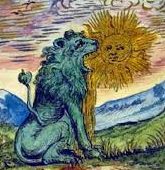
Because there is no other way to communicate with the author, I want just to say that I recently discovered this blog, I am checking its posts, and it is amazing, from the green lion eating the sun downward. Up my alley.
LikeLiked by 1 person
Thank you kindly. I started doing this some years back only as way of keeping notes on my idle reading but it’s since turned into a thing I very much enjoy. Fatherhood has made me spottier over the past couple of years but I try never to disappear for too long.
LikeLike
I wanted to echo these comments. Understand entirely that you’ve got other things going on (father of four myself), but do very much enjoy it when you post.
LikeLiked by 1 person
Thank you as well – and one has nearly done us in up and down so there is no bound to my respect for anyone balancing more than that.
LikeLike
To echo what you’ve probably heard many times before: it gets easier!
LikeLike