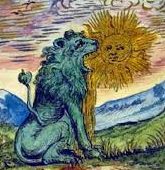
Then they dined on beef and necks of horses

The structure of Numa’s replies in the other day’s conversation between Numa and Jupiter put in mind a section of the The Contest of Homer and Hesiod (Certamen Homeri et Hesiodi) and the new text+commentary by Paola Bassino I’ve had out for the last year without opening. Below are the relevant sections (starting line ~100 of the text) and here is the dissertation version of the text+commentary (the main change to the published version seems to be the addition of a translation). This one does demand Greek since the charm – light though it may be – is in playing with the syntax of hexameters – Hesiod producing a complete line and Homer manufacturing an enjambment that reopens composition and allows him to flip the subversive sense of the original.

As he replied well also on these occasions, Hesiod turned to ambiguous propositions and, uttering several lines, expected Homer to reply in a fitting manner to each. So the first is Hesiod’s, the following Homer’s, though occasionally Hesiod composed the question by using two lines:

Hes. Then they dined on beef and necks of horses
Hom. they cleansed, since they were sweaty, being sated with war.
Hes. And the Phyrgians, who of all men on ships are the best
Hom. at having a meal on the shore with pirates.
Hes. Shooting arrows at the tribes of all the giants with his hands
Hom. Heracles loosed from his shoulders a bent bow.
Hes. This man is the son of a good man and a coward
Hom. mother, since war is hard for all women.
Hes. And not for [conceiving] you did your father and revered mother make love
Hom. the body that they sowed by the action of golden Aphrodite.
Hes. As she had yielded to marriage, Artemis shooter of arrows
Hom. killed Callisto from her silver bow.
Hes. So they feasted all day, having nothing
Hom. of their own, but Agamemnon lord of men arranged it.
Hes. Having dined among the smoky ashes
Hes. they gathered up the white bones of the deceased, Zeus’
Hom. son, the proud and godly Sarpedon.
Hes. Sitting thus over the plan of the Simois
Hes. we make our way from the ships carrying upon our shoulders
Hom. hilted swords and long-socketed javelins.
Hes. Then the best young men with their hands from the sea
Hom. pleased and eager dragged off the swift ship.
Hes. Then they took away the Colchian girl and king Aietes
Hom. they fled, as they recognised him as inhospitable and unlawful.
Hes. After they had made libations and drunk up the sea’s swell
Hom. they made themselves ready to sail on well-benched ships.
Hes. For them all the son of Atreus prayed very much, that they might perish
Hom. never in the sea, and he uttered this verse:
Hes. Eat, o foreigners, and drink; may none of you
Hes. return home to your dear fatherland
Hom. harmed, but may you reach home unharmed.

καλῶς δὲ καὶ ἐν τούτοις ἀπαντήσαντος ἐπὶ τὰς ἀμφιβόλους
γνώμας ὥρμησεν ὁ Ἡσίοδος, καὶ πλείονας στίχους λέγων
ἠξίου καθ’ ἕνα ἕκαστον συμφώνως ἀποκρίνασθαι τὸν Ὅμηρον.
ἔστιν οὖν ὁ μὲν πρῶτος Ἡσιόδου, ὁ δὲ ἑξῆς Ὁμήρου, ἐνίοτε δὲ
καὶ διὰ δύο στίχων τὴν ἐπερώτησιν ποιουμένου τοῦ Ἡσιόδου·

Hes. δεῖπνον ἔπειθ’ εἵλοντο βοῶν κρέα καὐχένας ἵππων
Hom. ἔκλυον ἱδρώοντας, ἐπεὶ πολέμοιο κορέσθην.
Hes. καὶ Φρύγες, οἳ πάντων ἀνδρῶν ἐπὶ νηυσὶν ἄριστοι
Hom. ἀνδράσι ληιστῆρσιν ἐπ’ ἀκτῆς δόρπον ἑλέσθαι.
Hes. χερσὶ βαλὼν ἰοῖσιν ὅλων κατὰ φῦλα γιγάντων
Hom. Ἡρακλῆς ἀπέλυσεν ἀπ’ ὤμων καμπύλα τόξα.
Hes. οὗτος ἀνὴρ ἀνδρός τ’ ἀγαθοῦ καὶ ἀνάλκιδός ἐστι
Hom. μητρός, ἐπεὶ πόλεμος χαλεπὸς πάσῃσι γυναιξίν.
Hes. οὔτ’ ἂρ σοί γε πατὴρ ἐμίγη καὶ πότνια μήτηρ
Hom. †σῶμα τό γ’ ἐσπείραντο† διὰ χρυσῆν Ἀφροδίτην.
Hes. αὐτὰρ ἐπεὶ δμήθη γάμῳ Ἄρτεμις ἰοχέαιρα
Hom. Καλλιστὼ κατέπεφνεν ἀπ’ ἀργυρέοιο βιοῖ<ο>.
Hes. ὣς οἳ μὲν δαίνυντο πανήμεροι, οὐδὲν ἔχοντες
Hom. οἴκοθεν, ἀλλὰ παρεῖχεν ἄναξ ἀνδρῶν Ἀγαμέμνων.
Hes. δεῖπνον δειπνήσαντες ἐνὶ σποδῷ αἰθαλοέσσῃ
Hes. σύλλεγον ὀστέα λευκὰ Διὸς κατατεθνειῶτος
Hom. παιδὸς ὑπερθύμου Σαρπηδόνος ἀντιθέοιο.
Hes. ἡμεῖς δ’ ἂμ πεδίον Σιμοέντιον ἥμενοι οὕτως
Hes. ἴομεν ἐκ νηῶν ὁδὸν ἀμφ’ ὤμοισιν ἔχοντες
Hom. φάσγανα κωπήεντα καὶ αἰγανέας δολιχαύλους.
Hes. δὴ τότ’ ἀριστῆες κοῦροι χείρεσσι θαλάσσης
Hom. ἄσμενοι ἐσσυμένως τε ἀπείρυσαν ὠκύαλον ναῦν.
Hes. κολχίδ’ ἔπειτ’ ἤγοντο καὶ Αἰήτην βασιλῆα
Hom. φεῦγον, ἐπεὶ γίγνωσκον ἀνέστιον ἠδ’ ἀθέμιστον.
Hes. αὐτὰρ ἐπεὶ σπεῖσάν τε καὶ ἔκπιον οἶδμα θαλάσσης
Hom. ποντοπορεῖν ἤμελλον ἐυσέλμων ἐπὶ νηῶν.
Hes. τοῖσιν δ’ Ἀτρείδης μεγάλ’ εὔχετο πᾶσιν ὀλέσθαι
Hom. μηδέ ποτ’ ἐν πόντῳ, καὶ φωνήσας ἔπος ηὔδα·
Hes. ἐσθίετ’ ὦ ξεῖνοι, καὶ πίνετε· μηδέ τις ὑμῶν
Hes. οἴκαδε νοστήσειε φίλην ἐς πατρίδα γαῖαν
Hom. πημανθείς, ἀλλ’ αὖτις ἀπήμονες οἴκαδ’ ἵκοισθε.

This world pays dividends

My father loves his dividends and his religion, though generally not in that order. He sidesteps the inconsistency by refusing to acknowledge corporate abuses so when the topic comes up I can’t help nettling him with the below – from Ch. 16 of Moby Dick:

Like Captain Peleg, Captain Bildad was a well-to-do, retired whaleman. But unlike Captain Peleg—who cared not a rush for what are called serious things, and indeed deemed those self-same serious things the veriest of all trifles—Captain Bildad had not only been originally educated according to the strictest sect of Nantucket Quakerism, but all his subsequent ocean life, and the sight of many unclad, lovely island creatures, round the Horn—all that had not moved this native born Quaker one single jot, had not so much as altered one angle of his vest. Still, for all this immutableness, was there some lack of common consistency about worthy Captain Bildad. Though refusing, from conscientious scruples, to bear arms against land invaders, yet himself had illimitably invaded the Atlantic and Pacific; and though a sworn foe to human bloodshed, yet had he in his straight-bodied coat, spilled tuns upon tuns of leviathan gore. How now in the contemplative evening of his days, the pious Bildad reconciled these things in the reminiscence, I do not know; but it did not seem to concern him much, and very probably he had long since come to the sage and sensible conclusion that a man’s religion is one thing, and this practical world quite another. This world pays dividends.

From the Great Above she opened her ear to the Great Below.

Another from Inanna, Queen of Heaven and Earth. Another introit, this one from the section entitled From the Great Above to the Great Below: Who doesn’t love a katabasis?

From the Great Above she opened her ear to the Great Below.
From the Great Above the goddess opened her ear to the Great Below.
From the Great Above Inanna opened her ear to the Great Below.

My Lady abandoned heaven and earth to descend to the underworld.
Inanna abandoned heaven and earth to descend to the underworld.
She abandoned her office of holy priestess to descend to the underworld.

In Uruk she abandoned her temple to descend to the underworld
In Badtibira she abandoned her temple to descend to the underworld
In Zabalam she abandoned her temple to descend to the underworld
In Adab she abandoned her temple to descend to the underworld
In Kish she abandoned her temple to descend to the underworld
In Akkad she abandoned her temple to descend to the underworld

She gathered together the seven me
She took them into her hands.
With the me in her possession, she prepared herself:

She placed the shugurra, the crown of the steppe, on her head.
She arranged the dark locks of hair across her forehead.
She tied the small lapis beads around her neck,
Let the double strand of beads fall to her breast,
And wrapped the royal robe around her body.
She daubed her eyes with ointment called “Let him come, Let him come,”
Bound the breastplate called “Come, man, come!” around her chest,
Slipped the gold ring over her wrist,
And took the lapis measuring rod and line in her hand.

Who?

Orpheus . Eurydice . Hermes from The Essential Rilke, translated by Galway Kinnell and Hannah Liebman.

Here was the wondrous mine of souls.
Like silent silver ore they moved
in veins through its darkness. Among roots
the blood welled up that flows to the humans,
seeming as heavy as porphyry in the dark.
Nothing else was red.

There were rocks
and spectral forests. Bridges across emptiness
and that broad gray blind pond
suspended above its distant bottom
like a rainy sky above a landscape.
And between gentle, forbearing meadows,
appeared the pale strip of the single path,
laid out like a long bleaching place.

And up this one path they came.

In front, the slender man in the blue cloak,
who gazed out ahead, silent, impatient.
His steps devoured the path in giant bites,
not bothering to chew; from the folds of his cloak,
his hands hung down heavy and locked shut,
oblivious to the now weightless lyre
which had grown into his left arm
as tendrils of a rosebush into an olive bough.
His senses were as if split in two:
while his gaze, like a dog, ran out ahead,
turned, came back, and again and again, far
and waiting, stood at the next bend, —
his hearing lagged behind like a smell.
At times it seemed to him to reach
back to the sounds of walking of the two others
supposed to be following him this whole ascent.
And then again, it was only his own steps’ echoes
and the wind stirring his cloak that were behind him.
But he told himself they were still coming;
said it aloud and heard his tones die away.
They were still coming, it was just that they
walked so terribly quietly. If only he
could turn around just once (if looking back
wouldn’t subvert the whole undertaking,
not yet completed), he would have to see them,
those two soft walkers following without a word:

The god of the way and of tidings from afar,
a wide brim above his bright eyes,
his slender wand held out in front,
beating wings at his ankles;
and, entrusted to his left hand: she.

The one so loved that a single lyre
raised more lament than lamenting women ever did;
and that from the lament a world arose in which
everything was there again: woods and valley
and path and village, field and river and animal;
and around this lament-world, just as
around the other earth, a sun
and a starry silent heaven turned,
a lament-heaven of disordered stars — :
This one so loved.

But now she walked at this god’s hand,
her steps impeded by long winding-sheets,
unsure, slowly, without impatience.
She was within herself, great with expectation,
and gave no thought to the man going on ahead
or to the path leading up to life.
She was within herself. And her being dead
filled her like great plenitude.
Like a fruit, with its sweetness and darkness,
was she full with her great death,
so new to her she understood nothing.

She had come into another virginity
and wasn’t to be touched; her sex was closed
like a young flower toward evening,
and her hands were by now so unused
to being wed that even the gentle god’s
infinitely soft, light, guiding touch
offended her as too intimate.

She was no more the woman of flaxen hair
who sometimes resonated in the poet’s songs,
no more the odor and island of the wide bed,
and that man’s possession no more.

She was already loosened like long hair
and surrendered like fallen rain
and meted out like a hundred-fold supply.

Already she was root.

And when suddenly, abruptly,
the god tapped her and in a pained voice
said: “He’s turned around,”
she did not understand and quietly answered: “Who?”

In the distance, dark before the bright exit,
stood someone whose face
could not be recognized. He stood and saw
how on a strip of the meadow path
with mournful look the god of tidings
silently turned to follow the figure
who already had started back down,
her steps impeded by long winding-sheets,
unsure, slowly without impatience.

Das war der Seelen wunderliches Bergwerk.
Wie stille Silbererze gingen sie
als Adern durch sein Dunkel. Zwischen Wurzeln
entsprang das Blut, das fortgeht zu den Menschen,
und schwer wie Porphyr sah es aus im Dunkel.
Sonst war nichts Rotes.

Felsen waren da
und wesenlose Wälder. Brücken über Leeres
und jener große graue blinde Teich,
der über seinem fernen Grunde hing
wie Regenhimmel über einer Landschaft.
Und zwischen Wiesen, sanft und voller Langmut,
erschien des einen Weges blasser Streifen,
wie eine lange Bleiche hingelegt.

Und dieses einen Weges kamen sie.

Voran der schlanke Mann im blauen Mantel,
der stumm und ungeduldig vor sich aussah.
Ohne zu kauen fraß sein Schritt den Weg
in großen Bissen; seine Hände hingen
schwer und verschlossen aus dem Fall der Falten
und wußten nicht mehr von der leichten Leier,
die in die Linke eingewachsen war
wie Rosenranken in den Ast des Ölbaums.
Und seine Sinne waren wie entzweit:
indes der Blick ihm wie ein Hund vorauslief,
umkehrte, kam und immer wieder weit
und wartend an der nächsten Wendung stand, -
blieb sein Gehör wie ein Geruch zurück.
Manchmal erschien es ihm als reichte es
bis an das Gehen jener beiden andern,
die folgen sollten diesen ganzen Aufstieg.
Dann wieder wars nur seines Steigens Nachklang
und seines Mantels Wind was hinter ihm war.
Er aber sagte sich, sie kämen doch;
sagte es laut und hörte sich verhallen.
Sie kämen doch, nur wärens zwei
die furchtbar leise gingen. Dürfte er
sich einmal wenden (wäre das Zurückschaun
nicht die Zersetzung dieses ganzen Werkes,
das erst vollbracht wird), müßte er sie sehen,
die beiden Leisen, die ihm schweigend nachgehn:

Den Gott des Ganges und der weiten Botschaft,
die Reisehaube über hellen Augen,
den schlanken Stab hertragend vor dem Leibe
und flügelschlagend an den Fußgelenken;
und seiner linken Hand gegeben: sie.

Die So-geliebte, daß aus einer Leier
mehr Klage kam als je aus Klagefrauen;
daß eine Welt aus Klage ward, in der
alles noch einmal da war: Wald und Tal
und Weg und Ortschaft, Feld und Fluß und Tier;
und daß um diese Klage-Welt, ganz so
wie um die andre Erde, eine Sonne
und ein gestirnter stiller Himmel ging,
ein Klage-Himmel mit entstellten Sternen - :
Diese So-geliebte.

Sie aber ging an jenes Gottes Hand,
den Schrittbeschränkt von langen Leichenbändern,
unsicher, sanft und ohne Ungeduld.
Sie war in sich, wie Eine hoher Hoffnung,
und dachte nicht des Mannes, der voranging,
und nicht des Weges, der ins Leben aufstieg.
Sie war in sich. Und ihr Gestorbensein
erfüllte sie wie Fülle.
Wie eine Frucht von Süßigkeit und Dunkel,
so war sie voll von ihrem großen Tode,
der also neu war, daß sie nichts begriff.

Sie war in einem neuen Mädchentum
und unberührbar; ihr Geschlecht war zu
wie eine junge Blume gegen Abend,
und ihre Hände waren der Vermählung
so sehr entwöhnt, daß selbst des leichten Gottes
unendlich leise, leitende Berührung
sie kränkte wie zu sehr Vertraulichkeit.

Sie war schon nicht mehr diese blonde Frau,
die in des Dichters Liedern manchmal anklang,
nicht mehr des breiten Bettes Duft und Eiland
und jenes Mannes Eigentum nicht mehr.

Sie war schon aufgelöst wie langes Haar
und hingegeben wie gefallner Regen
und ausgeteilt wie hundertfacher Vorrat.

Sie war schon Wurzel.

Und als plötzlich jäh
der Gott sie anhielt und mit Schmerz im Ausruf
die Worte sprach: Er hat sich umgewendet -,
begriff sie nichts und sagte leise: Wer?

Fern aber, dunkel vor dem klaren Ausgang,
stand irgend jemand, dessen Angesicht
nicht zu erkennen war. Er stand und sah,
wie auf dem Streifen eines Wiesenpfades
mit trauervollem Blick der Gott der Botschaft
sich schweigend wandte, der Gestalt zu folgen,
die schon zurückging dieses selben Weges,
den Schritt beschränkt von langen Leichenbändern,
unsicher, sanft und ohne Ungeduld.

Onions, hair, and fish – a conversation with Jupiter.

From Plutarch’s life of Numa (ch. 15, pg. 358 of the Loeb vol. 1 of Lives) and below another version from Ovid’s Fasti (3.330, also in the Loeb edition). Found via a side remark in George Dumezil’s Mitra-Varuna.

But nothing can be so strange as what is told about [Numa’s] conversation with Jupiter … Some, however, say that it was not the imps themselves who imparted the charm [of onions, hair, and little fish against thunder and lightning], but that they called Jupiter down from heaven by their magic, and that this deity angrily told Numa that he must charm thunder and lightning with “heads.” “Of onions?” asked Numa, filling out the phrase. “Of men,” said Jupiter. Thereupon Numa, trying once more to avert the horror of the prescription, asked, “with hair?” “Nay,” answered Jupiter, “with living—” “fish?” added Numa, as he had been taught by Egeria to say. Then the god returned to heaven in a gracious mood,—“hileos,” as the Greeks say,—and the place was called Ilicium from this circumstance; and that is the way the charm was perfected.

πᾶσαν δὲ ὑπερβέβληκεν ἀτοπίαν τὸ ὑπὲρ τῆς τοῦ Διὸς ὁμιλίας ἱστορούμενον. μυθολογοῦσι γὰρ εἰς τὸν Ἀβεντῖνον λόφον οὔπω μέρος ὄντα τῆς πόλεως οὐδὲ συνοικούμενον, ἀλλ᾿ ἔχοντα πηγάς τε δαψιλεῖς ἐν αὑτῷ καὶ νάπας σκιεράς, φοιτᾶν δύο δαίμονας, Πῖκον καὶ Φαῦνον· οὓς τὰ μὲν ἄλλα Σατύρων ἄν τις ἢ Πανῶν γένει προσεικάσειε, δυνάμει δὲ φαρμάκων καὶ δεινότητι τῆς περὶ τὰ θεῖα γοητείας λέγονται ταὐτὰ τοῖς … ἔνιοι δὲ οὐ τοὺς δαίμονάς φασιν ὑποθέσθαι τὸν καθαρμόν, ἀλλ᾿ ἐκείνους μὲν καταγαγεῖν τὸν Δία μαγεύσαντας, τὸν δὲ θεὸν ὀργιζόμενον τῷ Νομᾷ προστάσσειν ὡς χρὴ γενέσθαι τὸν καθαρμὸν κεφαλαῖς· ὑπολαβόντος δὲ τοῦ Νομᾶ, “κρομμύων;” εἰπεῖν, “ἀνθρώπων·” τὸν δὲ αὖθις ἐκτρέποντα τὸ τοῦ προστάγματος δεινὸν ἐπερέσθαι, “θριξίν;” ἀποκριναμένου δὲ τοῦ Διός, “ἐμψύχοις,” ἐπαγαγεῖν τὸν Νομᾶν, “μαινίσι;” ταῦτα λέγειν ὑπὸ τῆς Ἠγερίας δεδιδαγμένον. καὶ τὸν μὲν θεὸν ἀπελθεῖν ἵλεω γενόμενον, τὸν δὲ τόπον Ἰλίκιον ἀπ᾿ ἐκείνου προσαγορευθῆναι καὶ τὸν καθαρμὸν οὕτω συντελεῖσθαι.

And Ovid:

Sure it is the tops of the Aventine trees did quiver, and the earth sank down under the weight of Jupiter. The king’s heart throbbed, the blood shrank from his whole body, and his bristling hair stood stiff. When he came to himself, “King and father of the high gods,” he said, “vouchsafe expiations sure for thunderbolts, if with pure hands we have touched thine offerings, and if for that which now we ask a pious tongue doth pray.” The god granted his prayer, but hid the truth in sayings dark and tortuous, and alarmed the man by an ambiguous utterance. “Cut off the head,” said he.a The king answered him, “We will obey. We’ll cut an onion, dug up in my garden.” The god added, “A man’s.” “Thou shalt get,” said the other, “his hair.” The god demanded a life, and Numa answered him, “A fish’s life.” The god laughed and said, “See to it that by these things thou dost expiate my bolts, Ο man whom none may keep from converse with the gods!

constat Aventinae tremuisse cacumina silvae,
terraque subsedit pondere pressa Iovis.
corda micant regis, totoque e corpore sanguis
fugit, et hirsutae deriguere comae.
ut rediit animus, “da certa piamina” dixit
“fulminis, altorum rexque paterque deum,
si tua contigimus manibus donaria puris,
hoc quoque, quod petitur, si pia lingua rogat.”
adnuit oranti, sed verum ambage remota
abdidit et dubio terruit ore virum.
“caede caput” dixit: cui rex “parebimus,” inquit
“caedenda est hortis eruta cepa meis.”
addidit hic “hominis”: “sumes” ait ille “capillos.”
postulat hic animam, cui Numa “piscis” ait.
risit et “his” inquit “facito mea tela procures,
o vir conloquio non abigende deum.

This I ask Thee, tell me straight, Lord

Yasna 44 from M.L. West’s translation of The Hymns of Zoroaster. I’m including at bottom a portion of West’s introductory essay to help with some of the terminology (Mindful One, Right, Good Thought, etc.).


44.1
This I ask Thee, tell me straight, Lord,
(I ask) out of reverence, how Your kind is to be revered:
Mindful One, I hope one like Thee may declare it to a friend such as me.
We (worshippers) have friendly relations to maintain with Right,
so that it will come to us with Good Thought.

44.2
This I ask Thee, tell me straight, Lord:
how can the best existence’s beginning
be furthered by the man of good will who is to take those things forward?
For it is such a man, liberal with Right, observing the outcome for all,
who by his intent is a healer of existence, an ally, Mindful One.

44.3
This I ask Thee, tell me straight, Lord:
who was the father-begetter of Right in the beginning?
Who set the path of the sun and stars?
Who is it through whom the moon waxes or wanes?
These things, Mindful One, I desire to know, and others besides.

44.4
This I ask Thee, tell me straight, Lord:
who held the earth from beneath, and the heavens
from falling down? Who the waters and plants?
Who yoked the wind’s and the clouds’ swift pair?
Who is the creator, Mindful One, of Good Thought?

44.5
This I ask Thee, tell me straight, Lord:
what skilful artificer made the light and the darkness?
What skilful artificer made sleep and waking?
Who is it through whom there are morning, noon, and eve,
that make the prudent man mindful of his endeavour?

44.6
This I ask Thee, tell me straight, Lord:
if these propositions are true,
that Piety in action confirms Right
and assigns dominion to Thee together with Good Thought,
for what (class of) people didst Thou fashion the gladdening milch cow?

44.7
This I ask Thee, tell me straight, Lord:
who fashions the piety that we esteem together with dominion?
Who by his wisdom made the son respectful to the father?
I with these questions am providently promoting Thee, Mindful One,
the ordainer of all things through Thy bounteous will.

44.8
This I ask Thee, tell me straight, Lord,
so I may take Thy instruction to heart, Mindful One,
and the words spoken by Good Thought that I obtain in consultation,
and those fitly to be apprehended through Right about existence:
to what good destinations will my soul journey?

44.9
This I ask Thee, tell me straight, Lord:
the religion of mine that I am to perfect,
how might the master of a beneficent dominion proclaim it for me
with righteous rule, a very potent follower of Thine, Mindful One,
abiding with Right and Good Thought?

44.10
This I ask Thee, tell me straight, Lord:
that religion which is the best in existence –
may it promote my flock in union with Right –
do they with pious words and deed have a true conception of it?
My insight is Thine to command at Thy discretion, Mindful One.

44.11
This I ask Thee, tell me straight, Lord:
how might piety spread to those
to whom Thy religion, Mindful One, goes forth?
I with them am the first to find my way to Thee:
all others I regard with hostile spirit.

44.12
This I ask Thee, tell me straight, Lord:
who is righteous or wrongful of those I question?
Which is my enemy, this one or that one?
‘The wrongful one who takes pleasure in attacking thy gains,
he it is, not the other, who thinks as an enemy.’

44.13
This I ask Thee, tell me straight, Lord:
how are we to drive Wrong out from ourselves
down upon those who, being full of non-compliance,
do not strive for the companionship of Right
and have not had the pleasure of consulting Good Thought?

44.14
This I ask Thee, tell me straight, Lord:
how might I give Wrong into the hands of Right
to destroy her with the prescripts of Thy law,
to deliver a crushing blow on the wrongful,
to bring pains upon them, Mindful One, and harassments?

44.15
This I ask Thee, tell me straight, Lord:
if Thou hast this power with Right, to protect me
when the two hostile armies meet
on those terms which Thou, Mindful One, wouldst uphold,
where between the two and to whom dost Thou give the victory?

44.16
This I ask Thee, tell me straight, Lord:
who is the victorious one to protect with Thy law (all) who exist –
let me be given clarity – the healer of the world? Assign his role,
and let Compliance come to him with Good Thought,
Mindful One, to whom Thou wilt soever.

44.17
This I ask Thee, tell me straight, Lord:
how am I to journey in accord with You towards my goal
of attachment to You, and make my voice effective
in working for union with health and continuing life
by means of that prescript which cleaves to Right?

44.18
This I ask Thee, tell me straight, Lord:
how am I to earn that reward with Right –
the ten mares with stallion, and the camel –
which was promised me, Mindful One, with health
and continuing life, even as Thou takest these for Thyself?

44.19
This I ask Thee, tell me straight, Lord:
he that does not give that reward to one who earns it,
the man who awards it to himself when it has been promised,
what punishment for that will strike him at the first?
For I know the one that will strike him at the last.

44.20
What, Mindful One, has the Daevas’ dominion been good –
that is what I ask – they that blaspheme for the sake of those
with whom the Karpan and the Usij subject the cow to violence
and (to all the ills) that the Kavi makes her lament to her soul?
They do not care for her so as to promote the pasture with Right.

and from his introduction:

Chief among [Zoroaster’s] Lords was Ahura Mazdā, the Lord who takes thought or pays attention, or as I have chosen to render him, the Mindful Lord.12 This is a deity identified not by an opaque conventional name, like the old gods, but by reference to his essential quality of attentiveness or intelligence. His intelligence is creative and supervisory. He created this world, or at any rate what is good in it, by means of his thought. He observes men’s moral deliberations and choices with a watchful eye, and he cannot be deceived. He communicates his wisdom through visions and utterances that Zoroaster receives; men are his messengers.

Zoroaster addresses Ahura Mazdā constantly throughout his poems. In addressing him, however, he very often uses pronouns and verbs in the second person plural, as I have made clear in the translation by distinguishing scrupulously between Thou and Ye. These plurals are not merely honorific. Their reference is made plain by two passages where the prophet speaks of ‘Mazdā and Ahuras’, in other words ‘Mazdā and the other Lords’. Mazdā, then, is the leader of a concordant group, and it is a matter of indifference whether one addresses them collectively or Mazdā individually.

Zoroaster nowhere identifies the other Ahuras explicitly, but we can assume that he is thinking of certain divine entities which he constantly associates with Mazdā and sometimes addresses in the vocative. Their names are the names of abstract qualities, mostly of an ethical nature: Right (Asa); Good Thought (Vohu manah); Piety (ārmati); Bounteous Will (Spənta manyu); Dominion (Xsathra). These are all things that human beings may have in themselves, and Zoroaster often uses the words with reference to his own or other people’s thinking and conduct, besides treating them as personified beings with an independent existence. Sometimes it is not clear which way to take them, and whether to translate them with a capital or a lower-case initial. When they are personified they can be treated like the conventional gods of poetry and represented as speaking to one another or to mankind.

In the first days, in the very first days

From Inanna, Queen of Heaven and Earth by Diane Wolkstein and Samuel Noah Kramer. The text is a curious collaboration between an Assyriologist (Kramer) who first reconstructed and translated The Descent of Inanna episode (see his essay at the end of the book) and a folklorist and ‘storyteller’ (Wolkstein) who is more responsible for the final form. Wolkstein’s interpretive commentaries at the end of the work are a bit new-age Jungian in dress (in the 1980s sense) and more than a bit overconfident- especially given that her knowledge of Sumerian is second-hand – but they are sensitive readings and her renderings are everywhere beautiful, especially in capturing the stateliness of repetition and parallelism. Below is the introit to the first section, the Huluppu Tree.

The Huluppu Tree
In the first days, in the very first days,
In the first nights, in the very first nights,
In the first years, in the very first years,

In the first days when everything needed was brought into being,
In the first days when everything needed was properly nourished,
When bread was baked in the shrines of the land,
And bread was tasted in the homes of the land,
When heaven had moved away from earth,
And earth had separated from heaven,
And the name of man was fixed;
When the Sky God, An, had carried off the heavens,
And the Air God, Enlil, had carried off the earth,
When the Queen of the Great Below, Ereshkigal, was given the underworld for her domain,

He set sail; the Father set sail,
Enki, the God of Wisdom, set sail for the underworld.
Small windstones were tossed up against him;
Large hailstones were hurled up against him;
Like onrushing turtles, They charged the keel of Enki’s boat.
The waters of the sea devoured the bow of his boat like wolves;
The waters of the sea struck the stern of his boat like lions.

Say, why are beauties prais’d and honour’d most, the wise man’s passion, and the vain man’s toast?

From Alexander Pope’s Rape of the Lock, Canto 5. I think this is my favorite of of Pope’s bathetic appropriations from ancient epic – if only for how core a scene the original has become for interpreting the social politics of epic or epic-informed culture.

Then grave Clarissa graceful wav’d her fan;
Silence ensu’d, and thus the nymph began.

       “Say, why are beauties prais’d and honour’d most,
The wise man’s passion, and the vain man’s toast?
Why deck’d with all that land and sea afford,
Why angels call’d, and angel-like ador’d?
Why round our coaches crowd the white-glov’d beaux,
Why bows the side-box from its inmost rows?
How vain are all these glories, all our pains,
Unless good sense preserve what beauty gains:
That men may say, when we the front-box grace:
‘Behold the first in virtue, as in face!’
Oh! if to dance all night, and dress all day,
Charm’d the smallpox, or chas’d old age away;
Who would not scorn what housewife’s cares produce,
Or who would learn one earthly thing of use?
To patch, nay ogle, might become a saint,
Nor could it sure be such a sin to paint.
But since, alas! frail beauty must decay,
Curl’d or uncurl’d, since locks will turn to grey,
Since painted, or not painted, all shall fade,
And she who scorns a man, must die a maid;
What then remains but well our pow’r to use,
And keep good humour still whate’er we lose?
And trust me, dear! good humour can prevail,
When airs, and flights, and screams, and scolding fail.
Beauties in vain their pretty eyes may roll;
Charms strike the sight, but merit wins the soul.”

Here is Pope’s own rendering of the relevant scene in the Iliad – bk 12 310-328 between Sarpedon (speaking) and Glaucus. This one, from his full translation, is a slight revision from an earlier selection of episodes. My edition – the Twickenham v.2 – points out that the parody is closer to a translation by John Denham, though I haven’t found a readily available digital copy to check.

Then casting on his friend an ardent look,
Fired with the thirst of glory, thus he spoke:
“Why boast we, Glaucus! our extended reign,
Where Xanthus’ streams enrich the Lycian plain,
Our numerous herds that range the fruitful field,
And hills where vines their purple harvest yield,
Our foaming bowls with purer nectar crown’d,
Our feasts enhanced with music’s sprightly sound?
Why on those shores are we with joy survey’d,
Admired as heroes, and as gods obey’d,
Unless great acts superior merit prove,
And vindicate the bounteous powers above?
’Tis ours, the dignity they give to grace;
The first in valour, as the first in place;
That when with wondering eyes our martial bands
Behold our deeds transcending our commands,
Such, they may cry, deserve the sovereign state,
Whom those that envy dare not imitate!
Could all our care elude the gloomy grave,
Which claims no less the fearful and the brave,
For lust of fame I should not vainly dare
In fighting fields, nor urge thy soul to war.
But since, alas! ignoble age must come,
Disease, and death’s inexorable doom,
The life, which others pay, let us bestow,
And give to fame what we to nature owe;
Brave though we fall, and honour’d if we live,
Or let us glory gain, or glory give!”

and the Greek because it is always prettiest.

Γλαῦκε τί ἢ δὴ νῶϊ τετιμήμεσθα μάλιστα
ἕδρῃ τε κρέασίν τε ἰδὲ πλείοις δεπάεσσιν
ἐν Λυκίῃ, πάντες δὲ θεοὺς ὣς εἰσορόωσι,
καὶ τέμενος νεμόμεσθα μέγα Ξάνθοιο παρ᾽ ὄχθας
καλὸν φυταλιῆς καὶ ἀρούρης πυροφόροιο;
τὼ νῦν χρὴ Λυκίοισι μέτα πρώτοισιν ἐόντας
ἑστάμεν ἠδὲ μάχης καυστείρης ἀντιβολῆσαι,
ὄφρά τις ὧδ᾽ εἴπῃ Λυκίων πύκα θωρηκτάων:
οὐ μὰν ἀκλεέες Λυκίην κάτα κοιρανέουσιν
ἡμέτεροι βασιλῆες, ἔδουσί τε πίονα μῆλα
οἶνόν τ᾽ ἔξαιτον μελιηδέα: ἀλλ᾽ ἄρα καὶ ἲς
ἐσθλή, ἐπεὶ Λυκίοισι μέτα πρώτοισι μάχονται.
ὦ πέπον εἰ μὲν γὰρ πόλεμον περὶ τόνδε φυγόντε
αἰεὶ δὴ μέλλοιμεν ἀγήρω τ᾽ ἀθανάτω τε
ἔσσεσθ᾽, οὔτέ κεν αὐτὸς ἐνὶ πρώτοισι μαχοίμην
οὔτέ κε σὲ στέλλοιμι μάχην ἐς κυδιάνειραν:
νῦν δ᾽ ἔμπης γὰρ κῆρες ἐφεστᾶσιν θανάτοιο
μυρίαι, ἃς οὐκ ἔστι φυγεῖν βροτὸν οὐδ᾽ ὑπαλύξαι,
ἴομεν ἠέ τῳ εὖχος ὀρέξομεν ἠέ τις ἡμῖν.

Plus a bonus parallel from Milton’s Paradise Lost 2.450

Wherefore do I assume
These royalties and not refuse to reign,
Refusing to accept as great a share
Of hazard as of honour, due alike to him
Who reigns, and so much to him due
Of hazard more, as he above the rest
High honour’d sits.

A fair apparel of patience I will don, longer and longer for vigil make my nights

From Martin Lings’ Sufi Poems: A Medieval Anthology.

From Abu Bakr al-Shibli:


A fair apparel of patience I will don,
Longer and longer for vigil make my nights.
Unwillingly patient, not yet willing am I,
But little by little my soul I seek to enlist.

From Abu’l Abbas al-Qasim as-Sayyari of Marv (who may or may not be this Al-Qushayri – their dates are close but one generation off)


Patiently pleasures I shunned till they shunned me.
I made my soul forsake them; steadfast she stood.
The soul’s for man to make her as he would:
If fed, she seeks more; else, resigned she’ll be.
Mine was an arrogant soul; but when she knew
Me resolute for humbleness, humble she grew.

As rich as the selections are, I’m limiting myself to these two excerpts since Ling’s translations are elsewhere far from engaging – partly through archaism of vocabulary, more through archaism of syntax and what I suspect is an effort to mirror Arabic word order in English. A sample from his Al-Hallaj selections:

Thy spirit with my spirit mingled is,
Even as amber mingled is with musk
In blended perfumes. So, if aught Thee touch,
It toucheth me. Thus art Thou I inseparably.

I appreciate a respectfully literal translation – down to preserving word order – but there are limits.

The aspect of my furniture is so terrific at this point that I really must stop

From the too-plainly titled Ghost Stories by M.R. James. I’ve never read James but have been browsing a collection of his greatest tales this evening. As in this excerpt he often delights more in the follies of the genre than I’d expected.

Some classes of ghost stories it is very hard, seriously speaking, not to believe. Omens, Family Tokens and Forewarnings are of this sort.

Here is one, “never before published,” told me by an old man “who was there at the time.” I suppress names.

In the early part of last century, the wife of the squire of a certain village was driving across her park on the way to a county ball. The evening was gray and misty. [This goes without saying.]

Suddenly she looked out of the carriage window and “saw suffen”; as to what the something was my old man would not venture a statement. I gathered, however, that it was the lady’s “double.”

One of the horses broke loose, the other turned straight back to the Hall.

The lady never went out of the house again except in her coffin. [Impressive silence.] Of course my informant didn’t go to believe no such thing; but still, there was the story.

One really authentic one, which I fear a good many people must know, and I will lay my unquiet pen.

To be short: General Blucher was returning home alone from the wars. On entering the house he saw, sitting at the fire in a peculiar attitude, his parents—long since dead, and his sisters sitting around the room.

On greeting them he received no answer.

One of his sisters rose and touched him. He swooned, and when he came to himself was alone.

He was for some days delirious, but in a lucid interval, feeling himself at the point of death, he sent for his sovereign, told him the facts: said his sister had warned him he was to die that day, and so expired.

The aspect of my furniture is so terrific at this point that I really must stop.