With varying vanities, from ev’ry part, they shift the moving toyshop of their heart

From Canto 1 of Alexander Pope’s Rape of the Lock. Setting aside the gendering, I love these lines as a general description of all of us.

Oft, when the world imagine women stray,
The Sylphs through mystic mazes guide their way,
Thro’ all the giddy circle they pursue,
And old impertinence expel by new.
What tender maid but must a victim fall
To one man’s treat, but for another’s ball?
When Florio speaks, what virgin could withstand,
If gentle Damon did not squeeze her hand?
With varying vanities, from ev’ry part,
They shift the moving toyshop of their heart;
Where wigs with wigs, with sword-knots sword-knots strive,
Beaux banish beaux, and coaches coaches drive.
This erring mortals levity may call,
Oh blind to truth! the Sylphs contrive it all.

Edmund Crispin also liked ‘moving toyshop’ enough to take it as the title of one of his novels. He later borrowed a second title from another of Pope’s works – Elegy to the Memory of an Unfortunate Lady. That one is, depending on printing, either Sudden Vengeance or Frequent Hearses, both from the same couplet.

On all the line a sudden vengeance waits,
And frequent hearses shall besiege your gates.

A very paltry gift, of no account, My father, for a scholar like to thee

The dedication by Walafrid Strabo of his poem Hortulus to a former teacher (or brother of a former teacher, depending) Grimald of Weissenburg. The full text of Hortulus can be found here (Latin only). The translation is from Helen Waddell’s Medieval Latin Lyrics.

The garden pictured is that of St. Gall where Grimald was abbot. I’d have gone there – largely for the library – last fall had corona not struck….

A very paltry gift, of no account,
My father, for a scholar like to thee,
But Strabo sends it to thee with his heart.
So might you sit in the small garden close
In the green darkness of the apple trees
Just where the peach tree casts its broken shade,
And they would gather you the shining fruit
With the soft down upon it; all your boys,
Your little laughing boys, your happy school,
And bring huge apples clasped in their two hands.
Something the book may have of use to thee.
Read it, my father, prune it of its faults,
And strengthen with they praise what pleases thee.
And may god give thee in thy hands the green
Unwithering palm of everlasting life.

Haec tibi servitii munuscula vilia parvi
Strabo tuus, Grimalde pater doctissime, servus
Pectore devoto, nullius ponderis offert.
Ut cum conseptu viridis consederis horti
Super opacatas frondenti germine malos,
Persicus imparibus crines ubi dividit umbris,
Dum tibi cana legunt tenera lanugine poma
Ludentes pueri, schola laetabunda tuorum,
Atque volis ingentia mala capacibus indunt;
Grandia conantes includere corpora palmis:
Quo moneare habeas nostri pater alme laboris
Dum relegis quae dedo volens, interque legendum
Ut vitiosa seces deposco, placentia firmes.
Te Deus aeterna faciat virtute virentem,
Immarcescibilis palmam contingere vitae;
Hoc Pater, hoc Natus, hoc Spiritus annuat almus.

He laid down a rule of continence for himself

From Helen Waddell’s The Desert Fathers – in Fragments From the Paradisus of Palladius (pg 256-7):

A certain Apollonius, that had been a merchant and renounced the world, came to live on Mount Nitria: and since he could learn no art, hindered as he was by weight of years, nor could practice the abstinence laid down in Holy Write, he laid down a rule of continence for himself. For out of his own purse and labour he bought every kind of remedy and food-stuffs in Alexandria, and provided the brethren that were ailing with whatever they needed. You might see him from early morning till the ninth hour traversing up and down through all the monasteries, whether of men or women, in and out of door after door where there were any sick, carrying with him raisins, and pomegranates, and eggs, and fine wheaten flour, especially necessary for the ailing. To such a life for which alone he was adapted, did this servant of Christ devote his old age.

To which can be compared Bhagavad Gita 3.35

Better is one’s own dharma, though imperfectly performed, than the dharma of another well performed. Better is death in the doing of one’s own dharma: the dharma of another is fraught with peril.

For it’s an outrage for an abstaining reader to pass judgment on a badly drunk poet

From Ausonius’ A Riddle of the Number Three (Griphus Ternarii Numeri). I’m sticking with the Loeb translation, old-fashioned as it is, because I like the Edwardian savour.

And that you may know me for a boaster—I began these bits of verses during tiffin and finished them before messtime, that is to say, while drinking and a little before drinking (again). Your criticism, therefore, must allow for the subject and the season. Nay, do you too read this same book when a trifle “gay” and “wutty”; for it is unfair for a teetotal critic to pass judgment on a poet half-seas over.

ac ne me nescias gloriosum, coeptos inter pranden­dum dum versiculos ante cenae tempus absolvi, hoc est, dum bibo et paulo ante quam biberem. Sit ergo examen pro materia et tempore, set tu quoque hoc ipsum paulo hilarior et dilutior lege; namque iniurium est de poeta male sobrio lectorem abstemium iudicare.

The last line alone I’ll re-render – ‘for it’s an outrage for an abstaining reader to pass judgment on a badly drunk poet.’

Who sits in solitude and is quiet hath escaped from three wars

A few more from The Sayings of the Fathers in Helen Waddell’s The Desert Fathers

Book 2, Of Quiet
2. The abbot Antony said, “who sits in solitude and is quiet hath escaped from three wars: hearing, speaking, seeing: yet against one thing shall he continually battle: this is, his own heart.”

9. A certain brother came to the abbot Moses in Scete seeking a word from him. And the old man said to him, “Go and sit in they cell, and they cell shall teach thee all things.”

Book 7, Of Patience or Fortitude
34. A brother asked an old man, saying, “What shall I do, Father, for I do nothing a monk should, but in a kind of heedlessness I am eating and drinking and sleeping and always full of bad thoughts and great perturbation, going from one task to another, and from one thought to another?” And the old man said, “Sit thou in they cell, and do what thou canst, and be not troubled: for the little that thou dost now is even as when Antony did great things and many in the desert. For I have this trust in God, that whoever sits in his cell for His name and keeps his conscience shall himself be found in Antony’s place.”

Book 10, Of Discretion
15. They told of a certain old man that he had lived fifty years neither eating bread nor readily drinking water: and that he said, “I have killed in me lust and avarice and vainglory.” the abbot Abraham heard that he said these things, and he came to him and said, “Hast thou spoken thus?” And he answered, “Even so.” And the abbot Abraham said, “Behold, thou dost enter they cell, and find upon they bed a woman: canst thou refrain from thinking that it is a woman?” And he said, “No: but I fight my thoughts, so as not to touch that woman.” And the abbot Abraham said, “So then, thou has not slain lust, for the passion itself liveth, but it is bound. Again, if thou art walking on the road and sees stones and potsherds, and lying amongs them gold, canst thou think of it but as stones?” And he answered, “No: but I resist my thought, so as not to pick it up.” And the abbot Abraham said, “So then, passion liveth: but it is bound.” And again the abbot Abraham said, “If thou shouldst hear of two brethren, that one loves thee and speaks well of thee, but the other hates thee and disparages thee, and they should come to thee, wouldst though give them an equal welcome?” And he said, “No: but I should wrest my mind so that I should do as much for him that hated me as for him that loved me.” And the abbot Abraham said, “So then these passions live, but by holy men they are in some sort bound.”

This last can be difficult and I wish I had the original Latin at hand. I want to connect the sentiment to Bhagavad Gita 3.34

The love and hatred that the senses feel for their objects are inevitable. But let no one come under their sway; for they are one’s enemies


and 3.28

But, O mighty Arjuna, he who knows the truth about the gunas and action, and what is distinct from them [atman, the self] holds himself unattached, perceiving that it is the gunas that are occupied with the gunas (guna gunesu vartanta).

Guna here can, with grand unsatisfying imprecision, be taken as ‘senses and sensory objects.’
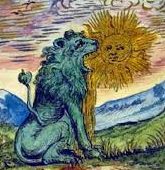
They wander in deep woods, in mournful light

From Helen Waddell’s Medieval Latin Lyrics, an atmospheric excerpt from a longer poem of Ausonius’ (Cupido Cruciatur) that she gives as The Fields of Sorrow (pg. 31).

They wander in deep woods, in mournful light,
Amid long reeds and drowsy headed poppies,
and lakes where no wave laps, and voiceless streams,
Upon whose banks in the dim light grow old
Flowers that were once bewailed names of kings.

errantes silva in magna et sub luce maligna
inter harundineasque comas gravidumque papaver
et tacitos sine labe lacus, sine murmure rivos,
quorum per ripas nebuloso lumine marcent
fleti, olim regum et puerorum nomina, flores

A bunch of grapes in the desert

From Helen Waddell’s The Desert Fathers – in the History of the Monks of Egypt, translated from the Greek by Rufinus of Aquileia (pg. 80). Her introduction and selections try to rehumanize the early monks by swapping focus from the excesses of someone like Simeon Stylites to the simple kindness and community of the mass of brothers.

They tell that once a certain brother brought a bunch of grapes to the holy Macarius: but he who for love’s sake thought not on his own things but on the things of others, carried it to another brother, who seemed more feeble. And the sick man gave thanks to God for the kindness of his brother, but he too thinking more of his neighbour than of himself, brought it to another, and he again to another, and so that same bunch of grapes was carried round all the cells, scattered as they were far over the desert, and no one knowing who first had sent it, it was brought at last to the first giver. But the holy Macarius gave thanks that he had seen in the brethren such abstinence and such loving-kindness and did himself reach after still sterner discipline of the life of the spirit.

I deal myself the best hand I can, and then accept it

From Montaigne 1.20 – That to Philosophize is to Learn to Die:

It is enough for me to spend my time contentedly. I deal myself the best hand I can, and then accept it. It can be as inglorious or as unexemplary as you please:

 Prætulerim delirus inersque videri,
Dum mea delectent mala me, vel denique fallant,
Quam sapere et ringi.
[I would rather be delirious or a dullard if my faults pleased me, or at least deceived me, rather than to be wise and snarling.]

Car il me suffit de passer à mon aise; et le meilleur jeu que je me puisse donner, je le prens, si peu glorieux au reste et exemplaire que vous voudrez,

praetulerim delirus inérsque videri,
Dum mea delectent mala me, vel denique fallant,
Quam sapere et ringi.

The Latin is from Horace – Epistles 2.2.126

I always hear an echo of this passage in a favorite line from Moby Dick’s opening chapter – I guess Melville would’ve had the Cotton translation or, less likely, the Florio.

I abandon the glory and distinction of such offices to those who like them. For my part, I abominate all honorable respectable toils, trials, and tribulations of every kind whatsoever. It is quite as much as I can do to take care of myself

An admirable evasion of whoremaster man, to lay his goatish disposition to the charge of a star

Edmund in 1.2 of King Lear:

This is the excellent foppery of the world, that,
when we are sick in fortune,–often the surfeit
of our own behavior,–we make guilty of our
disasters the sun, the moon, and the stars: as
if we were villains by necessity; fools by
heavenly compulsion; knaves, thieves, and
treachers, by spherical predominance; drunkards,
liars, and adulterers, by an enforced obedience of
planetary influence; and all that we are evil in,
by a divine thrusting on: an admirable evasion
of whoremaster man, to lay his goatish
disposition to the charge of a star!

My personal locus classicus for such observations is Zeus in Odyssey 1.30ish, on the troubles Aegisthus has brought upon himself – even though there he wobbles a bit in conceding a different manner of predestination.

Look you now, how ready mortals are to blame the gods. It is from us, they say, that evils come, but they even of themselves, through their own blind folly, have sorrows beyond that which is ordained.

ὢ πόποι, οἷον δή νυ θεοὺς βροτοὶ αἰτιόωνται:
ἐξ ἡμέων γάρ φασι κάκ᾽ ἔμμεναι, οἱ δὲ καὶ αὐτοὶ
σφῇσιν ἀτασθαλίῃσιν ὑπὲρ μόρον ἄλγε᾽ ἔχουσιν,

Then we shall see if my arguments come from my lips or my heart.

From Montaigne’s Essays 1.19 – That We Should Not Be Deemed Happy Until After Our Death

So it seems likely to me that [Solon] was … intending to tell us that happiness in life (depending as it does on the tranquillity and contentment of a spirit well-born and on the resolution and assurance of an ordered soul) may never be attributed to any man until we have seen him act out the last scene in his play, which is indubitably the hardest.10 In all the rest he can wear an actor’s mask: those fine philosophical arguments may be only a pose, or whatever else befalls us may not assay us to the quick, allowing us to keep our countenance serene. But in that last scene played between death and ourself there is no more feigning; we must speak straightforward French; we must show whatever is good and clean in the bottom of the pot:

Nam veræ voces tum demum pectore ab into
Ejiciuntur, et eripitur persona, manet res
[Only then are true words uttered from deep in our breast. The mask is ripped off: reality remains.]

That is why all the other actions in our life must be tried on the touchstone of this final deed. It is the Master-day, the day which judges all the others; it is (says one of the Ancients) the day which must judge all my years now past. The assay of the fruits of my studies is postponed unto death. Then we shall see if my arguments come from my lips or my heart.

je trouve vray-semblable qu’il aye regardé plus avant, et voulu dire que ce mesme bon-heur de nostre vie, qui dépend de la tranquillité et contentement d’un esprit bien né, et de la resolution et asseurance d’un’ame reglée, ne se doive jamais attribuer à l’homme, qu’on ne luy aye veu jouer le dernier acte de sa comedie, et sans doute le plus difficile. En tout le reste il y peut avoir du masque: ou ces beaux discours de la Philosophie ne sont en nous que par contenance; ou les accidens, ne nous essayant pas jusques au vif, nous donnent loysir de maintenir tousjours nostre visage rassis. Mais à ce dernier rolle de la mort et de nous, il n’y a plus que faindre, il faut parler François, il faut montrer ce qu’il y a de bon et de net dans le fond du pot,

Nam verae voces tum demum pectore ab imo
Ejiciuntur, et eripitur persona, manet res.

Voylà pourquoy se doivent à ce dernier traict toucher et esprouver toutes les autres actions de nostre vie. C’est le maistre jour, c’est le jour juge de tous les autres: c’est le jour, dict un ancien, qui doit juger de toutes mes années passées. Je remets à la mort l’essay du fruict de mes estudes. Nous verrons là si mes discours me partent de la bouche, ou du coeur

The two lines are Lucretius, III, 57.