Un subject merveilleusement vain, divers, et ondoyant

From Montaigne’s Essai 1.1 Par Divers Moyens On Arrive à Pareille Fin (By different means one arrives at the same end).

Certes, c’est un subject merveilleusement vain, divers, et ondoyant, que l’homme. Il est malaisé d’y fonder jugement constant et uniforme

Certainly he is a subject marvellously vain, diverse, and undulating – man.  It is not easy to found a steady and unchanging judgment on him.

There’s nothing remarkable in the sentiment but the word choice is so beautifully Montaigne and so good an instance of one of Proust’s insights into style:

Il en est ainsi pour tous les grands écrivains, la beauté de leurs phrases est imprévisible, comme est celle d’une femme qu’on ne connaît pas encore; elle est création puisqu’elle s’applique à un objet extérieur auquel ils pensent—et non à soi—et qu’ils n’ont pas encore exprimé. Un auteur de mémoires d’aujourd’hui, voulant sans trop en avoir l’air, faire du Saint-Simon, pourra à la rigueur écrire la première ligne du portrait de Villars: «C’était un assez grand homme brun… avec une physionomie vive, ouverte, sortante», mais quel déterminisme pourra lui faire trouver la seconde ligne qui commence par: «et véritablement un peu folle». La vraie variété est dans cette plénitude d’éléments réels et inattendus, dans le rameau chargé de fleurs bleues qui s’élance, contre toute attente, de la haie printanière qui semblait déjà comble, tandis que l’imitation purement formelle de la variété (et on pourrait raisonner de même pour toutes les autres qualités du style) n’est que vide et uniformité, c’est-à-dire ce qui est le plus opposé à la variété, et ne peut chez les imitateurs en donner l’illusion et en rappeler le souvenir que pour celui qui ne l’a pas comprise chez les maîtres.


So it is with all great writers: the beauty of their sentences is as unforeseeable as is that of a woman whom we have never seen; it is creative, because it is applied to an external object which they have thought of—as opposed to thinking about themselves—and to which they have not yet given expression. An author of memoirs of our time, wishing to write without too obviously seeming to be writing like Saint-Simon, might at a pinch give us the first line of his portrait of Villars: “He was a rather tall man, dark . . . with an alert, open, expressive physiognomy,” but what law of determinism could bring him to the discovery of Saint-Simon’s next line, which begins with “and, to tell the truth, a trifle mad”? The true variety is in this abundance of real and unexpected elements, in the branch loaded with blue flowers which shoots up, against all reason, from the spring hedgerow that seemed already overcharged with blossoms, whereas the purely formal imitation of variety (and one might advance the same argument for all the other qualities of style) is but a barren uniformity, that is to say the very antithesis of variety, and cannot, in the work of imitators, give the illusion or recall the memory of it save to a reader who has not acquired the sense of it from the masters themselves.

A rhapsody of rags gathered together from several dunghills

From Robert Burton’s Anatomy of Melancholy:

And for those other faults of barbarism [in my work], Doric dialect, extemporanean style, tautologies, apish imitation, a rhapsody of rags gathered together from several dunghills, excrements of authors, toys and fopperies confusedly tumbled out, without art, invention, judgment, wit, learning, harsh, raw, rude, fantastical, absurd, insolent, indiscreet, ill-composed, indigested, vain, scurrile, idle, dull, and dry; I confess all (’tis partly affected), thou canst not think worse of me than I do of myself. ‘Tis not worth the reading, I yield it, I desire thee not to lose time in perusing so vain a subject, I should be peradventure loath myself to read him or thee so writing; ’tis not operae pretium [worth the effort]

As we play’d pretty equally, we thus beat one another into that language.

From Benjamin Franklin’s Autobiography:

I had begun in 1733 to study languages; I soon made myself so much a master of the French as to be able to read the books with ease. I then undertook the Italian. An acquaintance, who was also learning it, us’d often to tempt me to play chess with him. Finding this took up too much of the time I had to spare for study, I at length refus’d to play any more, unless on this condition, that the victor in every game should have a right to impose a task, either in parts of the grammar to be got by heart, or in translations, etc., which tasks the vanquish’d was to perform upon honour, before our next meeting. As we play’d pretty equally, we thus beat one another into that language. I afterwards with a little painstaking, acquir’d as much of the Spanish as to read their books also.

I have already mention’d that I had only one year’s instruction in a Latin school, and that when very young, after which I neglected that language entirely. But, when I had attained an acquaintance with the French, Italian, and Spanish, I was surpris’d to find, on looking over a Latin Testament, that I understood so much more of that language than I had imagined, which encouraged me to apply myself again to the study of it, and I met with more success, as those preceding languages had greatly smooth’d my way.

From these circumstances, I have thought that there is some inconsistency in our common mode of teaching languages. We are told that it is proper to begin first with the Latin, and, having acquir’d that, it will be more easy to attain those modern languages which are deriv’d from it; and yet we do not begin with the Greek, in order more easily to acquire the Latin. It is true that, if you can clamber and get to the top of a staircase without using the steps, you will more easily gain them in descending; but certainly, if you begin with the lowest you will with more ease ascend to the top; and I would therefore offer it to the consideration of those who superintend the education of our youth, whether, since many of those who begin with the Latin quit the same after spending some years without having made any great proficiency, and what they have learnt becomes almost useless, so that their time has been lost, it would not have been better to have begun with the French, proceeding to the Italian, etc.; for, tho’, after spending the same time, they should quit the study of languages and never arrive at the Latin, they would, however, have acquired another tongue or two, that, being in modern use, might be serviceable to them in common life.

To his reasoning against beginning with Latin, I’d only counter that starting with a language of middling grammatical complexity prepares you to move both up (Greek) and down (any of the romance ones) while starting with one of relative grammatical simplicity can make upward motion more grating.  When I taught Latin I found the people who came with a base in French or Italian were more frustrated at the case system and the range of verb tenses/constructions than those who came with no language learning background.  It was easier to accept the density of rules as a (frustrating) given when you didn’t have a point for comparison in your pocket.

The editor of the Gutenberg text provides a bonus unsourced footnote from Edward Gibbon – though it seems to me only partially connected to Franklin’s point:

“‘Our seminaries of learning,’ says Gibbon, ‘do not exactly correspond with the precept of a Spartan king, that the child should be instructed in the arts which will be useful to the man; since a finished scholar may emerge from the head of Westminster or Eton, in total ignorance of the business and conversation of English gentlemen in the latter end of the eighteenth century. But these schools may assume the merit of teaching all that they pretend to teach, the Latin and Greek languages.'”

They drove him into the underworld like a peg

A modestly amusing footnote in the Loeb edition of Apollonius’ Argonautica (1.55ish), as the poet enumerates the crew.

And from wealthy Gyrton came Caeneus’ son, Coronus—a brave man, but no braver than his father. For bards sing of how Caeneus, although still living, perished at the hands of the Centaurs, when, all alone and separated from the other heroes, he routed them. They rallied against him, but were not strong enough to push him back nor to kill him, so instead, unbroken and unbending, he sank beneath the earth, hammered by the downward force of mighty pine trees*

They drove him into the underworld like a peg, hence he perished while still alive; cf. Pindar, fr. 128f.


ἤλυθε δ᾿ ἀφνειὴν προλιπὼν Γυρτῶνα Κόρωνος
Καινεΐδης, ἐσθλὸς μέν, ἑοῦ δ᾿ οὐ πατρὸς ἀμείνων.
Καινέα γὰρ ζωόν περ ἔτι κλείουσιν ἀοιδοὶ
Κενταύροισιν ὀλέσθαι, ὅτε σφέας οἶος ἀπ᾿ ἄλλων
ἤλασ᾿ ἀριστήων· οἱ δ᾿ ἔμπαλιν ὁρμηθέντες
οὔτε μιν ἀγκλῖναι προτέρω σθένον οὔτε δαΐξαι,
ἀλλ᾿ ἄρρηκτος ἄκαμπτος ἐδύσετο νειόθι γαίης,
θεινόμενος στιβαρῇσι καταΐγδην ἐλάτῃσιν

The Pindar fragment (with the Loeb edition by the same editor/translator as Apollonius) is:

128f The same papyrus gives scraps of vv. 3–8. A scholion on Apollonius Rhodius, Argonautica. “Apollonius took it from Pindar, who said” (vv. 7–9):

(lines 1–2 are fragmentary)
excel(?)
famous(?)
5and Castor(?)
. . . . . .
But Caeneus,6 (struck with) green (fir trees)
disappears after splitting the earth with his upright
foot.

Cf. Plutarch, The Stoics Talk More Paradoxically Than the Poets. “Pindar’s Caeneus used to be criticized for being an implausible creation—invulnerable to iron, feeling nothing in his body, and finally having sunk unwounded under the ground, ‘after splitting the earth with his upright foot.’”

But the best telling is Ovid’s (Metamorphoses 12.490is) in Nestor’s version of the battle of  the Centaurs and the Lapiths:

Now, quite beside themselves, the double monsters rushed on with huge uproar, and all together against that single foe they aimed and drove their weapons. The spears fell blunted, and Caeneus, the son of Elatus, still stood, for all their strokes, unwounded and unstained. The strange sight struck them speechless. Then Monychus exclaimed: ‘Oh, what a shame is this! We, a whole people, are defied by one, and he scarcely a man. And yet he is the man, while we, with our weak attempts, are what he was before. Of what advantage are our monster-forms? What our twofold strength? What avails it that a double nature has united in our bodies the strongest living things? We are not sons of any goddess nor Ixion’s sons, I think. For he was high-souled enough to aspire to be great Juno’s mate, while we are conquered by an enemy but half-man! Come then, let us heap stones and tree-trunks on him, mountains at a time! let’s crush his stubborn life out with forests for our missiles! Let sheer bulk smother his throat, and for wounds let weight suffice.’ He spoke and, chancing on a tree-trunk overthrown by mad Auster’s might, he hurled it at his sturdy foe. The others followed him; and in short time Othrys was stripped of trees and Pelion had lost his shade. Buried beneath that huge mound, Caeneus heaved against the weight of trees and bore up the oaken mass upon his sturdy shoulders. But indeed, as the burden mounted over lips and head, he could get no air to breathe. Gasping for breath, at times he strove in vain to lift his head into the air and to throw off the heaped-up forest; at times he moved, just as if lofty Ida, which we see yonder, should tremble with an earthquake. His end is doubtful. Some said that his body was thrust down by the weight of woods to the Tartarean pit; but the son of Ampycus denied this. For from the middle of the pile he saw a bird with golden wings fly up into the limpid air. I saw it too, then for the first time and the last.


ecce ruunt vasto rabidi clamore bimembres
telaque in hunc omnes unum mittuntque feruntque.
tela retusa cadunt: manet inperfossus ab omni
inque cruentatus Caeneus Elateius ictu.
fecerat attonitos nova res. ‘heu dedecus ingens!’
Monychus exclamat. ‘populus superamur ab uno
vixque viro; quamquam ille vir est, nos segnibus actis,
quod fuit ille, sumus. quid membra inmania prosunt?
quid geminae vires et quod fortissima rerum
in nobis natura duplex animalia iunxit?
nec nos matre dea, nec nos Ixione natos
esse reor, qui tantus erat, Iunonis ut altae
spem caperet: nos semimari superamur ab hoste!
saxa trabesque super totosque involvite montes
vivacemque animam missis elidite silvis!
massa premat fauces, et erit pro vulnere pondus.’
dixit et insanis deiectam viribus austri
forte trabem nactus validum coniecit in hostem
exemplumque fuit, parvoque in tempore nudus
arboris Othrys erat, nec habebat Pelion umbras.
obrutus inmani cumulo sub pondere Caeneus
aestuat arboreo congestaque robora duris
fert umeris, sed enim postquam super ora caputque
crevit onus neque habet, quas ducat, spiritus auras,
deficit interdum, modo se super aera frustra
tollere conatur iactasque evolvere silvas
interdumque movet, veluti, quam cernimus, ecce,
ardua si terrae quatiatur motibus Ide.
exitus in dubio est: alii sub inania corpus
Tartara detrusum silvarum mole ferebant;
abnuit Ampycides medioque ex aggere fulvis
vidit avem pennis liquidas exire sub auras,
quae mihi tum primum, tunc est conspecta supremum.

As masks are the sign that there are faces, words are the sign that there are things.

From Marcel Schwob’s Preface to Le Roi au Masque d’Or. 

If you are able to imagine a God that is not your [human] person and a speech that is quite different from yours, conceive that that God is speaking: the universe then is his language.  It is not necessary that he speak to us.  We do not know to whom he addresses himself.  But his things try to speak to us in their turn, and we, who are a part of them, try to understand them by the same model that God has imagined in bringing them forth.  They are only signs, and signs of signs.  Like we ourselves, they are masks on eternally impenetrable faces.  As masks are the sign that there are faces, words are the sign that there are things.  And these things are signs of the incomprehensible.  Our perfected senses allow us to break them down and our reasoning reckons them as an uninterrupted form, without doubt because our rough centralizing organization is a sort of symbol of the Supreme Center’s ability to unify.  And as all down here is only a collection of individuals, cells, or atoms, certainly the Being that we can imagine is only the complete collection of individuals in the Universe.  When he reasons things, he conceives them in resemblance; when he imagines them, he expresses them in diversity.

If it is true that God calculates in possibilities, it must be added that he speaks in realities;  We are his own words arrived at consciousness of what they carry within, trying to answer us, to answer him.  Severed, since we are words, but joined in the sentence of the universe, itself joined to the glorious period* that is one in his thought.


«Si vous pouvez supposer un Dieu qui ne soit pas votre personne et une parole qui soit bien différente de la vôtre, concevez que Dieu parle: alors l’univers est son langage. Il n’est pas nécessaire qu’il nous parle. Nous ignorons à qui il s’adresse. Mais ses choses tentent de nous parler à leur tour, et nous, qui en faisons partie, nous essayons de les comprendre sur le modèle même que Dieu a imaginé de les proférer. Elles ne sont que des signes, et des signes de signes. Ainsi que nous-mêmes, ce sont les masques de visages éternellement obscurs. Comme les masques sont le signe qu’il y a des visages, les mots sont le signe qu’il y a des choses. Et ces choses sont des signes de l’incompréhensible. Nos sens perfectionnés nous permettent de les disjoindre et notre raisonnement les calcule sous une forme continue, sans doute parce que notre grossière organisation centralisatrice est une sorte de symbole de la faculté d’unir du Centre Suprême. Et comme tout ici-bas n’est que collection d’individus, cellules, ou atomes, sans doute l’Être qu’on peut supposer n’est que la parfaite collection des individus de l’Univers. Lorsqu’il raisonne les choses, il les conçoit sous la ressemblance; lorsqu’il les imagine, il les exprime sous la diversité.

«S’il est vrai que Dieu calcule des possibles, on doit ajouter qu’il parle des réels; nous sommes ses propres mots arrivés à la conscience de ce qu’ils portaient en eux, essayant de nous répondre, de lui répondre; désunis, puisque nous sommes des mots, mais joints dans la phrase de l’univers, jointe elle-même à la glorieuse période qui est une en Sa pensée.»

*I’m want période to have all senses – rhetorical period, period of time, and musical period – but it’s hard to hit in a translation and may not even be active in the original.

I rub on privus privatus

From Robert Burton’s Anatomy of Melancholy

….amidst the gallantry and misery of the world; jollity, pride, perplexities and cares, simplicity and villainy; subtlety, knavery, candour and integrity, mutually mixed and offering themselves; I rub on privus privatus; as I have still lived, so I now continue, statu quo prius, left to a solitary life, and mine own domestic discontents: saving that sometimes, ne quid mentiar, as Diogenes went into the city, and Democritus to the haven to see fashions, I did for my recreation now and then walk abroad, look into the world, and could not choose but make some little observation, non tam sagax observator ac simplex recitator, not as they did, to scoff or laugh at all, but with a mixed passion.

Bilem saepe, jocum vestri movere tumultus.
Ye wretched mimics, whose fond heats have been,
How oft! the objects of my mirth and spleen.

I did sometime laugh and scoff with Lucian, and satirically tax with Menippus, lament with Heraclitus, sometimes again I was petulanti splene cachinno, and then again, urere bilis jecur, I was much moved to see that abuse which I could not mend.

Bilem saepe … – Horace Epistles 1.20.  Burton flowers it a bit.

Petulanti splene cachinno – Persius Satires 1.12.  The grammar of the quote doesn’t fold into the grammar of the context.  I give the context at greater length because it better connects with Burton’s application than the other quotes.

nam Romae quis non—a, si fas dicere—sed fas
tum cum ad canitiem et nostrum istud vivere triste
aspexi ac nucibus facimus quaecumque relictis,
cum sapimus patruos. tunc tunc—ignoscite (nolo,
quid faciam?) sed sum petulanti splene—cachinno.


Is there anyone at Rome who doesn’t  —oh, if only I could say it—but I may, when I look at our grey heads and that gloomy life of ours and everything we’ve been doing since we gave up our toys, since we started sounding like strict uncles. Then, then—excuse me (I don’t want to, I can’t help it), but I’ve got a cheeky temper—I cackle.

urere bilis iecur – a slight misquote of Horace Satires 1.9.65 – meum iecur urere bilis – ‘my liver burns with bile’

Retaining only the habit of expressing myself in terms of modest diffidence

From Benjamin Franklin’s Autobiography. It is a predictable eccentricity of my reading that the only thing on Franklin I’d read to this point was one of Sainte-Beuve’s portraits. And maybe a few exchanges with his friend David Hume. But each day, wisely used, gives room for new amends.

I continu’d this method [of Socratic argumentation] some few years, but gradually left it, retaining only the habit of expressing myself in terms of modest diffidence; never using, when I advanced anything that may possibly be disputed, the words certainly, undoubtedly, or any others that give the air of positiveness to an opinion; but rather say, I conceive or apprehend a thing to be so and so; it appears to me, or I should think it so or so, for such and such reasons; or I imagine it to be so; or it is so, if I am not mistaken. This habit, I believe, has been of great advantage to me when I have had occasion to inculcate my opinions, and persuade men into measures that I have been from time to time engaged in promoting; and, as the chief ends of conversation are to inform or to be informed, to please or to persuade, I wish well-meaning, sensible men would not lessen their power of doing good by a positive, assuming manner, that seldom fails to disgust, tends to create opposition, and to defeat everyone of those purposes for which speech was given to us, to wit, giving or receiving information or pleasure. For, if you would inform, a positive and dogmatical manner in advancing your sentiments may provoke contradiction and prevent a candid attention. If you wish information and improvement from the knowledge of others, and yet at the same time express yourself as firmly fix’d in your present opinions, modest, sensible men, who do not love disputation, will probably leave you undisturbed in the possession of your error. And by such a manner, you can seldom hope to recommend yourself in pleasing your hearers, or to persuade those whose concurrence you desire. Pope says, judiciously:

“Men should be taught as if you taught them not,
And things unknown propos’d as things forgot;”

farther recommending to us

“To speak, tho’ sure, with seeming diffidence.”

And he might have coupled with this line that which he has coupled with another, I think, less properly,

“For want of modesty is want of sense.”

If you ask, Why less properly? I must repeat the lines,

“Immodest words admit of no defense,
For want of modesty is want of sense.”

Now, is not want of sense (where a man is so unfortunate as to want it) some apology for his want of modesty? and would not the lines stand more justly thus?

“Immodest words admit but this defense,
That want of modesty is want of sense.”

This, however, I should submit to better judgments.

The first quote two quotes are from Pope’s An Essay on Criticism (573-74 for the couplet and 567 for the ‘farther’ on single line).  Note that Franklin, consciously or not, has appropriately softened Pope’s must into should.

Learn then what morals critics ought to show,
For ’tis but half a judge’s task, to know.
‘Tis not enough, taste, judgment, learning, join;
In all you speak, let truth and candour shine:
That not alone what to your sense is due,
All may allow; but seek your friendship too.

Be silent always when you doubt your sense;
And speak, though sure, with seeming diffidence:
Some positive, persisting fops we know,
Who, if once wrong, will needs be always so;
But you, with pleasure own your errors past,
And make each day a critic on the last.

‘Tis not enough, your counsel still be true;
Blunt truths more mischief than nice falsehoods do;
Men must be taught as if you taught them not;
And things unknown proposed as things forgot.
Without good breeding, truth is disapprov’d;
That only makes superior sense belov’d.

The second couplet is not actually Pope, though it is apparently commonly misattributed to him.  It belongs to the 4th Earl of Roscommon and the original context appears to have been an objection to filth in poetry.

Pirates and cosmic horror

I love Marcel Schwob but his style of atmospheric accretion doesn’t always lend itself to extracts.  Then again his stories are rarely over 5 pages so I don’t feel bad posting one in full.  So here is my favorite tale from Le Roi au masque d’or – La Cité Dormante (the collection has a recent and readily available translation from Wakefield Press, who seem intent on finally making all Schwob’s works available in English).


LA CITÉ DORMANTE[1]
A Léon Daudet.

La côte était haute et sombre sous la lueur bleu clair de l’aube. Le Capitaine au pavillon noir ordonna d’aborder. Parce que les boussoles avaient été rompues dans la dernière tempête, nous ne savions plus notre route ni la terre qui s’allongeait devant nous. L’Océan était si vert que nous aurions pu croire qu’elle venait de pousser en pleine eau par un enchantement. Mais la vue de la falaise obscure nous troublait; ceux qui avaient remué les tarots dans la nuit et ceux qui étaient ivres de la plante de leur contrée, et ceux qui étaient vêtus de façon diverse, quoiqu’il n’y eût pas de femmes à bord, et ceux qui étaient muets ayant eu la langue clouée, et ceux qui, après avoir traversé, au-dessus de l’abîme, la planche étroite des flibustiers, étaient demeurés fous de terreur, tous nos camarades noirs ou jaunes, blancs ou sanglants, appuyés sur les plats-bords, regardaient la terre nouvelle, tandis que leurs yeux tremblaient.

Étant de tous les pays, de toutes les couleurs, de toutes les langues, n’ayant pas même les gestes en commun, ils n’étaient liés que par une passion semblable et des meurtres collectifs. Car ils avaient tant coulé de vaisseaux, rougi de bastingages à la tranche saignante de leurs haches, éventré de soutes avec les leviers de manœuvre, étranglé silencieusement d’hommes dans leurs hamacs, pris d’assaut les galions avec un vaste hurlement, qu’ils s’étaient unis dans l’action; ils étaient semblables à une colonie d’animaux malfaisants et disparates, habitant une petite île flottante, habitués les uns aux autres, sans conscience, avec un instinct total guidé par les yeux d’un seul.

Ils agissaient toujours et ne pensaient plus. Ils étaient dans leur propre foule tout le jour et toute la nuit. Leur navire ne contenait pas de silence, mais un prodigieux bruissement continu. Sans doute le silence leur eût été funeste. Ils avaient par les gros temps la lutte de la manœuvre contre les lames, par le calme l’ivresse sonore et les chansons discordantes, et le fracas de la bataille quand des vaisseaux les croisaient.

Le Capitaine au pavillon noir savait tout cela, et le comprenait seul; il ne vivait lui-même que dans l’agitation, et son horreur du silence était telle que pendant les minutes paisibles de la nuit, il tirait par sa longue robe son compagnon de hamac, afin d’entendre le son inarticulé d’une voix humaine.

Les constellations de l’autre hémisphère pâlissaient. Un soleil incandescent troua la grande nappe du ciel, maintenant d’un bleu profond, et les Compagnons de la Mer, ayant jeté l’ancre, poussèrent les longs canots vers une crique taillée dans la falaise.

Là s’ouvrait un couloir rocheux, dont les murs verticaux semblaient se rejoindre dans l’air, tant ils étaient hauts; mais au lieu d’y sentir une fraîcheur souterraine, le Capitaine et ses compagnons éprouvaient l’oppression d’une extraordinaire chaleur, et les ruisselets d’eau marine qui filtraient dans le sable se desséchaient si vite que la plage entière crépitait avec le sol du couloir.

Ce boyau de roc débouchait dans une campagne plate et stérile, mamelonnée à l’horizon. Quelques bouquets de plantes grises croissaient au versant de la falaise; des bêtes minuscules, brunes, rondes ou longues, avec de minces ailes frémissantes de gaze, ou de hautes pattes articulées, bourdonnaient autour des feuilles velues ou faisaient frissonner la terre en certains points.

La nature inanimée avait perdu la vie mouvante de la mer et le crépitement du sable; l’air du large était arrêté par la barrière des falaises; les plantes semblaient fixes comme le roc, et les bêtes brunes, rampantes ou ailées, se tenaient dans une bande étroite hors de laquelle il n’y avait plus de mouvement.

Or, si le Capitaine au pavillon noir n’avait pas songé, malgré l’ignorance de la contrée où ils étaient, que les dernières indications des boussoles avaient porté le navire vers le Pays Doré où tous les Compagnons de la Mer désirent atterrir, il n’eût pas poussé plus loin l’aventure, et le silence de ces terres l’eût épouvanté.

Mais il pensa que cette côte inconnue était la rive du Pays Doré, et il dit à ses compagnons des paroles émues qui leur mirent des désirs variés au cœur. Nous marchâmes tête basse, souffrant du calme; car les horreurs de la vie passée, tumultueuses, s’élevaient en nous.

A l’extrémité de la plaine nous rencontrâmes un rempart de sable d’or étincelant. Un cri s’éleva des lèvres déjà sèches des Compagnons de la Mer; un cri brusque, et qui mourut soudain, comme étranglé dans l’air, parce que dans ce pays où le silence paraissait augmenter, il n’y avait plus d’écho.

Le Capitaine pensant que cette terre aurifère était plus riche au delà des levées de sable, les Compagnons montèrent péniblement; le sol fuyait sous nos pas.

Et de l’autre côté, nous eûmes une étrange surprise; car le rempart de sable était le contrefort des murailles d’une cité, où de gigantesques escaliers descendaient de la route de garde.

Pas un bruit vital ne s’élevait du cœur de cette ville immense. Nos pas sonnaient tandis que nous passions sur les dalles de marbre, et le son s’éteignait. La cité n’était pas morte, car les rues étaient pleines de chars, d’hommes et d’animaux: des boulangers pâles, portant des pains ronds, des bouchers soutenant au-dessus de leurs têtes des poitrines rouges de bœufs, des briquetiers courbés sur les chariots plats où les rangées de briques scintillantes s’entre-croisaient, des marchands de poissons avec leurs éventaires, des crieuses de salaisons, haut retroussées, avec des chapeaux de paille piqués sur le sommet de la tête, des porteurs esclaves agenouillés sous des litières drapées d’étoffes à fleurs de métal, des coureurs arrêtés, des femmes voilées écartant encore du doigt le pli qui couvrait leurs yeux, des chevaux cabrés, ou tirant, mornes, dans un attelage à chaînes lourdes, des chiens le museau levé ou les dents au mur. Or toutes ces figures étaient immobiles, comme dans la galerie d’un statuaire qui pétrit des statues de cire; leur mouvement était le geste intense de la vie, brusquement arrêtée; ils se distinguaient seulement des vivants par cette immobilité et par leur couleur.

Car ceux qui avaient eu la face colorée étaient devenus complètement rouges, la chair injectée; et ceux qui avaient été pâles étaient devenus livides, le sang ayant fui vers le cœur; et ceux dont le visage autrefois était sombre présentaient maintenant une figure fixe d’ébène; et ceux qui avaient eu la peau hâlée au soleil, s’étaient jaunis brusquement, et leurs joues étaient couleur de citron; en sorte que parmi ces hommes rouges, blancs, noirs et jaunes, les Compagnons de la Mer passaient comme des êtres vivants et actifs au milieu d’une réunion de peuples morts.

Le terrible calme de cette cité nous faisait hâter le pas, agiter les bras, crier des paroles confuses, rire, pleurer, hocher la tête à la manière des aliénés; nous pensions qu’un de ces hommes qui avaient été en chair peut-être nous répondrait; nous pensions que cette agitation factice arrêterait nos réflexions sinistres; nous pensions nous délivrer de la malédiction du silence. Mais les grandes portes abandonnées bâillaient sur notre route; les fenêtres étaient comme des yeux fermés; les tourelles de guetteurs sur les toits s’allongeaient indolemment vers le ciel. L’air semblait avoir un poids de chose corporelle; les oiseaux, planant sur les rues, au bord des murs, entre les pilastres, les mouches, immobiles et suspendues, paraissaient des bêtes varicolores emprisonnées dans un bloc de cristal.

Et la somnolence de cette cité dormante mit dans nos membres une profonde lassitude. L’horreur du silence nous enveloppa. Nous qui cherchions dans la vie active l’oubli de nos crimes, nous qui buvions l’eau du Léthé, teinte par les poisons narcotiques et le sang, nous qui poussions de vague en vague sur la mer déferlante une existence toujours nouvelle, nous fûmes assujettis en quelques instants par des liens invincibles.

Or, le silence qui s’emparait de nous rendit les Compagnons de la Mer délirants. Et parmi les peuples aux quatre couleurs qui nous regardaient fixement, immobiles, ils choisirent dans leur fuite effrayée chacun le souvenir de sa patrie lointaine; ceux d’Asie étreignirent les hommes jaunes, et eurent leur couleur safranée de cire impure; et ceux d’Afrique saisirent les hommes noirs, et devinrent sombres comme l’ébène; et ceux du pays situé par delà l’Atlantide embrassèrent les hommes rouges et furent des statues d’acajou; et ceux de la terre d’Europe jetèrent leurs bras autour des hommes blancs et leur visage devint couleur de cire vierge.

Mais moi, le Capitaine au pavillon noir, qui n’ai pas de patrie, ni de souvenirs qui puissent me faire souffrir le silence tandis que ma pensée veille, je m’élançai terrifié loin des Compagnons de la Mer, hors de la cité dormante; et malgré le sommeil et l’affreuse lassitude qui me gagne, je vais essayer de retrouver par les ondulations du sable doré, l’Océan vert qui s’agite éternellement et secoue son écume.

[1]Ces pages ont été trouvées dans un livre oblong à couverture de bois; la plupart des feuillets étaient blancs. Sur la lame supérieure étaient grossièrement gravés deux fémurs surmontés d’un crâne et le livre émergeait du sable d’or d’un désert jusqu’alors inexploré.
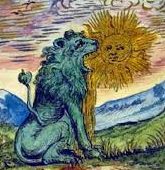
Les chats puissants et doux, orgueil de la maison

In mind because my cat has taken to sphinxing all day at the window by my desk.  Baudelaire’s Les Chats from Fleurs du Mal.  I made my own translation and annotated below my sometimes intentionally contrarian rendering decisions.

Les Chats

Les amoureux fervents et les savants austères
Aiment également, dans leur mûre saison,
Les chats puissants et doux, orgueil de la maison,
Qui comme eux sont frileux et comme eux sédentaires.

Amis de la science et de la volupté
Ils cherchent le silence et l’horreur des ténèbres;
L’Erèbe les eût pris pour ses coursiers funèbres,
S’ils pouvaient au servage incliner leur fierté.

Ils prennent en songeant les nobles attitudes
Des grands sphinx allongés au fond des solitudes,
Qui semblent s’endormir dans un rêve sans fin;

Leurs reins féconds sont pleins d’étincelles magiques,
Et des parcelles d’or, ainsi qu’un sable fin,
Etoilent vaguement leurs prunelles mystiques.


Impassioned lovers and austere scholars
alike love in their matured* age
cats powerful and soft, the pride of the house,
who, like them, are timid** and, like them, fixed of habit***.

lovers of discovery and delight
They seek out silence and the shadows’ terror;
Erebus would have adopted them for death’s messengers****
If to service they were able to submit their pride.

They take as they dream the noble poses
of great sphinxes stretched to length in the heart of solitudes,
who seem to drowse in a dream unending;

Leurs reins féconds are full of bewitching glimmers,*****
and specks of gold, like exquisite sand-grains,
sparkle obscurely in their enchanting eyes.

*I take mûre saison as ripe/mature like other translations I’ve seen, but mûre does have the idiomatic meaning ‘drunk’ so I think you could legitimately take the whole phrase as a pun equivalent to ‘when drunk’ rather than a reference to time of life.

**Everyone else I’ve seen takes frileux as ‘sensitive to cold.’  Which certainly does apply to cats – but so does the alternative sense ‘fearful, timid.’  And this latter works better with savants and can be pushed to apply to amoureux (fervents notwithstanding).

***Again, everyone else goes for the most literal sense of sédentaires but I don’t see why lovers, scholars, and cats are not equally as well described by the word’s other sense – ‘fixed of habit’

**** L’Erèbe can be either the place or the deity and I’m not certain which is intended, though possessive ses further on in the line argues the latter.  Coursiers I take as messengers rather than steeds because I don’t think there’s the suggestion they’d be hooked to death’s chariot, and messenger is in line with the existing tradition of cat as witch’s familiar.

***** English can’t handle this line with decency.  Leurs reins féconds – fertile flanks, rich loins.  Dropped. Other efforts are here – https://fleursdumal.org/poem/155


It is then, if ever, man walks alone with God

From Jack London’s The White Silence – originally published in his first collection, The Son of the Wolf, but now in any anthology of his short fiction.

No more conversation; the toil of the trail will not permit such extravagance.

And of all deadening labors, that of the Northland trail is the worst. Happy is the man who can weather a day’s travel at the price of silence, and that on a beaten track. And of all heartbreaking labors, that of breaking trail is the worst. At every step the great webbed shoe sinks till the snow is level with the knee. Then up, straight up, the deviation of a fraction of an inch being a certain precursor of disaster, the snowshoe must be lifted till the surface is cleared; then forward, down, and the other foot is raised perpendicularly for the matter of half a yard. He who tries this for the first time, if haply he avoids bringing his shoes in dangerous propinquity and measures not his length on the treacherous footing, will give up exhausted at the end of a hundred yards; he who can keep out of the way of the dogs for a whole day may well crawl into his sleeping bag with a clear conscience and a pride which passeth all understanding; and he who travels twenty sleeps on the Long Trail is a man whom the gods may envy.

The afternoon wore on, and with the awe, born of the White Silence, the voiceless travelers bent to their work. Nature has many tricks wherewith she convinces man of his finity–the ceaseless flow of the tides, the fury of the storm, the shock of the earthquake, the long roll of heaven’s artillery–but the most tremendous, the most stupefying of all, is the passive phase of the White Silence. All movement ceases, the sky clears, the heavens are as brass; the slightest whisper seems sacrilege, and man becomes timid, affrighted at the sound of his own voice. Sole speck of life journeying across the ghostly wastes of a dead world, he trembles at his audacity, realizes that his is a maggot’s life, nothing more.

Strange thoughts arise unsummoned, and the mystery of all things strives for utterance.

And the fear of death, of God, of the universe, comes over him–the hope of the Resurrection and the Life, the yearning for immortality, the vain striving of the imprisoned essence–it is then, if ever, man walks alone with God.