Such a philosophy combats our moral sufferings by deadening our sensibility

From Gerard de Nerval’s Aurelia – English is from the Penguin Selected Writings.

When the soul hovers uncertainly between life and dream, between mental disarray and the reappearance of cold reflection, it is in religious belief that one must seek solace. I have never been able to find relief in that school of philosophy which merely supplies us with maxims of self-interest or, at the most, of reciprocity, leaving us nothing but empty experience and bitter doubts. Such a philosophy combats our moral sufferings by deadening our sensibility; like the surgeon, it knows only how to cut out the organ which is causing the pain. But for us, born in an age of revolutions and upheavals which shattered all beliefs, raised at best to practise a vague religion based on a few outward observances and whose lukewarm devotion is perhaps more sinful than impiety or heresy, for us things become quite difficult whenever we feel the need to reconstruct that mystic temple whose edifice the pure and simple of spirit accept fully traced within their hearts. ‘The Tree of Knowledge is not that of Life!’ And yet can we rid our mind of all the good or evil implanted in it by so many intelligent generations? Ignorance cannot be learned.


Lorsque l’âme flotte incertaine entre la vie et le rêve, entre le désordre de l’esprit et le retour de la froide réflexion, c’est dans la pensée religieuse que l’on doit chercher des secours ; — je n’en ai jamais pu trouver dans cette philosophie qui ne nous présente que des maximes d’égoïsme ou tout au plus de réciprocité, une expérience vaine, des doutes amers ; — elle lutte contre les douleurs morales en anéantissant la sensibilité ; pareille à la chirurgie, elle ne sait que retrancher l’organe qui fait souffrir. — Mais pour nous, nés dans des jours de révolutions et d’orages, où toutes les croyances ont été brisées — élevés tout au plus dans cette foi vague qui se contente de quelques pratiques extérieures, et dont l’adhésion indifférente est plus coupable peut-être que l’impiété et l’hérésie, — il est bien difficile, dès que nous en sentons le besoin, de reconstruire l’édifice mystique dont les innocents et les simples admettent dans leurs cœurs la ligne toute tracée. « L’arbre de science n’est pas l’arbre de vie ! » Cependant, pouvons-nous rejeter de notre esprit ce que tant de générations intelligentes y ont versé de bon ou de funeste ? L’ignorance ne s’apprend pas.

Who has nothing else to do, he studies Sanskrit

I appreciate the shots my Sanskrit textbook – Devavanipravesika – take at its subject and it students.  It often introduces a new element of grammar with a variant of ‘these rules, though of appalling complexity at first glance, …’ and today in reviewing relatives and correlatives I found this example sentence:

yasyAnyA gatir nAsti, sa samskrtam pathati

Who has nothing else to do, he studies Sanskrit

Lacking a proper font and never sure the keyboard shortcuts needed I’ve capitalized long A’s and ignored whatever the dots below m and r are called.

Law’s a machine from which, to please the mob, truth the divinity must needs descend

The opening of Book IV of Robert Browning’s The Ring and the Book:

True, Excellency—as his Highness says,
Though she’s not dead yet, she’s as good as stretched
Symmetrical beside the other two;
Though he’s not judged yet, he’s the same as judged,
So do the facts abound and superabound:
And nothing hinders that we lift the case
Out of the shade into the shine, allow
Qualified persons to pronounce at last,
Nay, edge in an authoritative word
Between this rabble’s-brabble of dolts and fools
Who make up reasonless unreasoning Rome.
“Now for the Trial!” they roar: “the Trial to test
“The truth, weigh husband and weigh wife alike
“I’ the scales of law, make one scale kick the beam!”
Law’s a machine from which, to please the mob,
Truth the divinity must needs descend
And clear things at the play’s fifth act—aha!

μυριᾶν δ᾿ ἀρετᾶν ἀτελεῖ νόῳ γεύεται

From Pindar Nemean 3.40ish, with Loeb text and translation.

συγγενεῖ δέ τις εὐδοξίᾳ μέγα βρίθει.
ὃς δὲ διδάκτ᾿ ἔχει, ψεφεννὸς ἀνὴρ
ἄλλοτ᾿ ἄλλα πνέων οὔ ποτ᾿ ἀτρεκεῖ
κατέβα ποδί, μυριᾶν δ᾿ ἀρετᾶν ἀτελεῖ νόῳ γεύεται.

One with inborn glory carries great weight,
but he who has mere learning is a shadowy man;
ever changing his purpose, he never takes a precise
step, but attempts innumerable feats with an ineffectual
mind.

The single citation for ψεφεννός I can find is right here but it’s clearly related to another rare word – ψέφος or darkness (which appears as ψέφας in a fragment from Pindar).  But for the logic to follow, the sense has to be in contrast with βρίθω – which Slater’s Lexicon to Pindar, citing this appearance, gives as “be heavy met. συγγενεῖ δέ τις εὐδοξίᾳ μέγα βρίθει prevails, is powerful.”  The image would accordingly have to veer more toward  the association of dark with fog with shadow with shade/spirit with flitting lightness with inconstancy and ineffectuality.  And that movement toward spirit and lightness would seem confirmed with the next line’s πνέων which generally means ‘to breath’ but which Slater cites for this location as falling under the metaphorical sense of “be minded, have aspirations.”  All of which would come together in translation as:

One with inborn glory has great heft,
but he who has learning is an aery/insubstantial fog
aspiring now to one thing, now to another, and never
stepping with determined foot.  Countless achievements does he taste but with a mind that brings none to a conclusion.

I’m certainly projecting my own guilt for intellectual flightiness into Pindar’s conclusion but my rendering avoid’s the Loeb’s unjustifiable insertion of “[mere] learning.” My ἀτρεκής is easily within bounds of the accepted ‘precise, accurate, strict’, my γεύω sheds a loose metaphorical rendering, and my ἀτελής holds closer to the etymological basis.  I call it an improvement.  But the Loeb translator Race has the last laugh because I read his version while no one will read the one I spent 30 minutes on.

A little Ape with huge She-Bear

Some more Coleridge juvenalia – this one written in 1792 (age 20) on a break from Cambridge.  It’s addressed to his brother George and concerns the vicar who succeeded their father – the Dickensian-named Fulwood Smerdon.

Written After a Walk Before Supper

Tho’ much averse, dear Jack, to flicker,
To find a likeness for friend V—ker,
I’ve made thro’ Earth, and Air, and Sea,
A Voyage of Discovery!
And let me add (to ward off strife)
For V—ker and for V—ker’s Wife —
She large and round beyond belief,
A superfluity of beef!
Her mind and body of a piece,
And both composed of kitchen-grease.
In short, Dame Truth might safely dub her
Vulgarity enshrin’d in blubber!
He, meagre bit of littleness,
All snuff, and musk, and politesse;
So thin, that strip him of his clothing,
He’d totter on the edge of Nothing!
In case of foe, he well might hide
Snug in the collops of her side.
Ah then, what simile will suit?
Spindle-leg in great jack-boot?
Pismire crawling in a rut?
Or a spigot in a butt?
Thus I humm’d and ha’d awhile,
When Madam Memory with a smile
Thus twitch’d my ear — ‘‘Why sure, I ween,
In London streets thou oft hast seen
The very image of this pair:
A little Ape with huge She-Bear
Link’d by hapless chain together:
An unlick’d mass the one — the other
An antic small with nimble crupper — ‘‘
But stop, my Muse! for here comes supper.

If we went round the moon it would not make a pennyworth of difference to me or to my work

From Sir Arthur Conan Doyle’s A Study in Scarlet.  I’ve used this since childhood to further needle family and friends who show themselves repulsed by my ignorance of current affairs.

[Holmes’] ignorance was as remarkable as his knowledge. Of contemporary literature, philosophy and politics he appeared to know next to nothing. Upon my quoting Thomas Carlyle, he inquired in the naivest way who he might be and what he had done. My surprise reached a climax, however, when I found incidentally that he was ignorant of the Copernican Theory and of the composition of the Solar System. That any civilized human being in this nineteenth century should not be aware that the earth travelled round the sun appeared to be to me such an extraordinary fact that I could hardly realize it.

“You appear to be astonished,” he said, smiling at my expression of surprise. “Now that I do know it I shall do my best to forget it.”

“To forget it!”

“You see,” he explained, “I consider that a man’s brain originally is like a little empty attic, and you have to stock it with such furniture as you choose. A fool takes in all the lumber of every sort that he comes across, so that the knowledge which might be useful to him gets crowded out, or at best is jumbled up with a lot of other things so that he has a difficulty in laying his hands upon it. Now the skilful workman is very careful indeed as to what he takes into his brain-attic. He will have nothing but the tools which may help him in doing his work, but of these he has a large assortment, and all in the most perfect order. It is a mistake to think that that little room has elastic walls and can distend to any extent. Depend upon it there comes a time when for every addition of knowledge you forget something that you knew before. It is of the highest importance, therefore, not to have useless facts elbowing out the useful ones.”

“But the Solar System!” I protested.

“What the deuce is it to me?” he interrupted impatiently; “you say that we go round the sun. If we went round the moon it would not make a pennyworth of difference to me or to my work.”

The need to hear the news several times a day is already a sign of fear

In preparation for a reread of Ernst Junger’s Eumeswil I’ve gone back to his Waldgang / Traité du rebelle /The Forest Passage (though, unhelpfully, I only have the French and English versions at home).  It’s a curious essay that in its repetition and (for me) frequent incoherence in the back half feels now most interesting for capturing the author’s personal groundlessness at the time of writing (around 1950).  The Europe he came of age in is unquestionably dead, his notion of the dignity of the warrior profession is twice pummeled, the resurrected Germany he fought for without agreeing with has fallen, and a new world order headed by American and Russia of all people is in place and already threatening another war.  And that summary leaves out the question of the guilt-to-innocence ratio of the German people at large and himself in particular in relation to the brutalities of the Nazis.  His tumbling efforts to mold all this into a philosophy and way forward are better illustrated than described:

Fear is symptomatic of our times—and it is all the more disturbing as it comes on the heels of an epoch of great individual freedom, in which hardships of the kind portrayed by Dickens were already virtually forgotten.

How did such a shift come about? If we want to pick out a turning point none could be more appropriate than the day the Titanic went down. Here light and shadow collide starkly: the hubris of progress with panic, the highest comfort with destruction, and automatism with a catastrophe manifested as a traffic accident.

In fact, the growing automatism is closely connected with the fear, in the sense that man restricts his own power of decision in favor of technological expediencies. This brings all manner of conveniences—but an increasing loss of freedom must necessarily also result. The individual no longer stands in society like a tree in the forest; instead, he resembles a passenger on a fast-moving vessel, which could be called Titanic, or also Leviathan. While the weather holds and the outlook remains pleasant, he will hardly perceive the state of reduced freedom that he has fallen into. On the contrary, an optimism arises, a sense of power produced by the high speed. All this will change when fire-spitting islands and icebergs loom on the horizon. Then, not only does technology step over from the field of comfort into very different domains, but the lack of freedom simultaneously becomes apparent—be it in a triumph of elemental powers, or in the fact that any individuals who have remained strong command an absolute authority.

The details are well known and well described; they belong to our own-most experiences. It may be objected here that other times of fear, of apocalyptic panic, have existed that were not accompanied and orchestrated by this automatic character. We leave the question open here, since the automatism only takes on a frightening aspect when it reveals itself as one of the forms, as the style, of the cataclysm—as Hieronymus Bosch so unsurpassably depicted it. Whether our modern instance represents a very unusual kind of fear or whether it is simply the return of one and the same cosmic anxiety in the style of the times—we will not pause on this but will rather raise the opposite question, which we think of crucial importance: Might it be possible to lessen the fear even as the automatism progresses or, as can be foreseen, approaches perfection? Would it not be possible to both remain on the ship and retain one’s autonomy of decision—that is, not only to preserve but even to strengthen the roots that are still fixed in the primal ground? This is the real question of our existence.

It is this same question that is concealed behind all the fears of our times: man wants to know how he can escape destruction. These days, when we sit down with acquaintances or strangers anywhere in Europe, the conversation soon turns to general concerns—and then the whole misery emerges. It becomes apparent that practically all of these men and women are in the grip of the kind of panic that has been unknown here since the early Middle Ages. We observe them plunging obsessively into their fears, whose symptoms are revealed openly and without embarrassment. We are witness to a contest of minds arguing about whether it would be better to flee, hide, or commit suicide, and who, in the possession of full liberty, are already considering the means and wiles they will employ to win the favor of the base when it comes to power. With horror we also sense that there is no infamy they will not consent to if it is demanded of them. Among them will be healthy, strapping men, built like athletes. The question must be asked: why do they bother with sports?

However, these same men are not just fearful—they are also fearsome. The sentiment changes from fear to open hate the moment they notice a weakening in those they feared only a moment before. It is not only in Europe that one comes across such congregations. Where the automatism increases to the point of approaching perfection—such as in America—the panic is even further intensified. There it finds its best feeding grounds; and it is propagated through networks that operate at the speed of light. The need to hear the news several times a day is already a sign of fear; the imagination grows and paralyzes itself in a rising vortex. The myriad antennae rising above our megacities resemble hairs standing on end—they provoke demonic contacts.
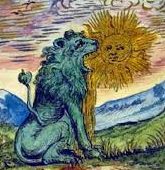
The tea-kettle is spoilt and Coleridge is undone!

Some Coleridge comic juvenalia:

Monody on a Tea-kettle

O Muse who sangest late another’s pain,
To griefs domestic turn thy coal-black steed!
With slowest steps thy funeral steed must go,
Nodding his head in all the pomp of woe:
Wide scatter round each dark and deadly weed,
And let the melancholy dirge complain,
(Whilst Bats shall shriek and Dogs shall howling run)
The tea-kettle is spoilt and Coleridge is undone!
Your cheerful songs, ye unseen crickets, cease!
Let songs of grief your alter’d minds engage!
For he who sang responsive to your lay,
What time the joyous bubbles ’gan to play,
The sooty swain has felt the fire’s fierce rage; —
Yes, he is gone, and all my woes increase;
I heard the water issuing from the wound —
No more the Tea shall pour its fragrant steams around!
O Goddess best belov’d! Delightful Tea!
With thee compar’d what yields the madd’ning Vine?
Sweet power! who know’st to spread the calm delight,
And the pure joy prolong to midmost night!
Ah! must I all thy varied sweets resign?
Enfolded close in grief thy form I see;
No more wilt thou extend thy willing arms,
Receive the fervent Jove, and yield him all thy charms!
How sink the mighty low by Fate opprest! —
Perhaps, O Kettle! thou by scornful toe
Rude urg’d t’ ignoble place with plaintive din,
May’st rust obscure midst heaps of vulgar tin; —
As if no joy had ever seiz’d my breast
When from thy spout the streams did arching fly, —
As if, infus’d, thou ne’er hadst known t’ inspire
All the warm raptures of poetic fire!
But hark! or do I fancy the glad voice —
‘‘What tho’ the swain did wondrous charms disclose —
(Not such did Memnon’s sister sable drest)
Take these bright arms with royal face imprest,
A better Kettle shall thy soul rejoice,
And with Oblivion’s wings o’erspread thy woes!’’
Thus Fairy Hope can soothe distress and toil;
On empty Trivets she bids fancied Kettles boil!

the choicest recompense for his great labors

From Pindar’s Nemean 1 (text and translation from the Loeb) – following baby Heracles’ dispatching of the Hera-sent snakes.  A personally revealing observation here but I much appreciate the simple touch that all his life’s labors lead only to peace (εἰρήνη) and quiet (ἡσυχία) – the latter called the choicest recompense (ποινὰν ἐξαίρετον) for his great efforts.  Too rarely is Heracles given a side past man of action and too rarely does Greek literature recognize the joy of relaxation.

[Amphitryon] summoned his neighbor,
the foremost prophet of highest Zeus,
the straight-speaking seer Teiresias, who declared to him
and to all the people what fortunes he would encounter:

all the lawless beasts he would slay on land
and all those in the sea;
and to many a man who traveled
in crooked excess he said that
he would give the most hateful doom.
And furthermore, when the gods would meet the Giants
in battle on the plain of Phlegra,
he said that beneath a volley of his arrows
their bright hair would be fouled

with earth, but that he himself
in continual peace for all time
would be allotted tranquillity as the choicest
recompense for his great labors…


γείτονα δ᾿ ἐκκάλεσεν
Διὸς ὑψίστου προφάταν ἔξοχον,
ὀρθόμαντιν Τειρεσίαν· ὁ δέ οἱ
φράζε καὶ παντὶ στρατῷ, ποίαις ὁμιλήσει τύχαις,

ὅσσους μὲν ἐν χέρσῳ κτανών,
ὅσσους δὲ πόντῳ θῆρας ἀιδροδίκας·
καί τινα σὺν πλαγίῳ
ἀνδρῶν κόρῳ στείχοντα τὸν ἐχθρότατον
φᾶσέ νιν δώσειν μόρον.
καὶ γὰρ ὅταν θεοὶ ἐν
πεδίῳ Φλέγρας Γιγάντεσσιν μάχαν
ἀντιάζωσιν, βελέων ὑπὸ ῥι-
παῖσι κείνου φαιδίμαν γαίᾳ πεφύρσεσθαι κόμαν

ἔνεπεν· αὐτὸν μὰν ἐν εἰρή-
νᾳ τὸν ἅπαντα χρόνον <ἐν> σχερῷ
ἡσυχίαν καμάτων μεγάλων
ποινὰν λαχόντ᾿ ἐξαίρετον