Forse tu non pensavi ch’io löico fossi!

From Inferno Canto 27.112-129 – the conclusion of Guido da Montefeltro’s story

Francesco venne poi com’ io fu’ morto,
per me; ma un d’i neri cherubini
li disse: “Non portar: non mi far torto.

Venir se ne dee giù tra ’ miei meschini
perché diede ’l consiglio frodolente,
dal quale in qua stato li sono a’ crini;

ch’assolver non si può chi non si pente,
né pentere e volere insieme puossi
per la contradizion che nol consente”.

Oh me dolente! come mi riscossi
quando mi prese dicendomi: “Forse
tu non pensavi ch’io löico fossi!”.

A Minòs mi portò; e quelli attorse
otto volte la coda al dosso duro;
e poi che per gran rabbia la si morse,

disse: “Questi è d’i rei del foco furo”;
per ch’io là dove vedi son perduto,
e sì vestito, andando, mi rancuro».
Francis came afterward, when I was dead,
For me; but one of the black Cherubim
Said to him: ‘ Take him not; do me no wrong;


He must come down among my servitors,
Because he gave the fraudulent advice
From which time forth I have been at his hair;

For who repents not cannot be absolved,
Nor can one both repent and will at once,
Because of the contradiction which consents not.

O miserable me ! how I did shudder
When he seized on me, saying: ‘ Peradventure
Thou didst not think that I was a logician ! ‘

He bore me unto Minos, who entwined
Eight times his tail about his stubborn back,
And after he had bitten it in great rage,

Said: ‘ Of the thievish fire a culprit this ;’
Wherefore, here where thou seest, am I lost,
And vested thus in going I bemoan me.”


Virtuti semper adversatur ignorantia

Two engravings – Virtus Combusta and Virtus Deserta – after drawings by Mantegna, captioned thus in the British Museums’ exhibit of 2007:

The two parts of this engraving are based on drawings by Mantegna. The subject is an allegory on the hold of ignorance on humanity. At top right the fat naked woman seated on a globe representing Ignorance reigns. She is served by the blindfolded figure of Fate and emaciated Avarice. At left, a sightless woman accompanied by a satyr symbolising Lust, and Error, a man with an Ass`s ears, stumbles toward a chasm. Below figures have fallen into the pit. One is being rescued by Hermes, the God of Knowledge, demonstrating that Humanity can be saved.

The lower image, Virtus Deserta, features a tumbled stone/brick/column with the inscription “Virtuti S.A.I” – a sort of personal motto of Mantegna’s that expands to virtuti semper adversatur ignorantia – Ignorance is always opposed to virtue.

an00028229_001_l

an00028228_001_l

Et nondum sparsa conpage carinae Naufragium sibi quisque facit

From Lucan’s Civil War 1.486-505, text and translation from the Loeb edition.

Nec solum volgus inani
Percussum terrore pavet; sed curia et ipsi
Sedibus exiluere patres, invisaque belli
Consulibus fugiens mandat decreta senatus.
Tum, quae tuta petant et quae metuenda relinquant
Incerti, quo quemque fugae tulit impetus, urguet
Praecipitem populum, serieque haerentia longa
Agmina prorumpunt. Credas aut tecta nefandas
Corripuisse faces aut iam quatiente ruina
Nutantes pendere domos: sic turba per urbem
Praecipiti lymphata gradu, velut unica rebus
Spes foret adflictis patrios excedere muros,
Inconsulta ruit. Qualis, cum turbidus Auster
Reppulit a Libycis inmensum Syrtibus aequor
Fractaque veliferi sonuerunt pondera mali,
Desilit in fluctus deserta puppe magister
Navitaque, et nondum sparsa conpage carinae
Naufragium sibi quisque facit; sic urbe relicta
In bellum fugitur.

Nor was the populace alone stricken with groundless fear. The Senate House was moved; the Fathers themselves sprang up from their seats; and the Senate fled, deputing to the consuls the dreaded declaration of war. Then, knowing not where to seek refuge or where to flee danger, each treads on the heels of the hastening population, wherever impetuous flight carries him. Forth they rush in long unbroken columns; one might think that impious firebrands had seized hold of the houses, or that the buildings were swaying and tottering in an earthquake shock. For the frenzied crowd rushed headlong through the city with no fixed purpose, and as if the one chance of relief from ruin were to get outside their native walls. So, when the stormy South wind has driven the vast sea from the Syrtes of Libya and the heavy mast with its sails has come crashing down, the skipper abandons the helm and leaps down with his crew into the sea, and each man makes shipwreck for himself before the planks of the hull are broken asunder. Thus Rome is abandoned, and flight is the preparation for war.

Si bonus es, venias; si nequam, nequaquam.

From an exchange between Alexander Neckam/Nequam and the Abbot of St. Albans.  The general story goes that Alexander asked for a teaching charge at St. Albans, to which the abbot punned:

Si bonus es, venias; si nequam, nequaquam.

If you are a good man, you should come; if evil, by no means

Alexander is then said to have answered:

Si velis, veniam; sin autem, tu autem

If you wish, I shall come; if not, farewell.

(Alexander’s pun doesn’t translate well since the wit is rooted in recognizing ‘tu autem‘ as the beginning to the memento mori concluding line of medieval lectures – ‘tu autem Domine miserere nobis‘ – and hence a clever shorthand for farewell and fuck off.  )

But then I have seen reversals of this sequence – that Alexander, promised the position but tired of foot-dragging, had sent his ‘reply’ first – to which the Abbott then replied with his, which then becomes the source of Alexander’s nickname rather than a pun on it.


Hé bien, Titus, que viens-tu faire?

Act IV, Scene IV of Racine’s Berenice.  Titus speaks to himself:

Hé bien, Titus, que viens-tu faire ?
Bérénice t’attend. Où viens-tu, téméraire ?
Tes adieux sont-ils prêts ? T’es-tu bien consulté ?
Ton coeur te promet-il assez de cruauté ?
Car enfin au combat, qui pour toi se prépare,
C’est peu d’être constant, il faut être barbare.
Soutiendrai-je ces yeux dont la douce langueur,
Sait si bien découvrir les chemins de mon coeur ?
Quand je verrai ces yeux armés de tous leurs charmes,
Attachés sur les miens, m’accabler de leurs larmes,
Me souviendrai-je alors de mon triste devoir ?
Pourrai-je dire enfin : je ne veux plus vous voir ?
Je viens percer un coeur que j’adore, qui m’aime.
Et pourquoi le percer ? Qui l’ordonne ? Moi-même.
Car enfin Rome a-t-elle expliqué ses souhaits ?
L’entendons-nous crier autour de ce palais ?
Vois-je l’État penchant au bord du précipice ?
Ne le puis-je sauver que par ce sacrifice ?
Tout se tait, et moi seul trop prompt à me troubler,
J’avance des malheurs que je puis reculer.
Et qui sait si sensible aux vertus de la reine,
Rome ne voudra point l’avouer pour Romaine ?
Rome peut par son choix justifier le mien.
Non, non, encore un coup ne précipitons rien.
Que Rome avec ses lois mette dans la balance
Tant de pleurs, tant d’amour, tant de persévérance,
Rome sera pour nous. Titus, ouvre les yeux.
Quel air respires-tu ? N’es-tu pas dans ces lieux
Où la haine des rois avec le lait sucée,
Par crainte, ou par amour, ne peut être effacée ?
Rome jugea ta reine en condamnant ses rois.
N’as-tu pas en naissant entendu cette voix ?
Et n’as-tu pas encore ouï la renommée
T’annoncer ton devoir jusque dans ton armée ?
Et lorsque Bérénice arriva sur tes pas,
Ce que Rome en jugeait, ne l’entendis-tu pas !
Faut-il donc tant de fois te le faire redire ?
Ah lâche ! Fais l’amour, et renonce à l’empire.
Au bout de l’univers va, cours te confiner,
Et fais place à des coeurs plus dignes de régner.
Sont-ce là ces projets de grandeur et de gloire
Qui devaient dans les coeurs consacrer ma mémoire ?
Depuis huit jours je règne. Et jusques à ce jour
Qu’ai-je fait pour l’honneur ? J’ai tout fait pour l’amour.
D’un temps si précieux quel compte puis-je rendre ?
Où sont ces heureux jours que je faisais attendre ?
Quels pleurs ai-je séchés ? Dans quels yeux satisfaits
Ai-je déjà goûté le fruit de mes bienfaits ?
L’univers a-t-il vu changer ses destinées ?
Sais-je combien le ciel m’a compté de journées ?
Et de ce peu de jours si longtemps attendus,
Ah malheureux ! Combien j’en ai déjà perdus !
Ne tardons plus. Faisons ce que l’honneur exige.
Rompons le seul lien…

That thou among the wastes of time must go

From Shakespeare’s Sonnets – no. XII – but found in William Hazlitt’s On the Pleasure of Hating – with what I’m finding to be Hazlitt’s typical looseness of precision in quoting.  The beautiful origin aside, I marked this mainly for its closeness to ‘gutter of time’ – which I would not be against betting was another of Sterne’s intentionally warped echoes of Shakespeare

When I do count the clock that tells the time,
And see the brave day sunk in hideous night;
When I behold the violet past prime,
And sable curls, all silvered o’er with white;
When lofty trees I see barren of leaves,
Which erst from heat did canopy the herd,
And summer’s green all girded up in sheaves,
Borne on the bier with white and bristly beard,
Then of thy beauty do I question make,
That thou among the wastes of time must go,
Since sweets and beauties do themselves forsake
And die as fast as they see others grow;
  And nothing ‘gainst Time’s scythe can make defence
  Save breed, to brave him when he takes thee hence.

On the field of the battle that never was

From Stanislaw Lem’s Cyberiad – in the first sally of Trurl and Klapaucius:

Sensing that something had gone amiss, Ferocitus nodded to the twelve buglers at his right hand. Atrocitus, from the top of his hill, did likewise; the buglers put the brass to their lips and sounded the charge on either side. At this clarion signal each army totally and completely linked up. The fearsome metallic clatter of closing contacts reverberated over the future battlefield; in the place of a thousand bombardiers and grenadiers, commandos, lancers, gunners, snipers, sappers and marauders—there stood two giant beings, who gazed at one another through a million eyes across a mighty plain that lay beneath billowing clouds. There was absolute silence. That famous culmination of consciousness which the great Gargantius had predicted with mathematical precision was now reached on both sides. For beyond a certain point militarism, a purely local phenomenon, becomes civil, and this is because the Cosmos Itself is by nature wholly civilian, and indeed, the minds of both armies had assumed truly cosmic proportions! Thus, though on the outside armor still gleamed, as well as the death-dealing steel of artillery, within there surged an ocean of mutual good will, tolerance, an all-embracing benevolence, and bright reason. And so, standing on opposite hilltops, their weapons sparkling in the sun, while the drums continued to roll, the two armies smiled at one another. Trurl and Klapaucius were just then boarding their ship, since that which they had planned had come to pass: before the eyes of their mortified, infuriated rulers, both armies went off hand in hand, picking flowers beneath the fluffy white clouds, on the field of the battle that never was.

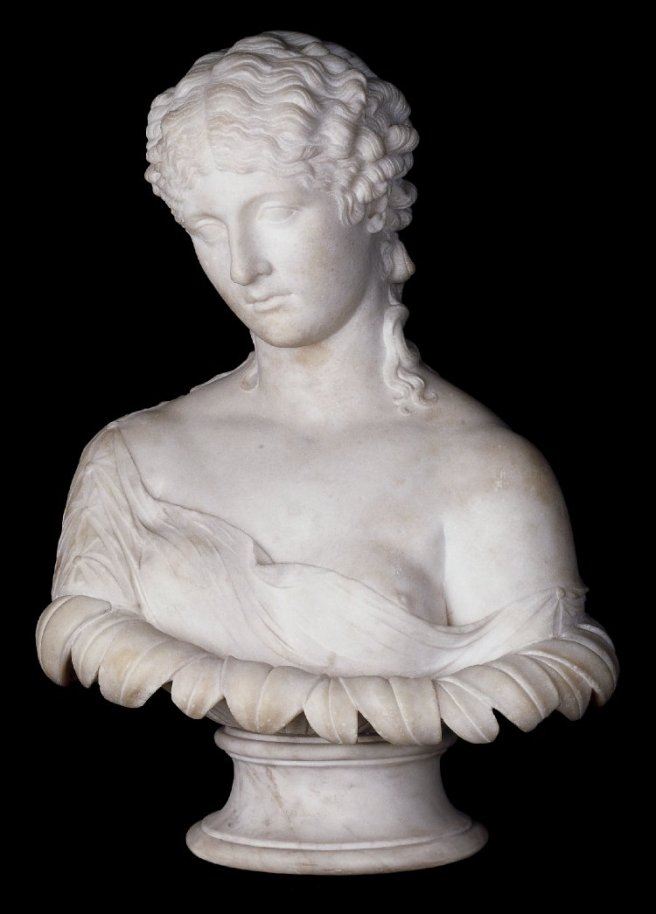
I must take care of my wife

From Treasures of the British Museum on the Townley Collection:

The bust was purchased from Prince Laurenzano at Naples in 1772 and was Charles Townley’s favourite sculpture.  It is related that when, as a Roman Catholic, he was obliged to flee from the London mob at the time of the bloody Gordon riots (1780) his priorities were such that he secured his cabinet of gems, then taking Clytie in his arms with the words ‘I must take care of my wife’, ‘he left his house, casting one last, longing, look at the marbles which, as he feared, would never charm his eyes again’.

an00033326_001_l

I am a neo-frivolist

From Antal Szerb’s The Pendragon Legend (pg. 178):

“I really don’t understand you.  I’d so much rather be in your position.  To devote one’s life to scholarship … to truth, and the service of mankind …”

“You may rest assured that my personal scholarship has never served mankind.  Because there is no such thing as justice, no universal humanity.  There are only versions of justice and different sorts of people.  And it has always given me particular pleasure that my own scholarly efforts, let’s say, in the field of old English ironworking, have never been of the slightest use to anyone.”

“You speak like someone who has no ideals.”

“True.  I am a neo-frivolist.”

“And how does that differ from old-fashioned frivolity?”

“Mostly in the ‘neo’ prefix.  It makes it more interesting.”