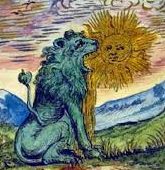
Then go forth, nor fear or spice, or fish, or fire, or close-stools here

Part three of what is apparently become a recurring series on bad books as food wrappings (part 1 and part 2). Here we expand to toilet paper.

Robert Herrick allusively in To his Booke

Have I not blest thee? Then go forth, nor fear
Or spice, or fish, or fire, or close-stools here.

But with thy fair Fates leading thee, Go on
With thy most white Predestination.
Nor thinkd these Ages that do hoarcely sing
The farting Tanner and familiar King,
The dancing Frier, tatter’d in the bush;
Those monstrous lies of little Robin Rush,
Tom Chipperfeild, and pretty-lisping Ned,
That doted on a Maide of Gingerbread;
The flying Pilcher and the frisking Dace,
With all the rabble of Tim-Trundell‘s race
(Bred from the dung-hils and adulterous rhimes),
Shall live, and thou not superlast all times.
No, no; thy Stars have destin’d Thee to see
The whole world die and turn to dust with thee.
He’s greedie of his life, who will not fall
When as a publick ruine bears down All.

Martial, predictably, provides at least one classical instance (12.61):

Versus et breve vividumque carmen
in te ne faciam times, Ligurra,
et dignus cupis hoc metu videri.
sed frustra metuis cupisque frustra.
in tauros Libyci fremunt leones,
non sunt papilionibus molesti.
quaeras censeo, si legi laboras,
nigri fornicis ebrium poetam,
qui carbone rudi putrique creta
scribit carmina quae legunt cacantes.

frons haec stigmate non meo notanda est.

You are afraid, Ligurra, of my writing verses against you, a brief, lively poem, and you long to seem worthy of such an apprehension. But idle is your fear and idle your desire. Libyan lions roar at bulls, they do not trouble butterflies. I advise you, if you are anxious to be read of, to look for some boozy poet of the dark archway who writes verses with rough charcoal or crumbling chalk which folk read while they shit. This brow of yours is not for marking with my brand.

And Robert Burton, as so often, is the likely connector – citing the Martial passage in his Democritus to the Reader prologue of The Anatomy of Melancholy.

By which means it comes to passe, that not only *Libraries and Shops are full of our putid Papers, but every Close-stoole and Jakes, Scribunt carmina quae legunt cacantes; they serve to put under Pies, to lap Spice in, and keepe Rost-meat from burning.

*Non tam referta bibliothecae quam cloacae. [the libraries are not as full as the drains.]

The pleasantest dotage that ever I read

From Andre du Laurens‘ 1594 treatise Discours de la conservation de la veuë: des maladies melancoliques: des catarrhes, & de la vieillesse, englished in 1599 by Richard Surphlet as A discourse of the preservation of the sight of melancholike diseases of rheumes and of old age:

The pleasantest dotage that euer I read, was of one Sienois a Gentleman, who had resolued with himselfe not to pisse, but to dye rather, and that because he imagined, that when he first pissed, all his towne would be drowned. The Phisitions shewing him, that all his bodie, and ten thousand moe such as his, were not able to containe so much as might drowne the least house in the towne, could not change his minde from this foolish imaginati∣on. In the end they seeing his obstinacie, and in what danger he put his life, found out a pleasant inuention. They caused the next house to be set on fire, & all the bells in the town to ring, they per∣swaded diuerse seruants to crie, to the fire, to the sire, & therewith∣all send of those of the best account in the town, to craue helpe, and shew the Gentleman that there is but one way to saue the towne, and that it was, that he should pisse quickelie and quench the sire. Then this sillie melancholike man which abstained from pissing for feare of loosing his towne, taking it for graunted, that it was now in great hazard, pissed and emptied his bladder of all that was in it, and was himselfe by that meanes preserued.

This was cited in Mary Ann Lund’s A User’s Guide to Melancholy, a book which is (to me) wrongly taken as an introduction to Burton’s Anatomy of Melancholy. It feels more an onramp, a brief overview of the renaissance conception of melancholy and the medical theories behind that conception. I think the same is achieved just as effectively by several other books that also provide broader overviews – Matthew Bell’s Melancholia: The Western Malady and Stanley Jackson’s Melancholia and Depression: From Hippocratic Times to Modern Times – but this one does have the benefit of sustained connection to the text and its author if you’re looking for the confidence to pick up Burton. There’s a Guardian review here and a far better (but paywalled) TLS here.

Plures crapula, quam gladius, is a true saying, the board consumes more than the sword

From Robert Burton’s Anatomy of Melancholy (136 in the NYRB edition, to avoid the horrendous Part 1 etc. citations):

Plures crapula, quam gladius, is a true saying, the board consumes more than the sword. Our intemperance it is, that pulls so many several incurable diseases upon our heads, that hastens old age, perverts our temperature, and brings upon us sudden death.

Crapula in Latin and κραιπάλη in Greek are both limited to excessive drinking – without any commentary on gluttony. I’m not sure if English translations of the period broadened the sense or if Burton just wanted the rhyme.

The rule, put shortly, which the philosophers seek to express in endless words and volumes

From Pliny the Younger’s Epistles (7.26):

Possum ergo quod plurimis verbis plurimis etiam voluminibus philosophi docere conantur, ipse breviter tibi mihique praecipere, ut tales esse sani perseveremus, quales nos futuros profitemur infirmi. Vale.

So here for our guidance is the rule, put shortly, which the philosophers seek to express in endless words and volumes: in health we should continue to be the men we vowed to become when sickness prompted our words.

I found this cited in Robert Burton’s Anatomy of Melancholy (Part. 1 Sect. 1 Memb. 1 Subs. 1) but his imprecision of quotation drives me mad if I don’t have the OET commentary volumes at hand. The above becomes:

summum esse totius philosophiae, ut tales esse sani perseveremus, quales nos futuros profitemur infirmi

This is the sum of all philosophy – in health we should continue to be the men we vowed to become when sickness prompted our words

Which when googled for the source only ends up putting you into a loop always connecting back to Burton.

What care I whether the divell himselfe redeem me?

From Robert Burton’s The Anatomy of Melancholy (Part 2, Sec 1, Memb. 1, Subs. 1), on Unlawfull Cures of Melancholy (to be rejected, of course):

It matters not, saith Paracelsus, whether it bee God or the Divell, Angells or uncleane spirits cure him, so that he be eased. If a man fall into a ditch, as he prosequutes it, what matter is it whether a friend or an enimy helpe him out, and if I be troubled with such a malady, what care I whether the divell himselfe, or any of his ministers by Gods permission redeem me?

applied these days to Mitch McConnell.

Iusta autem ab iniustis petere insipientia est

Some wordplay from Mercury’s prologue in Plautus’ Amphitruo (33-36).  Found in Democritus to His Reader in Burton’s Anatomy of Melancholy.  The translation is from Wolfgang de Melo’s recent Loeb set of Plautus – and a much better one than others I’ve read (partly because he tosses meter for accuracy).

iustam rem et facilem esse oratam a uobis uolo,
nam iustae ab iustis iustus sum orator datus.
nam iniusta ab iustis impetrari non decet,
iusta autem ab iniustis petere insipientia est;


I want to ask you for a just and small favor: I was appointed as a just pleader pleading with the just for a just cause. For it wouldn’t be right to obtain what’s unjust from the just; but it would be stupidity to demand what’s just from the unjust.

A rhapsody of rags gathered together from several dunghills

From Robert Burton’s Anatomy of Melancholy:

And for those other faults of barbarism [in my work], Doric dialect, extemporanean style, tautologies, apish imitation, a rhapsody of rags gathered together from several dunghills, excrements of authors, toys and fopperies confusedly tumbled out, without art, invention, judgment, wit, learning, harsh, raw, rude, fantastical, absurd, insolent, indiscreet, ill-composed, indigested, vain, scurrile, idle, dull, and dry; I confess all (’tis partly affected), thou canst not think worse of me than I do of myself. ‘Tis not worth the reading, I yield it, I desire thee not to lose time in perusing so vain a subject, I should be peradventure loath myself to read him or thee so writing; ’tis not operae pretium [worth the effort]

I rub on privus privatus

From Robert Burton’s Anatomy of Melancholy

….amidst the gallantry and misery of the world; jollity, pride, perplexities and cares, simplicity and villainy; subtlety, knavery, candour and integrity, mutually mixed and offering themselves; I rub on privus privatus; as I have still lived, so I now continue, statu quo prius, left to a solitary life, and mine own domestic discontents: saving that sometimes, ne quid mentiar, as Diogenes went into the city, and Democritus to the haven to see fashions, I did for my recreation now and then walk abroad, look into the world, and could not choose but make some little observation, non tam sagax observator ac simplex recitator, not as they did, to scoff or laugh at all, but with a mixed passion.

Bilem saepe, jocum vestri movere tumultus.
Ye wretched mimics, whose fond heats have been,
How oft! the objects of my mirth and spleen.

I did sometime laugh and scoff with Lucian, and satirically tax with Menippus, lament with Heraclitus, sometimes again I was petulanti splene cachinno, and then again, urere bilis jecur, I was much moved to see that abuse which I could not mend.

Bilem saepe … – Horace Epistles 1.20.  Burton flowers it a bit.

Petulanti splene cachinno – Persius Satires 1.12.  The grammar of the quote doesn’t fold into the grammar of the context.  I give the context at greater length because it better connects with Burton’s application than the other quotes.

nam Romae quis non—a, si fas dicere—sed fas
tum cum ad canitiem et nostrum istud vivere triste
aspexi ac nucibus facimus quaecumque relictis,
cum sapimus patruos. tunc tunc—ignoscite (nolo,
quid faciam?) sed sum petulanti splene—cachinno.


Is there anyone at Rome who doesn’t  —oh, if only I could say it—but I may, when I look at our grey heads and that gloomy life of ours and everything we’ve been doing since we gave up our toys, since we started sounding like strict uncles. Then, then—excuse me (I don’t want to, I can’t help it), but I’ve got a cheeky temper—I cackle.

urere bilis iecur – a slight misquote of Horace Satires 1.9.65 – meum iecur urere bilis – ‘my liver burns with bile’

The means he used to make his ass leave off kicking

From Tristram Shandy. I will for tomorrow find the quote referenced, which Sterne likely took from Burton’s Anatomy of Melancholy and Burton in his turn from Saint Jerome’s Life of Hilarion

If any thing in this world, which my father said, could have provoked my uncle Toby, during the time he was in love, it was the perverse use my father was always making of an expression of Hilarion the hermit; who, in speaking of his abstinence, his watchings, flagellations, and other instrumental parts of his religion—would say—tho’ with more facetiousness than became an hermit—’That they were the means he used, to make his ass (meaning his body) leave off kicking.’

It pleased my father well; it was not only a laconick way of expressing—but of libelling, at the same time, the desires and appetites of the lower part of us; so that for many years of my father’s life, ’twas his constant mode of expression—he never used the word passions once—but ass always instead of them—So that he might be said truly, to have been upon the bones, or the back of his own ass, or else of some other man’s, during all that time.

Rotting away among the Sirens

Epictetus Discourses 2.234 36-41.  An originally Stoic exhortation but one I redirect along the same lines as Robert Burton’s self-conviction of his reading practices – that “like a ranging spaniel, that barks at every bird he sees, leaving his game, I have followed all, saving that which I should.”

What, then, generally takes place? Men act like a traveller on the way to his own country who stops at an excellent inn, and, since the inn pleases him, stays there. Man, you have forgotten your purpose; you were not travelling to this but through it. “But this is a fine inn.” And how many other inns are fine, and how many meadows—yet simply for passing through. But your purpose is the other thing, to return to your country, to relieve the fear of your kinsmen, to do the duties of a citizen yourself, to marry, bring up children, hold the customary offices. For you did not come into the world to select unusually fine places, I ween, but to live and go about your business in the place where you were born and were enrolled as a citizen. Something like this takes place also in the matter which we are considering. Since a man must advance to perfection through the spoken word and such instruction as you receive here, and must purify his own moral purpose and correct the faculty which makes use of external impressions, and since the instruction must necessarily be given by means of certain principles, and in a particular style, and with a certain variety and impressiveness in the form of these principles, some persons are captivated by all these things and stay where they are; one is captivated by style, another by syllogisms, another by arguments with equivocal premisses, another by some other “inn” of that sort, and staying there they rot away as though they were among the Sirens.

Τί οὖν ἐστι τὸ γινόμενον; οἷον εἴ τις ἀπιὼν εἰς τὴν πατρίδα τὴν ἑαυτοῦ καὶ διοδεύων πανδοκεῖον καλὸν ἀρέσαντος αὐτῷ τοῦ πανδοκείου καταμένοι ἐν τῷ πανδοκείῳ. ἄνθρωπε, ἐπελάθου σου τῆς προθέσεως· οὐκ εἰς τοῦτο ὥδευες, ἀλλὰ διὰ τούτου. “ἀλλὰ κομψὸν τοῦτο.” πόσα δ᾿ ἄλλα πανδοκεῖα κομψά, πόσοι δὲ λειμῶνες· ἁπλῶς ὡς δίοδος. τὸ δὲ προκείμενον ἐκεῖνο· εἰς τὴν πατρίδα ἐπανελθεῖν, τοὺς οἰκείους ἀπαλλάξαι δέους, αὐτὸν τὰ τοῦ πολίτου ποιεῖν, γῆμαι, παιδοποιεῖσθαι,ἄρξαι τὰς νομιζομένας ἀρχάς. οὐ γὰρ τοὺς κομψοτέρους ἡμῖν τόπους ἐκλεξόμενος ἐλήλυθας, ἀλλ᾿ ἐν οἷς ἐγένου καὶ ὧν κατατέταξαι πολίτης, ἐν τούτοις ἀναστραφησόμενος. τοιοῦτόν τι καὶ ἐνταῦθά ἐστι τὸ γινόμενον. ἐπεὶ διὰ λόγου καὶ τοιαύτης παραδόσεως ἐλθεῖν ἐπὶ τὸ τέλειον δεῖ καὶ τὴν αὑτοῦ προαίρεσιν ἐκκαθᾶραι καὶ τὴν δύναμιν τὴν χρηστικὴν τῶν φαντασιῶν ὀρθὴν κατασκευάσαι, ἀνάγκη δὲ τὴν παράδοσιν γίνεσθαι διά τινων θεωρημάτων καὶ διὰ λέξεως ποιᾶς καὶ μετά τινος ποικιλίας καὶ δριμύτητος τῶν θεωρημάτων, ὑπ᾿ αὐτῶν τινες τούτων ἁλισκόμενοι καταμένουσιν αὐτοῦ, ὁ μὲν ὑπὸ τῆς λέξεως, ὁ δ᾿ ὑπὸ συλλογισμῶν, ὁ δ᾿ ὑπὸ μεταπιπτόντων, ὁ δ᾿ ὑπ᾿ ἄλλου τινὸς τοιούτου πανδοκείου, καὶ προσμείναντες κατασήπονται ὡς παρὰ ταῖς Σειρῆσιν.