I left my locked mouth hanging on the wall

Some more of Muso Soseki in W.S. Merwin and Soiku Shigematsu’s translation Sun at Midnight.  

[I’ve discovered that this site reformats my line spacing – indentation on the second and double indentation on the third of every three-line verse – but I haven’t the energy to look into ways of overriding this]

17
[Untitled]

All on my own I’m happy
in the unmapped landscape
inside the bottle
my only friend
is this
wisteria cane
Last night
we stayed up talking
so late
that I’m afraid
I was overheard
by the empty sky

72
No-Word Hut

I left my locked mouth
hanging
on the wall
With the brushwood
door shut tight
I delight in my own freedom
Inside
my secret talk resounds
like thunder
Even the bare
posts and the lamps
can’t pretend they don’t hear

129
Hut in Harmony

When the master
without a word
raises his eyebrows
the posts and rafters
the cross-beams and roof-tree
begin to smile
There is another place
for conversing
heart to heart
The full moon
and the breeze
at the half-open window

He explains that the very old trees have forgotten what it is to be a tree

Seen in an exhibition today – Cabbages in an Orchard by Charles Rennie Mackintosh

20793253725

From the exhibition’s notes:

Mackintosh wrote a four-page explanatory essay to accompany this work for The Magazine, an unpublished, handmade album of essays and drawings.  Mackintosh’s handwritten text, meant “to satisfy the ordinary ignorant reader,” gives us a rare glimpse into his quirky and surreal sense of humor.  He explains that the very old trees have forgotten what it is to be a tree, and so they have become like the cabbages they gaze upon in their orchard.

To read a book at such a time is simply depraved!

From Nietzsche’s Ecce Homo, Why I Am so Clever:

I have seen this with my own eyes: gifted natures with a generous and free disposition, ‘read to ruin’ in their thirties – merely matches that one has to strike to make them emit sparks – ‘thoughts.’  Early in the morning, when day breaks, when all is fresh, in the dawn of one’s strength – to read a book at such a time is simply depraved!”

Yeah, well, you know, that’s just, like, your opinion, man.

La paresse, toute languissante qu’elle est, ne laisse pas d’en être souvent la maîtresse

Some thoughts of La Rochefoucauld on laziness (paresse):

266

C’est se tromper que de croire qu’il n’y ait que les violentes passions, comme l’ambition et l’amour, qui puissent triompher des autres. La paresse, toute languissante qu’elle est, ne laisse pas d’en être souvent la maîtresse; elle usurpe sur tous les desseins et sur toutes les actions de la vie; elle y détruit et y consume insensiblement les passions et les vertus.

We deceive ourselves if we believe that there are violent passions like ambition and love that can triumph over others. Idleness, languishing as she is, does not often fail in being mistress; she usurps authority over all the plans and actions of life; imperceptibly consuming and destroying both passions and virtues.

398

De tous nos défauts, celui dont nous demeurons le plus aisément d’accord, c’est de la paresse; nous nous persuadons qu’elle tient à toutes les vertus paisibles et que, sans détruire entièrement les autres, elle en suspend seulement les fonctions.

Of all our faults that which we most readily admit is idleness: we believe that it makes all virtues ineffectual, and that without utterly destroying, it at least suspends their operation.

482

L’esprit s’attache par paresse et par constance à ce qui lui est facile ou agréable; cette habitude met toujours des bornes à nos connaissances, et jamais personne ne s’est donné la peine d’étendre et de conduire son esprit aussi loin qu’il pourrait aller.

The mind attaches itself by idleness and habit to whatever is easy or pleasant. This habit always places bounds to our knowledge, and no one has ever yet taken the pains to enlarge and expand his mind to the full extent of its capacities.

54

De toutes les passions celle qui est plus inconnue à nous-mêmes, c’est la paresse; elle est la plus ardente et la plus maligne de toutes, quoique sa violence soit insensible, et que les dommages qu’elle cause soient très cachés; si nous considérons attentivement son pouvoir, nous verrons qu’elle se rend en toutes rencontres maîtresse de nos sentiments, de nos intérêts et de nos plaisirs; c’est la rémore qui a la force d’arrêter les plus grands vaisseaux, c’est une bonace plus dangereuse aux plus importantes affaires que les écueils, et que les plus grandes tempêtes; le repos de la paresse est un charme secret de l’âme qui suspend soudainement les plus ardentes poursuites et les plus opiniâtres résolutions; pour donner enfin la véritable idée de cette passion, il faut dire que la paresse est comme une béatitude de l’âme, qui la console de toutes ses pertes, et qui lui tient lieu de tous les biens.

Of all passions that which is least known to us is idleness; she is the most ardent and evil of all, although her violence may be insensible, and the evils she causes concealed; if we consider her power attentively we shall find that in all encounters she makes herself mistress of our sentiments, our interests, and our pleasures; like the Remora, she can stop the greatest vessels, she is a hidden rock, more dangerous in the most important matters than sudden squalls and the most violent tempests. The repose of idleness is a magic charm of the soul which suddenly suspends the most ardent pursuits and the most obstinate resolutions. In fact to give a true notion of this passion we must add that idleness, like a beatitude of the soul, consoles us for all losses and fills the vacancy of all our wants.
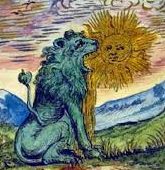
A mysterious carriage of the body to cover the defects of the mind

Number 257 of La Rochefoucauld’s Réflexions morales

La gravité est un mystère du corps inventé pour cacher les défauts de l’esprit.

Gravity is a mystery of the body invented in order to hide the defects of the mind.

Which Laurence Sterne cites in his perfect portrait of Yorick’s sensibilities regarding – because it comes to mind in my own struggle with this – what I’ll call ‘professionalism.’

For, to speak the truth, Yorick had an invincible dislike and opposition in his nature to gravity;—not to gravity as such;—for where gravity was wanted, he would be the most grave or serious of mortal men for days and weeks together;—but he was an enemy to the affectation of it, and declared open war against it, only as it appeared a cloak for ignorance, or for folly: and then, whenever it fell in his way, however sheltered and protected, he seldom gave it much quarter.

Sometimes, in his wild way of talking, he would say, that Gravity was an errant scoundrel, and he would add,—of the most dangerous kind too,—because a sly one; and that he verily believed, more honest, well-meaning people were bubbled out of their goods and money by it in one twelve-month, than by pocket-picking and shop-lifting in seven. In the naked temper which a merry heart discovered, he would say there was no danger,—but to itself:—whereas the very essence of gravity was design, and consequently deceit;—’twas a taught trick to gain credit of the world for more sense and knowledge than a man was worth; and that, with all its pretensions,—it was no better, but often worse, than what a French wit had long ago defined it,—viz. ‘A mysterious carriage of the body to cover the defects of the mind;’—which definition of gravity, Yorick, with great imprudence, would say, deserved to be wrote in letters of gold.

I think I knew – or could have guessed – the source but I hadn’t realized the similar connection with the reflexion immediately proceeding, number 256:

Dans toutes les professions chacun affecte une mine et un extérieur pour paraître ce qu’il veut qu’on le croie. Ainsi on peut dire que le monde n’est composé que de mines.

In all professions each person puts on an expression and an exterior in order to appear as what he wishes to be taken for.  Accordingly you could say that the world is composed only of appearances.

I made your destiny a destiny of kingship, but I did not make it a destiny of eternal life

The Sumerian Death of Bilgames (Gilgamesh), as Bilgames on his deathbed learns his fate in a god-sent dream (Andrew George’s Penguin edition, pg 200-201).  Bilgames’ end is of course highly privileged but the overall feel of the Netherworld here is more cheerful than in Enkidu’s from the later standard Babylonian Gilgamesh – though much (to most) of that cheer can be undercut by the earlier question and answer session on the fates of various types of people:

[Great Mountain Enlil, the father of the gods,]
[conversed in the dream with the lord Bilgames:]
[‘O Bilgames, I made your destiny a destiny of kingship, but I did
not make it a destiny of eternal life. ]
[For mankind, whatever life it has, be not sick at heart,]
[be not in despair, be not heart-stricken!]
[The bane of mankind is thus come, I have told you,]
[what (was fixed) when your navel-cord was cut is thus come, I have told you.]
[The darkest day of mortal man has caught up with you,]
[the solitary place of mortal man has caught up with you,]
[the flood-wave that cannot be breasted has caught up with you,]
[the battle that cannot be fled has caught up with you,]
[the combat that cannot be matched has caught up with you,]
[the fight that shows no pity has caught up with you!]
[But do not go down to the Great City with heart knotted (in anger) ,]
[let it be undone before Utu,]
[let it be unravelled like palm-fibre and peeled like an onion!]
Go ahead, [when the great] Anunna [gods sit down] to the funerary banquet,
to the place where the en-priests lie, where the [lagar-priests lie,]
to where the lumak-priests and nindingir-priestesses lie,
to where the nindingir-priestesses lie, where the ‘true one’ lies,
to where the guda-priests lie, where the linen-clad priests lie,
the place where your father is, and your grandfathers,
your mother, your sisters, your siblings,
your precious friend, your little brother,
your friend Enkidu, the young man your companion!
[(There) in the Great City, dwell] governors and kings,
there chiefs of armies [lie,]
[there captains of troops lie.]
[When in the Great City Aralli a man … ,]
[the man …… will not … ]
[From the sister’s house the sister will come to you,]
[from the sibling’s] house [the sibling will come to you,]
your own [will come to you, your precious one will come to you,]
the elders of your city will come to you!
Be not in despair, be not heart-stricken,
for now you will number among the Anunna gods,
you will be accounted one of the lesser gods,
you will act as the governor of the Netherworld,
you will pass judgement, you will render verdicts,
what [you say] will be as weighty [as the word of Ningishzida and] Dumuzi.’
Then the young [lord,] the lord Bilgames,
arose, it had been a [dream,] he shuddered, [it had been a deep
sleep.]
[He rubbed] his eyes with his hands, there was desolate [silence.]

La Rochefoucauld on resolutions

A run of Réflexions morales that feel seasonally appropriate

188

La santé de l’âme n’est pas plus assurée que celle du corps; et quoique l’on paraisse éloigné des passions, on n’est pas moins en danger de s’y laisser emporter que de tomber malade quand on se porte bien.

The health of the soul is no more assured than that of the body; and even though you appear removed from passions, you are no less in danger of being carried away by them than of falling sick when in good health.

189

Il semble que la nature ait prescrit à chaque homme dès sa naissance des bornes pour les vertus et pour les vices.

It seems that nature has stipulated for each man from his birth the limits for his virtues and for his vices.

191

On peut dire que les vices nous attendent dans le cours de la vie comme des hôtes chez qui il faut successivement loger; et je doute que l’expérience nous les fît éviter s’il nous était permis de faire deux fois le même chemin.

We can say that vices await us in the course of life like hosts with whom we must successively lodge; and I doubt that experience would make us avoid them if it were permitted us to travel twice the same path.

192

Quand les vices nous quittent, nous nous flattons de la créance que c’est nous qui les quittons.

When vices leave us, we flatter ourselves with the belief that it is we who have left them.

193

Il y a des rechutes dans les maladies de l’âme, comme dans celles du corps. Ce que nous prenons pour notre guérison n’est le plus souvent qu’un relâche ou un changement de mal.

There are relapses in the illnesses of the soul, just as in those of the body.  What we take for our healing is most often only a break or a changing of disease.

194

Les défauts de l’âme sont comme les blessures du corps: quelque soin qu’on prenne de les guérir, la cicatrice paraît toujours, et elles sont à tout moment en danger de se rouvrir.

The defects of the souls are like the wounds of the body; whatever care one takes to heal them, the scarring always shows, and they are at every moment in danger of being opened.

195

Ce qui nous empêche souvent de nous abandonner à un seul vice est que nous en avons plusieurs.

What often prevents us from abandoning ourselves to a single vice is that we have many of them.

Where soil is their sustenance and clay their food

From Tablet VII of Gilgamesh in the Andrew George translation.  Enkidu has learned of his coming death and recounts his dream vision of the underworld awaiting him.  The text unfortunately breaks off in the middle of the scene but we still get what must be literature’s first version of the Danse Macabre motif.

[As for Enkidu], his mind was troubled,
he lay on his own and [began to ponder.]
What was on his mind he told to his friend:
‘My friend, in the course of the night I had such a dream!

‘The heavens thundered, the earth gave echo,
and there was I, standing between them.
A man there was, grim his expression,
just like a Thunderbird his features were frightening.
‘His hands were a lion’s paws, his claws an eagle’s talons,
he seized me by the hair, he overpowered me.
I struck him, but back he sprang like a skipping rope,
he struck me, and like a raft capsized me.
‘Underfoot [he] crushed me, like a mighty wild bull,
[drenching] my body with poisonous slaver.
“Save me, my friend! …… ”
You were afraid of him, but you ….. .

‘[He struck me and] turned me into a dove.
‘[He bound] my arms like the wings of a bird,
to lead me captive to the house of darkness, seat of Irkalla:
to the house which none who enters ever leaves,
on the path that allows no journey back,
‘to the house whose residents are deprived of light,
where soil is their sustenance and clay their food,
where they are clad like birds in coats of feathers,
and see no light, but dwell in darkness.
‘On door [and bolt the dust lay thick,]
on the House [of Dust was poured a deathly quiet.]
In the House of Dust that I entered,
‘I looked around me, saw the “crowns” in a throng,
there were the crowned [heads] who’d ruled the land since days
of yore,
who’d served the roast [at the] tables of Anu and Enlil,
who’d proffered baked bread, and poured them cool water from
skins.
‘In the House of Dust that I entered,
there were the en-priests and lagar-priests,
there were lustration-priests and lumahhu-priests,
there were the great gods’ gudapsu-priests,
‘there was Etana, there was Shakkan,
[there was] the queen of the Netherworld, the goddess
Ereshkigal.
Before her sat [Belet]-~eri, the scribe of the Netherworld,
holding [ a tablet], reading aloud in her presence.
‘[She raised] her head and she saw me:
“[Who was] it fetched this man here?
[Who was it] brought here [this fellow?]” ,