
A mighty army of besieging mice!

From Rutilius Namatianus’ Going Home (De Reditu Suo) in Martha Malamud’s translation.  Her intro – to another late antique poet I’d never heard of until recently – was excellent but I would have liked to have a facing Latin text as well – though admittedly, as she points out, there are good parallel editions in French, Italian, and German if you’re inclined to pursue them.

Absurdity aside, these lines on Cosa caught my attention because it was the first Roman settlement whose founding, layout, and development I studied in depth – I think my Professor had been involved in one of the excavation phases (Univ. of Michigan-led, I think).

We now see Cosa’s ancient ruins, rotting walls
that lie abandoned and without a guard.
Because it makes me laugh, I’ll tell the silly cause
of its demise, though it’s embarrassing.
What caused the Cosans long ago to leave their homes?
A mighty army of besieging mice!
The bitter losses of the Pygmy troops and Cranes
allied against them are more credible

cernimus antiquas nullo custode ruinas
et desolatae moenia foeda Cosae.
ridiculam cladis pudet inter seria causam
promere, sed risum dissimulare piget.
dicuntur cives quondam migrare coacti
muribus infestos deseruisse Lares!
credere maluerim Pygmaeae damna cohortis
et coniuratos in sua bella grues.

Those who could hear a song this deeply vanished long ago

From David Hinton’s translation of Li Po – The Selected Poems of Li Po

Listening to Lu Tzu-Hsun play the ch’in on a moonlit night

The night’s lazy, the moon bright. Sitting
here, a recluse plays his pale white ch’in,

and suddenly, as if cold pines were singing,
it’s all those harmonies of grieving wind.

Intricate fingers flurries of white snow,
empty thoughts emerald-water clarities:

No one understands now. Those who could
hear a song this deeply vanished long ago.


His style is vulgar and his grammar is suspect

Two poems by Ch’en Ts’ao-An from Jerome Seaton’s The Wine of Endless Life: Taoist Drinking Songs.   Seaton’s biographical note is less than enthusiastic – “Little is known of this man. His style is vulgar and his grammar is suspect. Perhaps non-Chinese, at least poorly educated” and I can find nothing else except a mention in the Columbia History of Chinese Literature’s glossary of names.  I enjoyed him at least.

I’ve clambered high
to this spring in the grove
salt and onions
I’m poor enough
I’ve seen beyond man’s prisons
seen beyond the tigers in my mind
what’s wealth, what’s rank?
silence has a music of its own
heaven and earth make an ample goblet
all directions in me


A worldly man I sit
with a big glass tumbler full
pluck the lotus, peruse the dance, break into song
sing as I drink, see demons when I’m done
all of this
so many motes of dust and chaff
men’s right and wrongs? I make the best of them
loftiness is possible
lowliness, that too

Piero Della Francesca’s Resurrection

reallygoodres

On my mind today because I was reminded of a delightfully Plutarchean anecdote about this work’s continued existence – that an American pilot in WW2 had been dispatched with orders to bomb Sansepolcro but along the way the target name formed into a hazy memory of a professor’s lecture on a great art treasure located there.  Humanistic education saved the day and he dropped the bombs elsewhere.

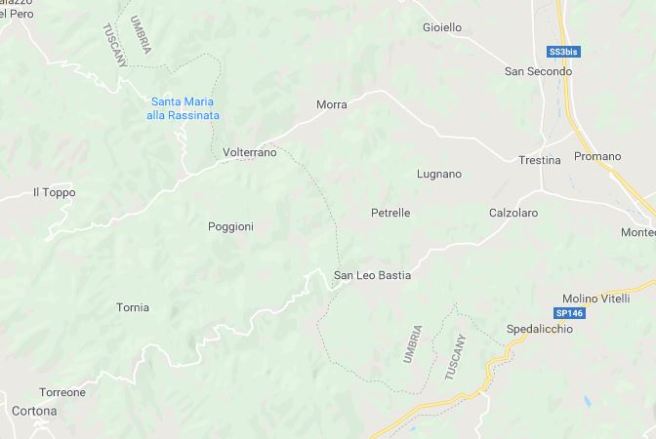
My own anecdote – because all such things blend – a couple of years ago my now-wife and I were driving from Ravenna to Montepulciano with a planned stop in Sansepolcro for me to complete another portion of the Piero Della Francesca trail (we had been to Arezzo two years earlier).  We managed the first leg from Ravenna fine but on the second segment I grew too bold in navigation and opted to get off the SS3 around Trestina and cross the Apennines directly instead of following the highway the longer way around the northern rim of Lake Trasimene.  The resulting route is the squiggly section pictured below – done in light rain on mostly single lane roads and barely topping 20mph through most sections.  But at least there was a Montepulciano bakery apricot tart was waiting at the end.

map

But one sort of penetration, to awaken an idea

From Within a Budding Grove:

As I came away from the church I saw by the old bridge a cluster of girls from the village …. My eyes rested upon her skin; and my lips, had the need arisen, might have believed that they had followed my eyes. But it was not only to her body that I should have liked to attain, there was also her person, which abode within her, and with which there is but one form of contact, namely to attract its attention, but one sort of penetration, to awaken an idea in it.

…..

That was what I wished her to know, so that she should regard me as someone of importance. But when I had uttered the words ‘Marquise’ and ‘carriage and pair,’ suddenly I had a great sense of calm. I felt that the fisher-girl would remember me, and I felt vanishing, with my fear of not being able to meet her again, part also of my desire to meet her. It seemed to me that I had succeeded in touching her person with invisible lips, and that I had pleased her. And this assault and capture of her mind, this immaterial possession had taken from her part of her mystery, just as physical possession does.


Comme je quittais l’église, je vis devant le vieux pont des filles du village … Mes regards se posaient sur sa peau et mes lèvres à la rigueur pouvaient croire qu’elles avaient suivi mes regards. Mais ce n’est pas seulement son corps que j’aurais voulu atteindre, c’était aussi la personne, qui vivait en lui et avec laquelle il n’est qu’une sorte d’attouchement, qui est d’attirer son attention, qu’une sorte de pénétration, y éveiller une idée.

C’était cela que je voulais qu’elle sût pour prendre une grande idée de moi. Mais quand j’eus prononcé les mots «marquise» et «deux chevaux», soudain j’éprouvai un grand apaisement. Je sentis que la pêcheuse se souviendrait de moi et se dissiper avec mon effroi de ne pouvoir la retrouver, une partie de mon désir de la retrouver. Il me semblait que je venais de toucher sa personne avec des lèvres invisibles et que je lui avais plu. Et cette prise de force de son esprit, cette possession immatérielle, lui avait ôté de son mystère autant que fait la possession physique.

Unfortunately some of us only realize well into life that if attracting and holding someone’s mental attention can be viewed as a form of seduction, it can also rouse in that person the same senses of grievance, entitlement, and presumed intimacy of spirit that an actual seduction and withdrawal would do.  But obviously this is in the context of more prolonged contact than the scene above.


Reading books in bed he yells at the wind

From Red Pine’s translation In Such Hard Time: The Poetry of Wei Ying-wu:

On a Leave of Absence, I Receive Word from Lu Twenty-two, Who Claims He is Ill in Bed and Surprised Li Two Hasn’t Visited in Such a Long Time.  I Reply with a Poem and Poke Fun at Li Two

Why did this minor official exhaust himself running errands
medicine and naps won’t restore his talents
playing chess in the garden he complains about bird shit
reading books in bed he yells at the wind
an old friend inquires because he has the same illness
thinking of him this spring I lift up my cup
but I have to laugh at that vulgar Wang Jung
if I had a fly whisk I’d wave it from here

Per Red Pine’s commentary, the first four lines refer to Wei himself.

Marcel Schwob’s bookplate

A surprise find in the Catalogue de la bibliothèque de Marcel Schwob in the surprisingly beautiful opening essay by Schwob’s friend and student Pierre Champion – Marcel Schwob parmi ses livres.  

Je [ses livres] revois, les compagnons de sa maladie, “consolation des heures mauvaises,” comme le dit l’ex-libris qui fut grave pour lui et represente un clerc au milieu des tentations charnelles.  Mais Marcel Schwob aimait trop ses livres pour mettre sur leurs pages un ex-libris.*

*Il avait ete grave sur bois, en 1899, par J. Grandjouan, de Nantes, l’auteur de caricatures politiques tres violentes.

57591734786__8BA3900F-B2B4-4401-8475-90444DB2DD6D

Those that we inspire contract it

From Within a Budding Grove. Another prodding to read Henri Bergson one day.

The time which we have at our disposal every day is elastic; the passions that we feel expand it, those that we inspire contract it; and habit fills up what remains.

Le temps dont nous disposons chaque jour est élastique; les passions que nous ressentons le dilatent, celles que nous inspirons le rétrécissent et l’habitude le remplit.

One of them eats the sweet fruit; the other looks on without eating

From Swami Nikhilananda’s translation of the Upanishads.  These two verses occur at both Svetasvatara 4.6-7 and Mundaka 3.1.1-2:

Two birds, united always and known by the same name, closely cling to the same tree.  One of them eats the sweet fruit; the other looks on without eating.

Seated on the same tree, the jiva moans, bewildered by its impotence. But when it beholds the other, the Lord worshipped by all, and His glory, it becomes free from grief.

Nikhilananda’s commentary – based on that of Sankaracharya – is available here (pg 120 of the PDF)